A long reptile without obvious legs is not necessarily a snake. Australia has legless lizards, including the flap-footed lizards described by Queensland Museum. Some have small hind-limb flaps that are easy to miss.
If you are unsure what you have seen, keep your distance. These clues are for understanding an animal or checking an existing photograph, not for deciding whether to pick it up.
Features that can help
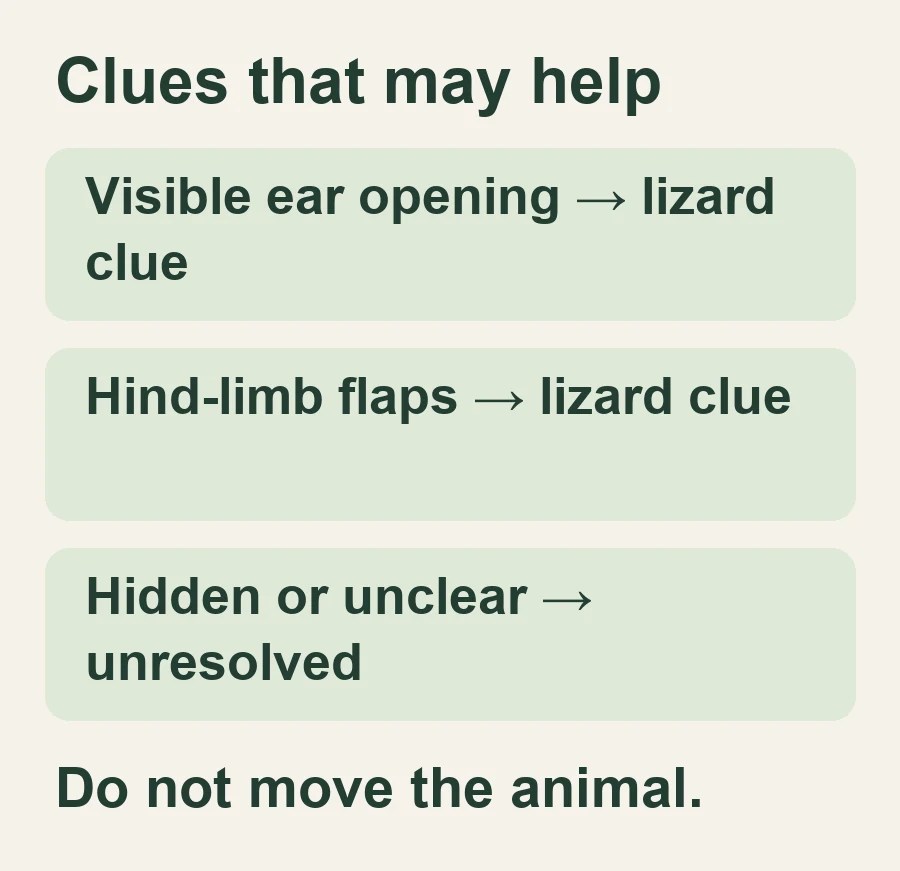
An external ear opening can be a useful lizard clue. Snakes lack an external ear opening, although some lizards do not have an obvious one either. A photo that does not show an ear therefore cannot settle the identification.
Small, flattened hind-limb flaps are another clue to a flap-footed lizard. They may be hidden by grass or the animal’s position. Do not turn the animal over or move it to look for them.
The Queensland Government comparison also describes the broad, flat tongue of legless lizards, compared with a snake’s long, slender, deeply forked tongue. This is supporting information if it is already visible, not something to provoke the animal into showing.
The blinking rule does not work for every Australian lizard
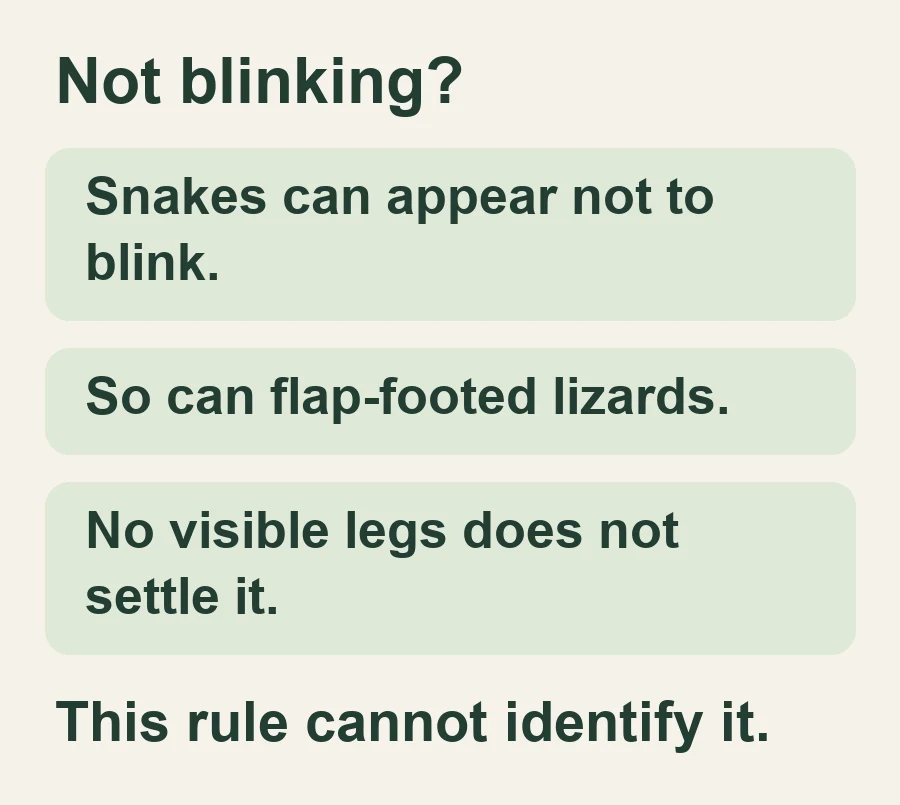
You may have heard that lizards blink and snakes do not. Australian flap-footed lizards have lidless eyes covered by a transparent spectacle. An animal that does not blink could belong to either group.
When the photograph is inconclusive
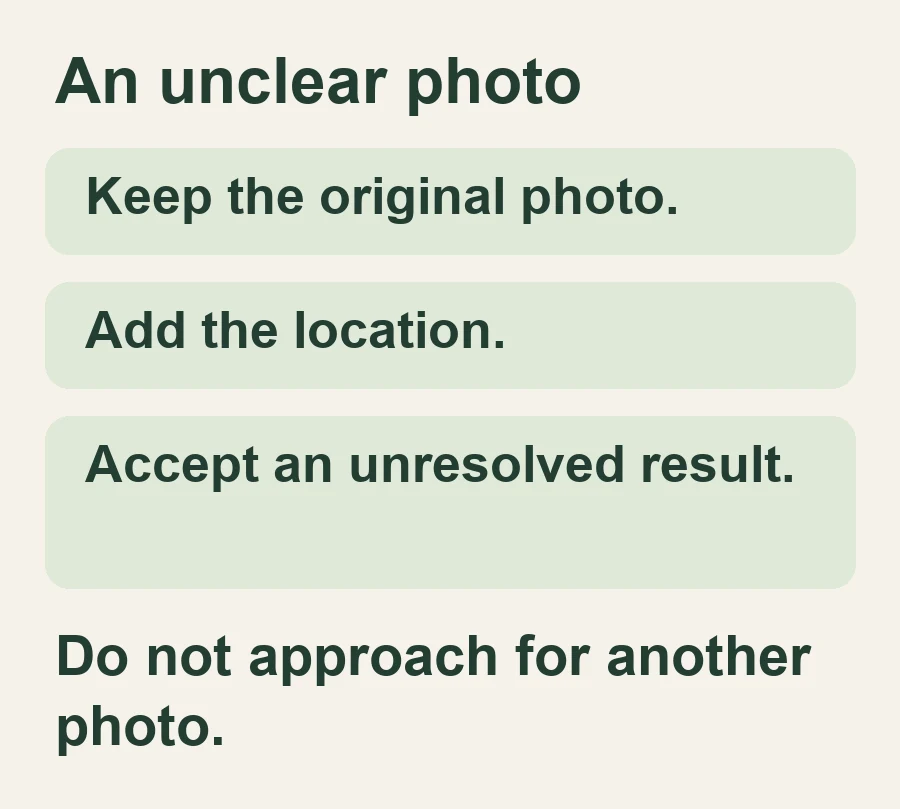
Keep the original image and note where the animal was seen. A blurred head or concealed body may leave the useful features out of view. It is reasonable to leave the identification unresolved rather than force a match.
Our guide to identification from a photo explains what information to include when asking for help. Do not approach again for a closer picture.