
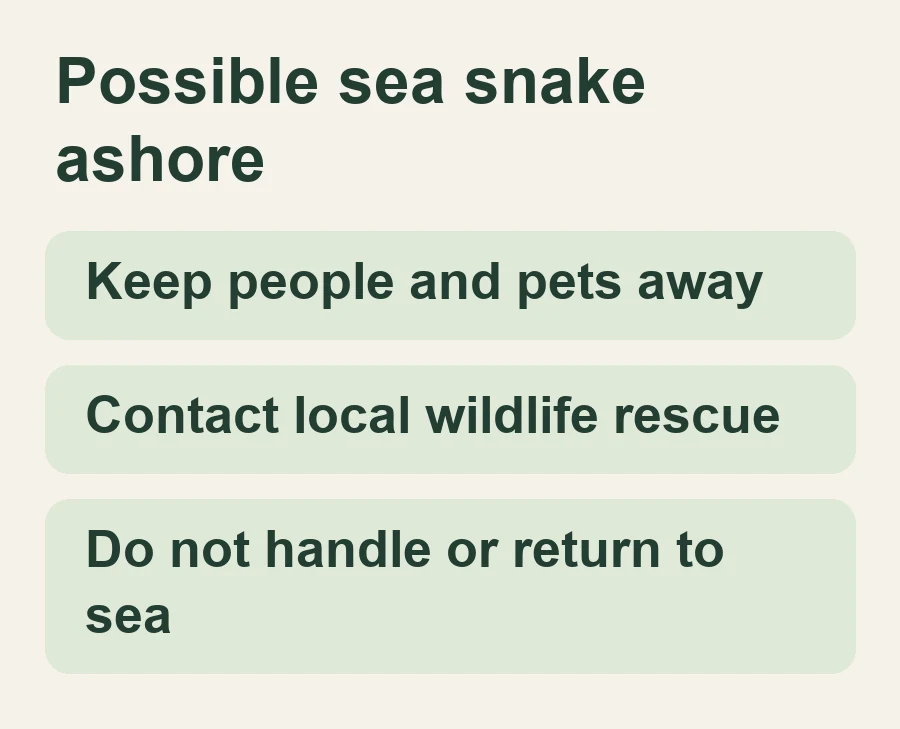
Keep your distance, move children and pets away, and contact your local wildlife authority or wildlife rescue service. Do not pick up the snake or try to return it to the sea yourself. Explain that you have found a possible sea snake so the service can arrange appropriate help.
Why not put it back in the water?
A stranded snake may need assessment rather than an immediate release. The Australian Museum’s yellow-bellied sea snake account warns that sick or injured animals can drift ashore and specifically advises against picking them up and returning them to the sea. Handling can also injure the snake.
Leave capture, transport and any release decision to trained responders. A container, towel or stick is not a reason to attempt the rescue yourself.

What if it looks dead?
Do not touch it to check. Western Australia’s parks and wildlife guidance says that sea snakes washed onto beaches may still be alive even when they appear dead, and may react if disturbed. A motionless animal is not safe to handle.
What should you tell the rescue service?
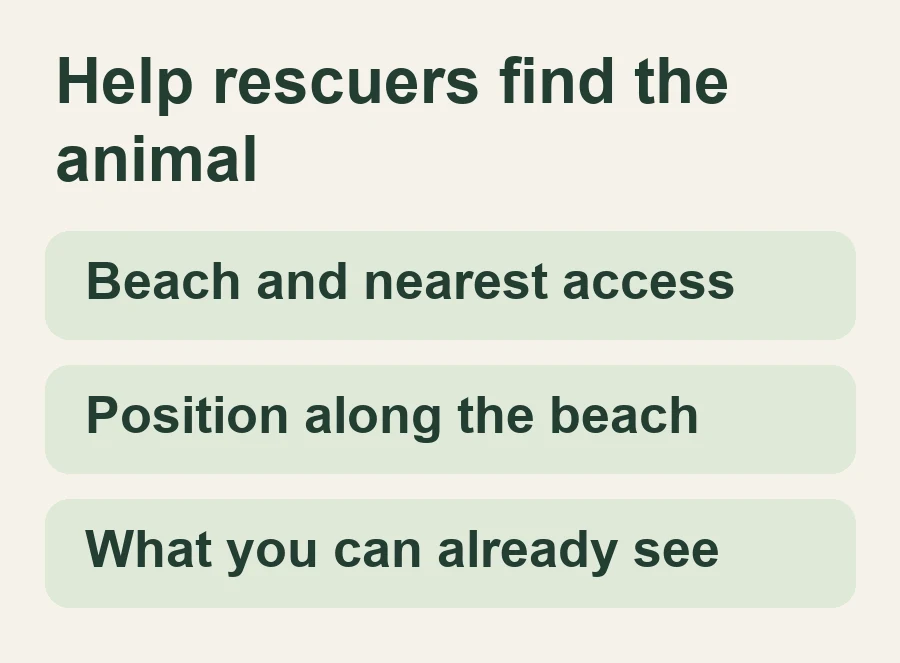
Give the beach name, nearest access point and the position along the beach. Describe what you can already see from a safe distance, including whether it is moving. If you already have a safely taken photograph, offer it to the responder. Do not approach again to inspect injuries or obtain a better identification picture.
If someone may have been bitten
Call 000 for an ambulance, keep the person still and follow snakebite first aid. Do not wait for pain, swelling or species identification. ANZCOR guidance notes that snakebites may leave no visible mark and may be painless.
For more about their biology, read how sea snakes get oxygen.