
Several sea-snake species tested by scientists refused seawater, even when dehydrated. The yellow-bellied sea snake needs fresh water despite living in the ocean. Research points to rain falling on the sea as an important source of drinking water for this species.

What do yellow-bellied sea snakes drink?
In a 2012 study in Costa Rica, yellow-bellied sea snakes drank fresh water after becoming dehydrated, but did not drink seawater. Some also drank diluted, brackish water. The paper uses the older scientific name Pelamis platurus; the species is now called Hydrophis platurus.
How can there be fresh water on the ocean?
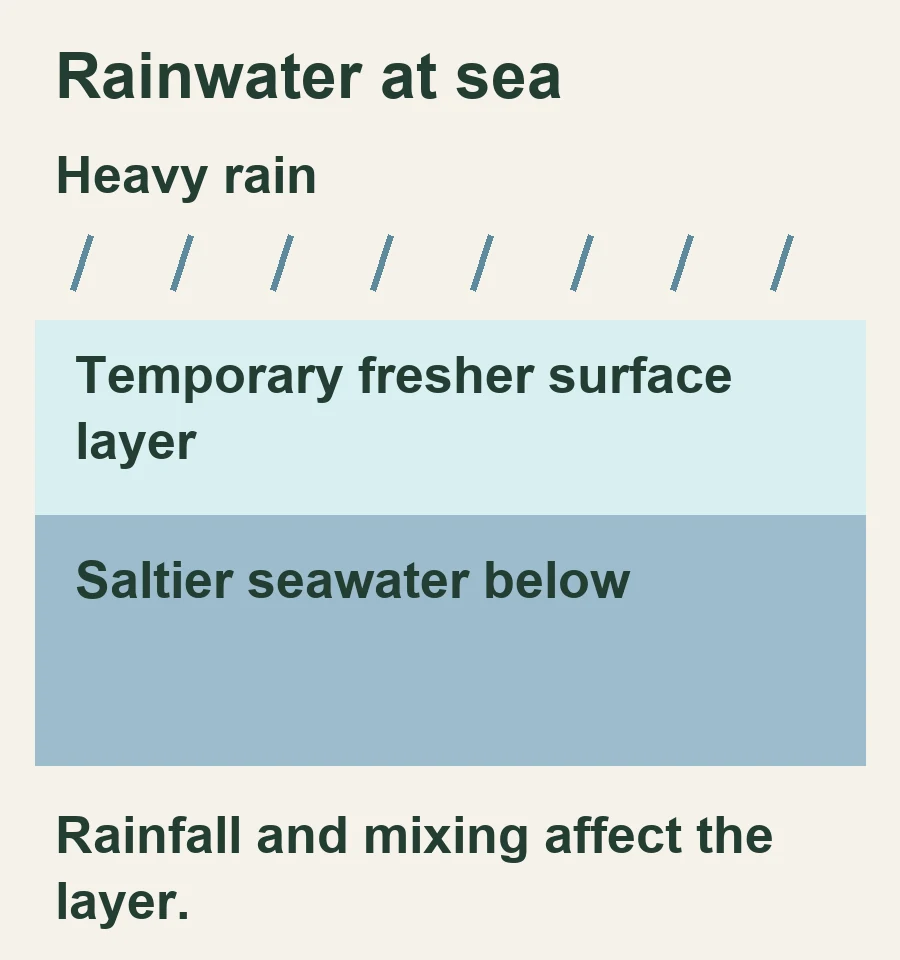
Heavy rain can create a temporary layer of fresh or dilute brackish water at the surface. Researchers call this a freshwater lens. Its availability depends on rainfall and how the surface water mixes.
A 2019 study of yellow-bellied sea snakes followed the start of the wet season off Costa Rica. Fewer newly captured snakes drank fresh water in laboratory tests after rain began than before it. Surface water also became less salty.
The researchers interpreted the decline in thirsty snakes as evidence that they had drunk from rain-formed surface lenses. They did not directly watch snakes drinking from those lenses during storms.
Do all sea snakes respond the same way?
No single drinking pattern should be assumed for every species. A 2015 study of five species from northern Australia found that none of the tested snakes drank seawater. Dehydrated Hydrophis curtus, H. elegans and H. zweifeli drank fresh water, while the tested Aipysurus mosaicus and Hydrophis peronii did not under similar conditions.
That difference shows why results from one species cannot simply be applied to all sea snakes. It does not establish that the non-drinking species can live indefinitely without fresh water.
Learn more about sea snakes
Getting drinking water is a different process from getting oxygen. See how sea snakes breathe for the roles of air and skin gas exchange.
If you find a sea snake ashore, keep away and follow the beach encounter guide. Leave assessment and care to trained wildlife responders.