
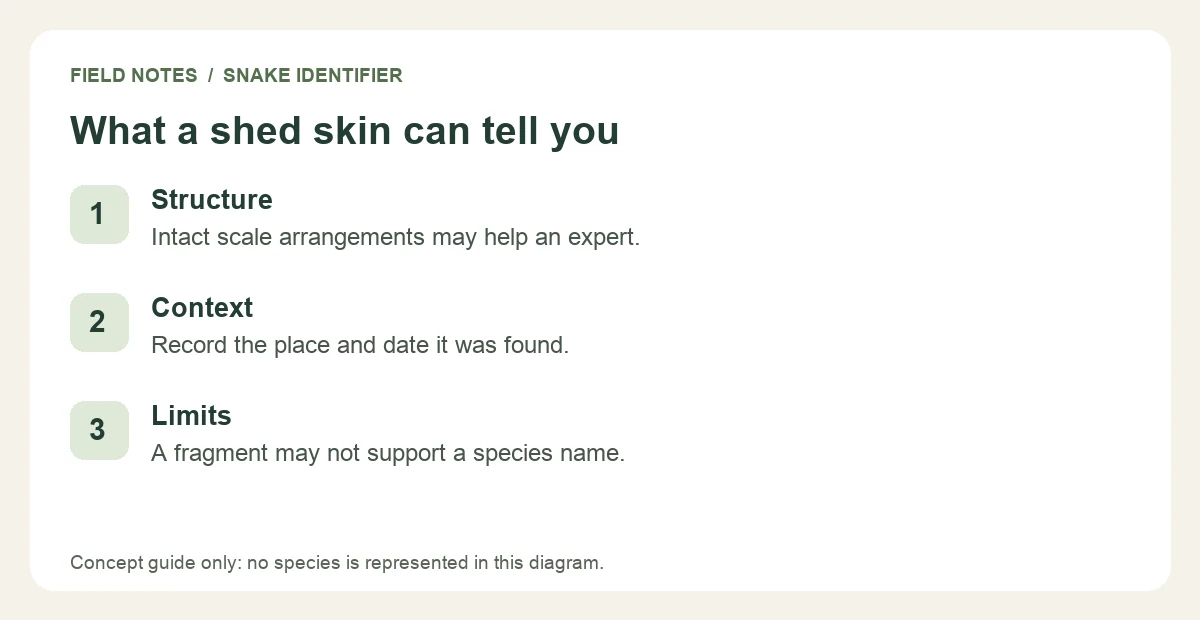
A shed skin can sometimes be identified, but a casual photograph or its colour may not be enough. Specialists can use preserved scale arrangements alongside the location. Finding a shed does not, by itself, tell you where the snake is now.
Why a specialist looks beyond colour
The Queensland snake FAQ notes that shed skins can be compared using scale patterns and counts. That is different from matching a translucent skin to the colour of a living snake in a photograph.
In a documented Queensland identification enquiry, BOOBOOK used scale rows, surviving pattern and the local range of pythons to identify a carpet-python shed. The useful lesson is the combination of evidence. One scale count copied from an internet example is not a universal identification key.


How to make a useful enquiry
Photograph the skin as found if you can do so without entering a confined space or disturbing cover. Include a view of the whole visible piece and any detail already accessible. Tell the reviewer whether you have the complete skin or only fragments, and give the nearest town and the discovery date.
Ask the museum or local identification service what they need before collecting or transporting anything. The Western Australian Museum asks people to contact it first about specimens and accepts a digital photograph as an initial step. Do not submit a live snake with the skin.
Does a shed mean the snake is still in the house?
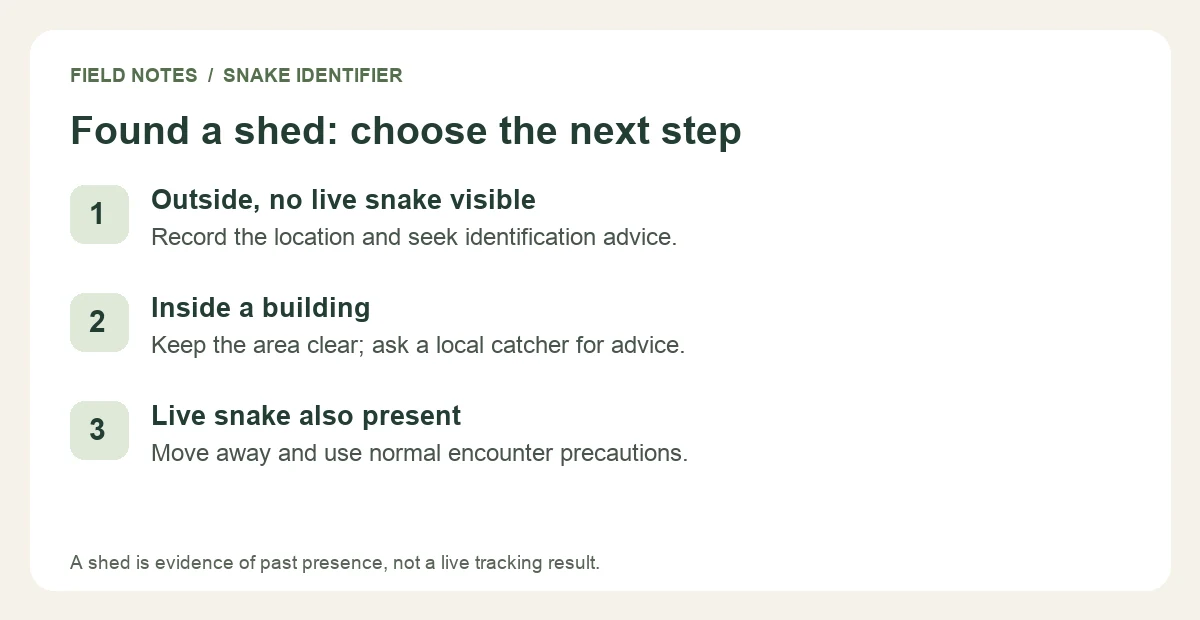
It is evidence that a snake used the place, but the skin alone cannot establish its current position or whether it has left. If it is indoors, tell a catcher exactly where it was found. Do not search roof cavities, pull apart stored materials or put your hands into a suspected hiding place.
Related: Snake inside the house · Using a snake photograph
Sources checked 25 September 2026: Queensland Government: snake questions; BOOBOOK: identifying a shed snake skin; Western Australian Museum: identification requests; Queensland Education: preventing snake bites; NSW Environment and Heritage: snakes.