
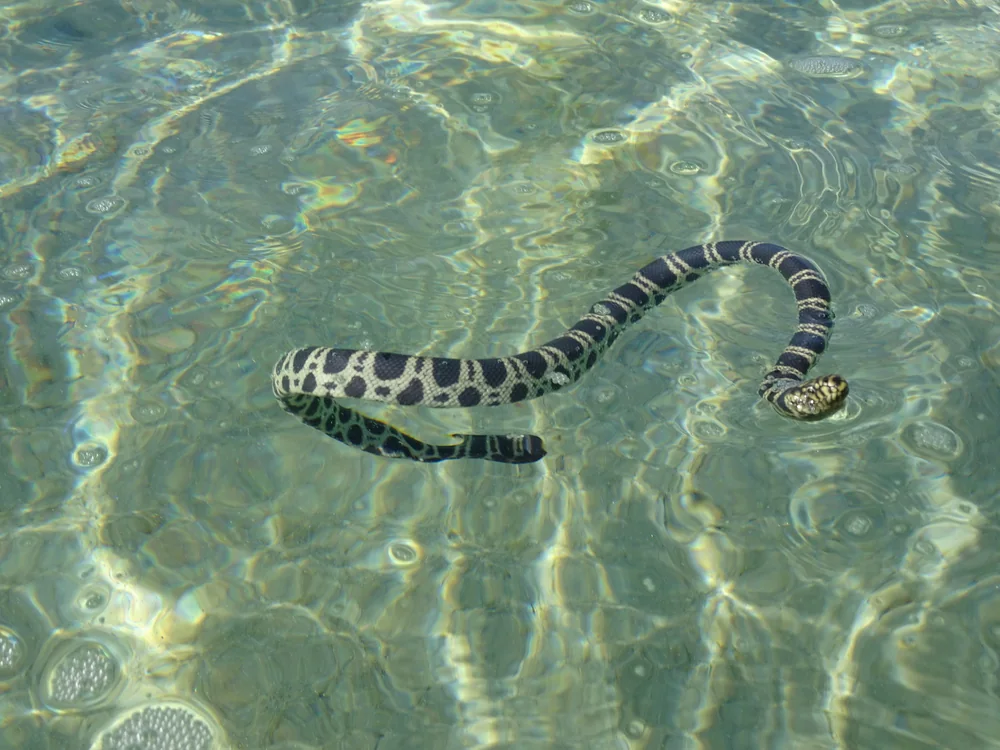
Elapidae
Olive-headed Sea Snake
Hydrophis major
A large, relatively heavy-bodied sea snake of northern Australian waters.
Venomous
Identification and appearance
A relatively heavy-bodied sea snake reported to exceed 1.5 m. General build and size alone cannot distinguish it from other sea snakes.
Other names
Greater Sea Snake
Typical length
Reported to exceed 1.5 m; this does not establish a species maximum or a typical adult interval.
Body build
robust
Key identification features
- Relatively heavy-bodied form
- Large marine snake
Where it is found
Northern Australian marine waters; the source marks New South Wales occurrence as uncertain.
Activity
Tracked snakes in a New Caledonian study were most active during rapidly falling tides.
Diet
Fish. A New Caledonian study found striped eel catfish in the diet; this does not establish an exclusive diet throughout Australia.
Reproduction
Live-bearing.
Medical significance
Treat any suspected bite as an emergency. Call 000 for an ambulance and do not wait for identification.
What to do if you encounter one
Keep your distance in the water or on shore. Do not touch, catch or return a stranded snake to the water. Keep people and pets away and contact local wildlife assistance.
Taxonomy notes
New South Wales occurrence is marked uncertain. The cited study reports sample snout–vent lengths, not a total-length maximum or typical adult interval.
Sources checked
- The Reptile Database — Hydrophis major (2026-09-25)
- Udyawer et al. 2020 — Hydrophis major ecology study (2026-09-26)
- ANZCOR — Australian snake bite first aid (2026-09-26)
Still not sure?
Compare this snake with more clues.
A profile is a guide, not a reason to approach or handle a snake.