
Elapidae
Pale-headed Snake
Hoplocephalus bitorquatus
A slender, potentially dangerous, partly arboreal snake recorded from New South Wales and Queensland.
Venomous — potentially dangerous
Identification and appearance
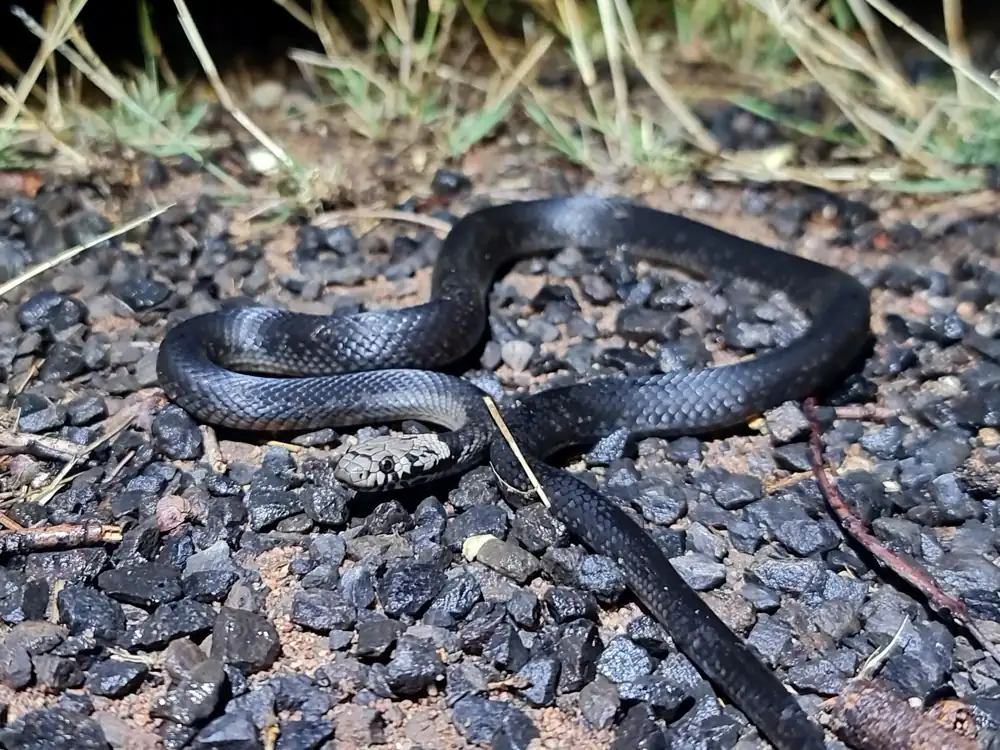
A pale grey head contrasts with an unpatterned grey-brown to blackish-brown body. Dark spots on the head border a white stripe across the nape; the lips carry contrasting dark and cream marks. The body is slender and adapted for climbing.
Typical length
The Australian Museum reports a total length up to 90 cm; females generally grow larger than males. This maximum is not a typical adult interval.
Body build
slender
Head appearance
paler head, local head and lip markings
Key identification features
- Unpatterned dark grey-brown body
- Pale head with a white nape stripe
- Contrasting dark and cream lip marks
- Slender climbing body
Where it is found
New South Wales and Queensland.
Habitat
This tree-dwelling snake uses wet and dry forest and open woodland, particularly Callitris woodland on floodplains and beside watercourses. Old trees and standing dead trees provide shelter in hollows and beneath peeling bark.
Activity
Mostly active at night.
Diet
Eats frogs, geckos, skinks and bats. Frogs were the most frequent prey found in examined museum specimens.
Reproduction
Live-bearing.
Medical significance
Potentially dangerous venom. Call 000 and follow snakebite first aid for any suspected bite; do not wait for identification.
What to do if you encounter one
Keep clear and do not handle it. Use a qualified snake catcher or local wildlife authority if it is trapped near people.
Sources checked
- Australian Reptile Online Database — Pale-headed Snake (2026-09-25)
- Australian Museum — Pale-headed Snake (2026-09-26)
- The Reptile Database — Hoplocephalus bitorquatus (2026-09-25)
Still not sure?
Compare this snake with more clues.
A profile is a guide, not a reason to approach or handle a snake.