
Elapidae
Stokes’ Sea Snake
Hydrophis stokesii
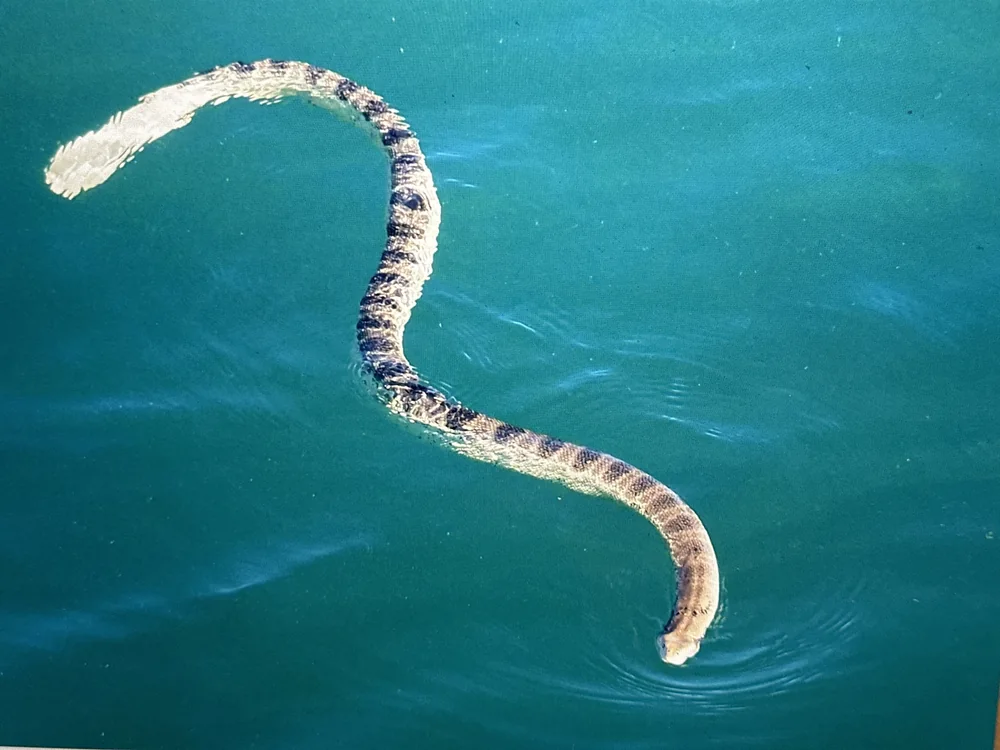
A stout sea snake with variable brown to cream colouring; some individuals have dark bands and spots.
Venomous
Identification and appearance
A heavy-bodied sea snake with a large head and thick neck. Colour varies from brown or cream to grey and almost black. Dark bands, blotches or side spots may be present; adults can be less strongly patterned.
Typical length
The NT Government identification guide lists a fully grown size of 120–200 cm. It does not define a measured population average; no typical adult interval is used in matching.
Body build
robust
Key identification features
- Stout body
- Brown to cream upperparts
- Dark bands and side spots in some individuals
Where it is found
Found in northern and eastern Australian coastal waters. The NT Government describes it as common in Territory waters; Queensland records and a New South Wales listing are also documented. This state list remains incomplete.
Habitat
A coastal sea snake associated with muddy seabeds.
Activity
In a small Exmouth Gulf tracking study, snakes spent most of their time underwater. Some dives included long periods near the seafloor; others involved gradual ascents through the water.
Diet
Feeds mainly on bottom-dwelling fish, including toadfishes.
Reproduction
Live-bearing.
Medical significance
For any suspected snakebite, call 000 and follow snakebite first aid. Do not wait for identification.
What to do if you encounter one
Keep clear and do not handle, net or disentangle a sea snake. Contact qualified wildlife help if a stranded animal or fishing-gear entanglement needs attention.
Sources checked
- The Reptile Database — Hydrophis stokesii (2026-09-25)
- NT Government — Marine protected species identification guide, page 30 (2026-09-26)
- Queensland Government — Reptiles of Queensland (2026-09-26)
- Coppersmith et al. (2025), Wiggle and glide: fine-scale telemetry reveals unique diving strategies in benthic-foraging sea snakes (2026-09-26)
- Northern Territory EPA — protected-marine-species habitat assessment (2026-09-26)
Still not sure?
Compare this snake with more clues.
A profile is a guide, not a reason to approach or handle a snake.