
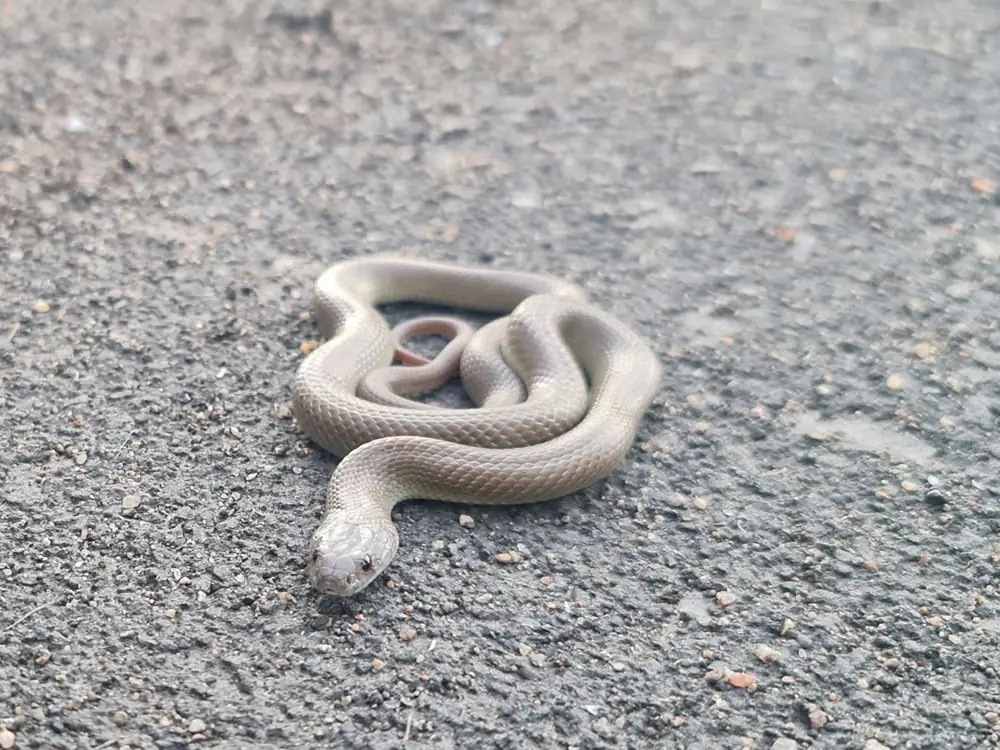
Elapidae
Western Pygmy Mulga Snake
Pseudechis weigeli
A venomous black-snake relative recorded in the Kimberley and the Northern Territory.
Dangerously venomous
Identification and appearance
Brown to reddish tones are overlaid by darker scale edges. Head and neck markings vary, and in some individuals dark spots also extend along the back.
Other names
Pygmy Mulga Snake, Weigel’s Black Snake
Key identification features
- Brown to reddish body with darker scale edges
- Variable head and neck markings
- Dark back spots in some individuals
Where it is found
The Kimberley region of Western Australia and the Litchfield area of the Northern Territory; the current species limits conflict with older Queensland records.
Habitat
In the Kimberley, Western Pygmy Mulga Snakes occur in tropical savannah woodland and monsoon vine forest.
Activity
May be active by day or at night, depending on the weather.
Diet
Its diet is poorly known, but probably includes reptiles and frogs, and possibly small mammals.
Reproduction
Egg-laying.
Medical significance
Treat any suspected bite as an emergency. Call 000 for an ambulance and do not wait for identification.
What to do if you encounter one
Keep well clear, leave a route for the snake to move away and do not approach for a closer look. If it is inside a building, keep people and pets away and contact a qualified local snake catcher.
Similar-looking snakes
The Mulga Snake is a potential lookalike; do not approach either snake to compare markings.
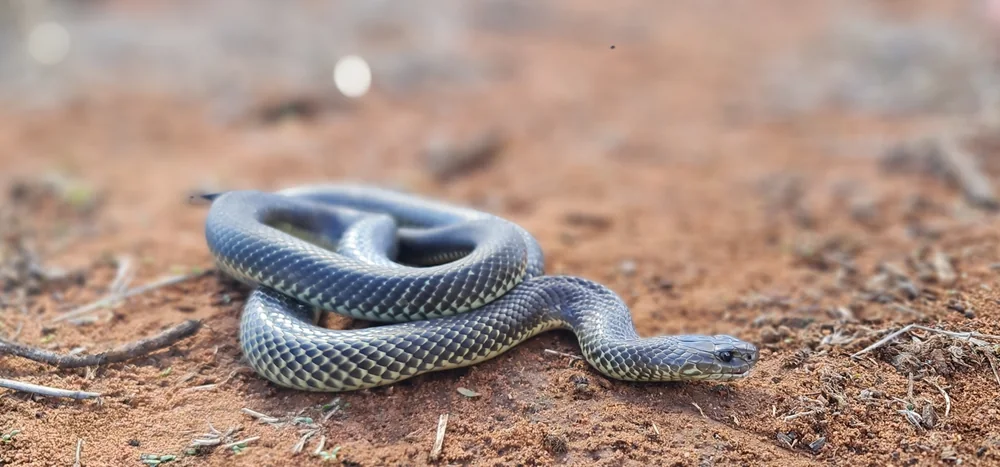
Photo: Max Tibby · CC0 1.0 (Licence)
Elapidae
Mulga Snake
Pseudechis australis
A large, variable snake widespread across most of Australia.
Open identification guideTaxonomy notes
The 2017 phylogeographic treatment records Pseudechis weigeli in Western Australia and the Northern Territory, while treating Queensland pygmy mulga material as P. pailsei.
Sources checked
- Australian Reptile Online Database — Pseudechis weigeli (2026-09-25)
- The Reptile Database — Pseudechis weigeli (2026-09-25)
- Maddock et al. 2017 — Pseudechis phylogeography (2026-09-26)
- ANZCOR — Australian snake bite first aid (2026-09-26)
- University of Melbourne AVRU, Black snakes account (2026-09-26)
Still not sure?
Compare this snake with more clues.
A profile is a guide, not a reason to approach or handle a snake.