
Elapidae
Mustard-bellied Snake
Drysdalia rhodogaster
A small south-eastern snake with a dark head and yellow-orange nape band.
Venomous
Identification and appearance
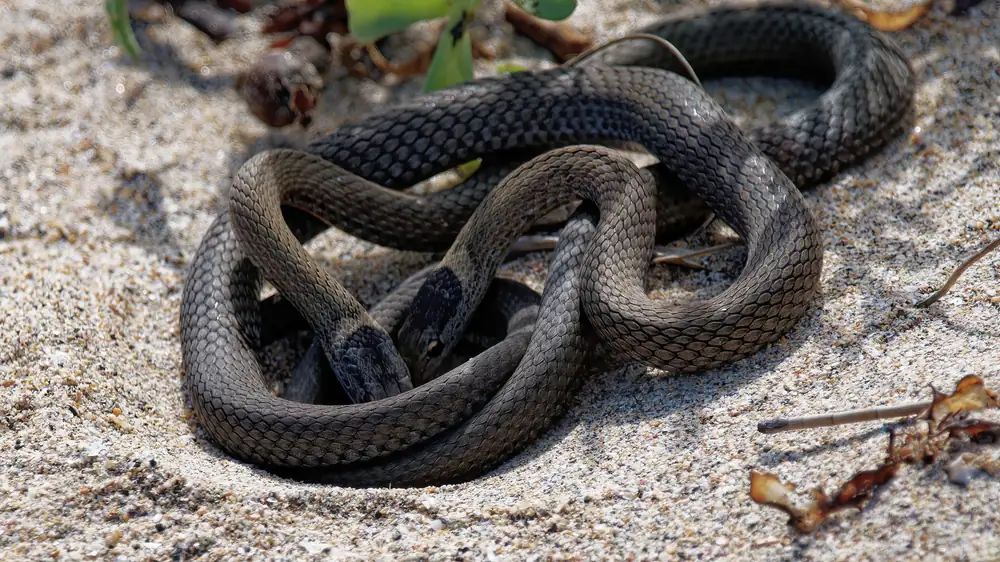
A small south-eastern snake that is brown to grey above with a darker head and a yellow to orange neck band. The account notes that the usual white upper-lip stripe of a related species is absent.
Other names
Rose-bellied Snake
Typical length
AROD lists an average size of about 40 cm; no separate maximum is given.
Head appearance
Darker head and yellow-orange nape band
Key identification features
- Brown to grey upper surface
- Yellow-orange nape band
- White upper-lip stripe of a related species is absent
Where it is found
South-eastern New South Wales.
Diet
Reported prey is mostly lizards.
Reproduction
Live-bearing; AROD reports an average litter size of 5.
Medical significance
Venom is documented but the source says this species is not regarded as dangerous. Treat any possible bite as an emergency and call 000.
What to do if you encounter one
Keep your distance and leave the snake a clear route away. Do not handle it, chase it for a photograph or attempt to inspect its mouth. If it is inside a building, keep people and pets clear and contact a qualified local snake catcher.
Similar-looking snakes
White-lipped and marsh snakes are cited comparisons; the nape band is only a broad distant clue.
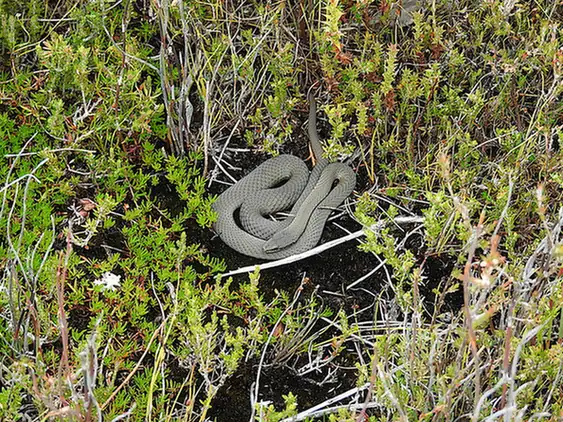
Photo: george_vaughan · CC0 1.0 (Licence)
Elapidae
White-lipped Snake
Drysdalia coronoides
White-lipped Snake is recorded across south-eastern Australia, including Tasmania and New South Wales. It varies from olive-brown and grey to reddish brown or dark grey, with a white stripe on the upper lip and no pale or dark nape band.
Open identification guide
Photo: Max Tibby · CC0 1.0 (Licence)
Elapidae
Marsh Snake
Hemiaspis signata
Marsh Snake is a small east-coast snake with an olive to grey back, dark belly and paired pale facial lines.
Open identification guideSources checked
- Australian Reptile Online Database — Mustard-bellied Snake (2026-09-25)
- The Reptile Database — Drysdalia rhodogaster (2026-09-25)
- ANZCOR — First Aid Management of Australian Snake Bite (2026-09-25)
Still not sure?
Compare this snake with more clues.
A profile is a guide, not a reason to approach or handle a snake.