
Colubridae
Northern Tree Snake
Dendrelaphis calligaster
A slender, daytime-active tree snake recorded in Cape York and Torres Strait.
Non-venomous
Identification and appearance
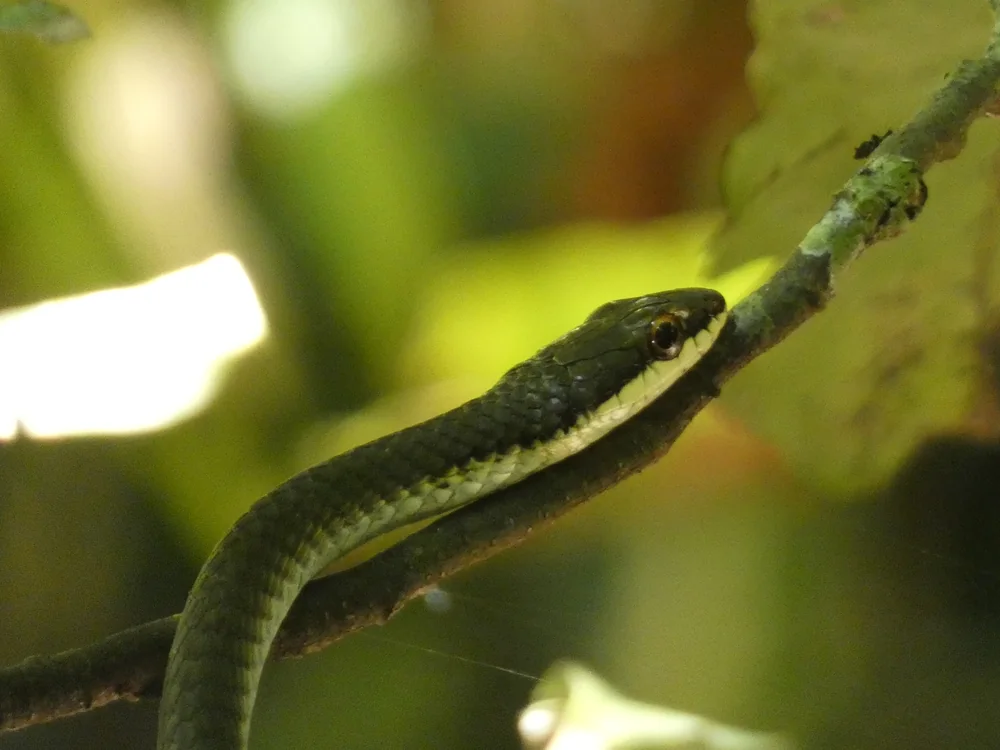
Its slim body may look green or grey-brown from above. A dark line crosses the eye, while the belly is cream to yellow.
Typical length
The Queensland Government reports that Northern Tree Snakes grow to 1.2 m; a typical adult interval was not established.
Body build
slender
Head appearance
dark streak through the eye
Key identification features
- Very slender body
- Green or grey-brown upperparts
- Dark line through the eye
Where it is found
Eastern Cape York Peninsula and Torres Strait islands in Australia; the account also lists New Guinea and neighbouring islands.
Activity
Diurnal.
Diet
Frogs and reptiles.
Reproduction
Oviparous.
Medical significance
Non-venomous, but capable of biting. If identity is uncertain and a bite is suspected, call 000 and follow snakebite first aid.
What to do if you encounter one
Keep clear and do not handle it. Use a qualified snake catcher or local wildlife authority if it is trapped near people.
Similar-looking snakes
The Common or Green Tree Snake is a documented lookalike. The Northern Tree Snake’s dark eye-to-neck streak is a supporting clue, not a safe close-up test.
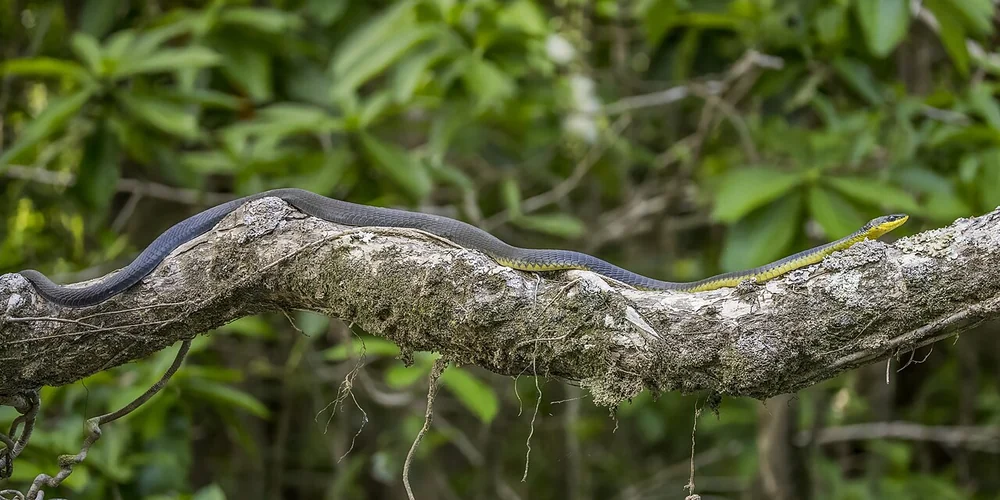
Photo: Charles J. Sharp · CC BY-SA 4.0 (Licence)
Colubridae
Green Tree Snake
Dendrelaphis punctulatus
A very slender, agile snake with a long tail, often seen moving through gardens or low branches. Despite the name it may be olive, brown, black or even blue. Green colour is only one possible appearance of this non-venomous species.
Open identification guideSources checked
- The Reptile Database — Dendrelaphis calligaster (2026-09-25)
- Queensland Government — Snakes of the Cairns region (2026-09-26)
- Source for similar-species comparison (2026-09-26)
Still not sure?
Compare this snake with more clues.
A profile is a guide, not a reason to approach or handle a snake.