
Elapidae
Western Turtle-headed Sea Snake
Emydocephalus orarius
A large coastal Western Australian sea snake with 19–21 body bands. The current diagnosis records a maximum total length of 116 cm, with records from Shark Bay through the Pilbara to the Kimberley.
Unknown
Identification and appearance
A large coastal Emydocephalus with a banded body; the current diagnosis notes 19–21 bands and enlarged ventral tubercles in adult males.
Typical length
The current diagnosis reports a maximum recorded total length of 116 cm.
Key identification features
- Large coastal sea snake
- 19–21 body bands
- Enlarged ventral tubercles in adult males
Where it is found
Coastal Western Australia from Shark Bay through the Pilbara to the Kimberley; the original-description material includes soft-bottom trawl habitats.
Habitat
Most known specimens came from trawls over soft seabeds off Western Australia; its habitat preferences remain poorly understood.
Medical significance
The consulted sources do not establish medical significance. Do not handle the snake or infer safety from appearance, size or name. Call 000 and follow snakebite first aid for any suspected bite.
What to do if you encounter one
Keep clear and do not handle, catch or disentangle a sea snake. Seek qualified wildlife help if a stranded animal or fishing-gear entanglement requires attention.
Similar-looking snakes
Eastern Turtle-headed Sea Snake is a close comparison. The western species was described in 2020 using genetic evidence and a combination of physical features, including scale arrangement and colour pattern. Colour or habitat alone is not a reliable way to distinguish them.
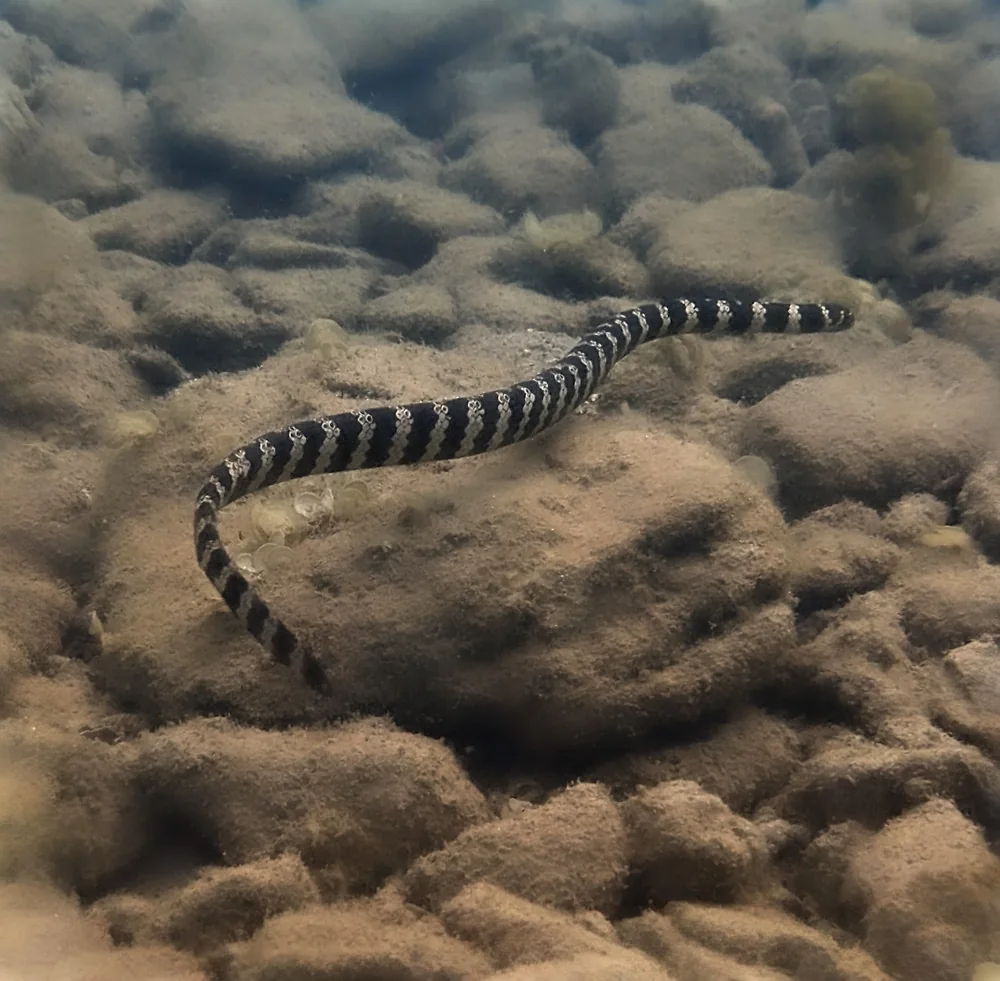
Photo: Ben Keen · CC0 1.0 (Licence)
Elapidae
Eastern Turtle-headed Sea Snake
Emydocephalus annulatus
An egg-eating marine snake with banded and dark colour forms.
Open identification guideSources checked
Still not sure?
Compare this snake with more clues.
A profile is a guide, not a reason to approach or handle a snake.