
Yes, Australian snakes can be active at night. Some normally hunt after dark; others change their activity with the weather. The time you saw a snake is useful background for an identification, but it cannot tell you whether the snake is venomous.


Some snakes regularly hunt after dark
The carpet python mostly feeds after dark, according to Queensland’s species account. The brown tree snake is another night-active species. Its government account describes it as a climber that uses trees, rock faces and buildings. Seeing a snake up off the ground at night does not identify it as a python.
Day-active snakes can use the evening too
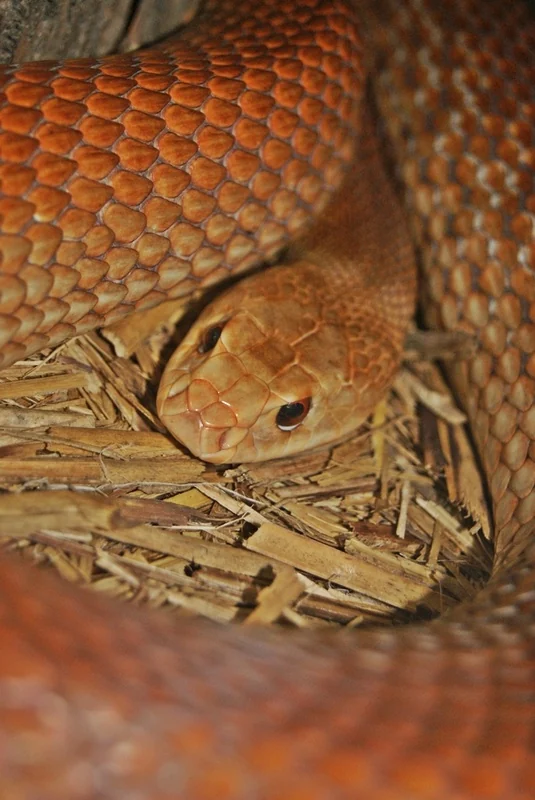
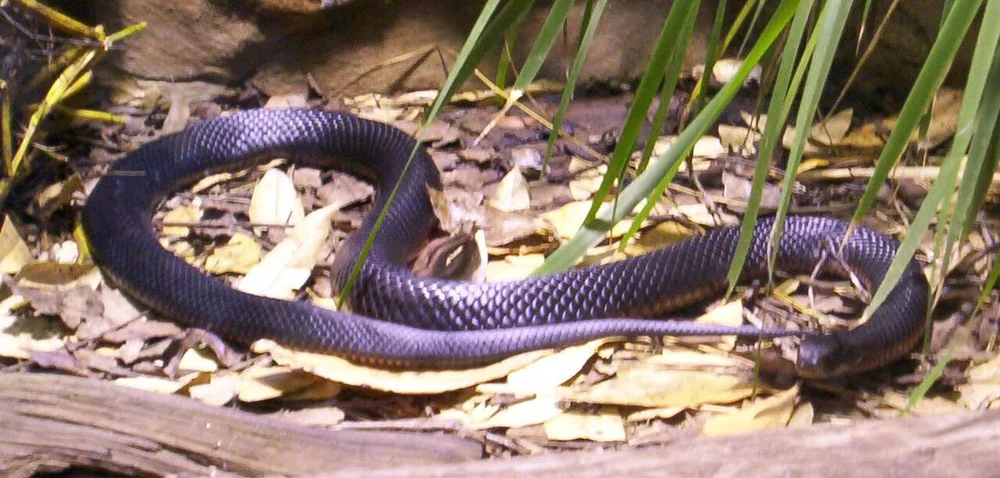
The Australian Museum’s coastal taipan account describes a mostly daytime snake that may become nocturnal in hot weather. Red-bellied black snakes can also remain active into the evening when temperatures allow. “It was dark” therefore cannot exclude these species where their ranges fit.

Why there is no reliable clock-time rule
Australia includes very different climates. CSIRO’s explanation of snake activity contrasts tropical northern patterns with the cooler south and explains the role of environmental warmth. A warm tropical evening and a cold southern night offer different conditions.


For identification, note the nearest town, time, weather and what the snake was doing. Do not discard a possible match just because its profile says “mainly diurnal”: that means mainly active during the day, not exclusively.
For a trip to the shed or a night walk
Use enough light to see your route and wear enclosed footwear. Queensland Education specifically includes lighting and footwear in its night-time snake precautions. If a snake is on the path, give it space rather than trying to step over it. Leave photography until you are safely clear, and do not follow it into vegetation.
Use location and visible markings in the snake identifier to compare possible matches.
Related: Snakes in winter · Snakes that climb
Sources checked 25 September 2026: Queensland Government: carpet python; Queensland Government: brown tree snake; Australian Museum: Coastal Taipan; Australian Museum: Red-bellied Black Snake; CSIRO: weather and snake activity; Queensland Education: preventing snake bites.