
Yes. Australian snakes can climb, and climbing does not mean a snake is non-venomous. Pythons and common tree snakes are familiar climbers, but some medically significant snakes also use trees and structures. A snake on a branch, fence or roof needs the same space as one on the ground.
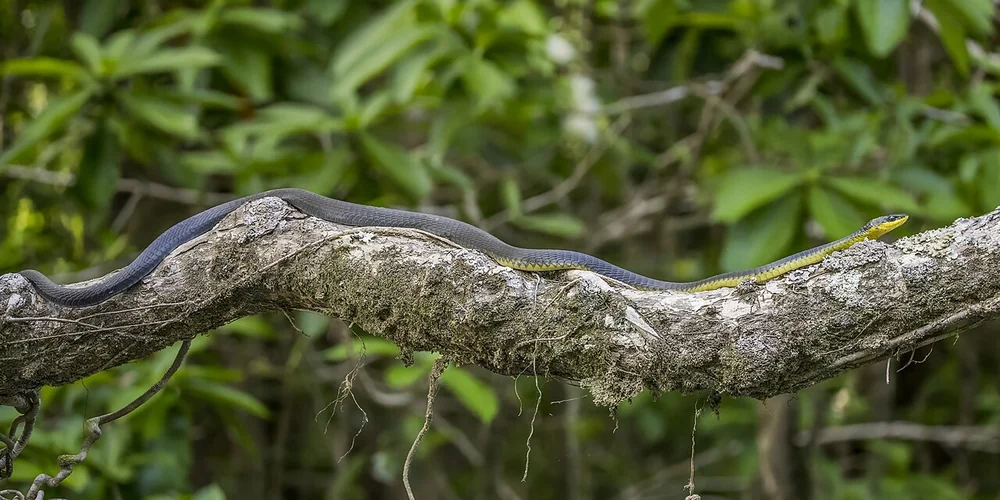

Common tree snakes and pythons
The common tree snake is slender and active both in trees and on the ground. Despite its other name, green tree snake, it has several colour forms. Queensland’s regional guide records that variation, so the word “green” should not become an identification requirement.
Carpet pythons also use branches and may occupy roof spaces. The Queensland carpet python account describes both trees and buildings; neither setting identifies an unknown snake on its own.


Venomous snakes can climb too
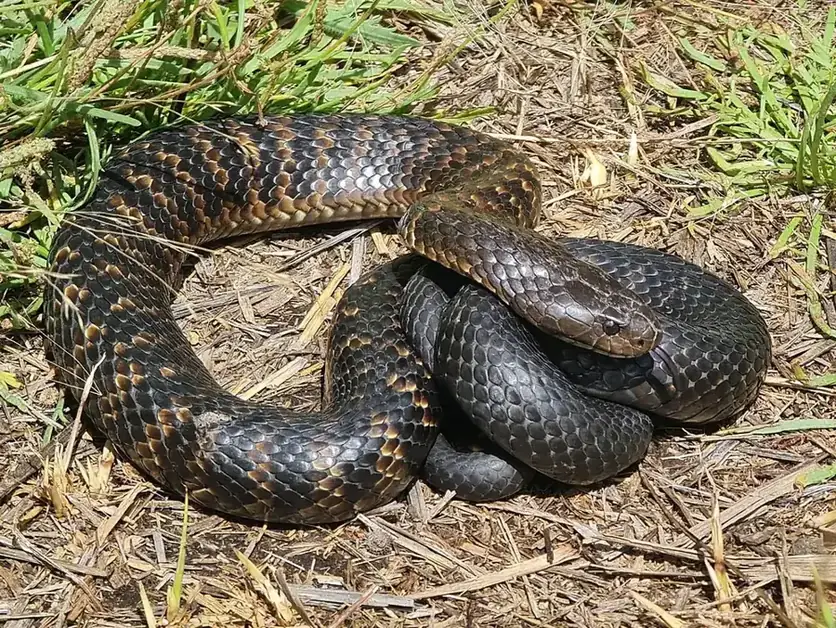
The rough-scaled snake is a skilled climber with highly toxic venom. The Australian Museum account describes hunting and sheltering in vegetation and trees. Tiger snakes can also climb vegetation and human-made structures.

“Tree snake” is not one uniform category
The common tree snake and brown tree snake are different species. The latter is rear-fanged and venomous, and is generally active at night. It is useful to read the full species name rather than treating every tree-dwelling snake as the same animal. Queensland’s brown tree snake account explains the distinction.
If one is in your roof or garden tree
Do not climb a ladder to investigate, shake the branch or attempt to pull it free. Give a catcher the location and any photo already taken safely. If the snake is outside and people can stay clear, leave it space; if it has entered the house, use the indoor encounter guidance.
Compare location, markings and body shape in the snake identifier for possible matches.
Related: Night-time sightings · A snake in the house
Sources checked 25 September 2026: Queensland Government: snakes of south-east Queensland; Queensland Government: carpet python; Australian Museum: Rough-scaled Snake; Australian Museum: Tiger Snake; Queensland Government: brown tree snake; NSW Environment and Heritage: snakes.