
There is no reliable rule that baby snakes are more venomous than adults. Venom can change as a snake grows, but that does not create a simple ranking from young to old. A young venomous snake can still cause a serious bite, and its apparent age should not change your response to a suspected bite.


What does “more venomous” mean?
The phrase can mix up different questions: what the venom does, how potent it is in a particular test, and how much enters the body during a bite. Those are not interchangeable measurements.
For example, comparing the effects of equal amounts of venom does not tell you the amount a snake would deliver in an encounter. Likewise, a change in the venom’s ingredients does not by itself establish that every bite from one age group is worse. The species and the question being measured matter.
Brown-snake venom can change with age
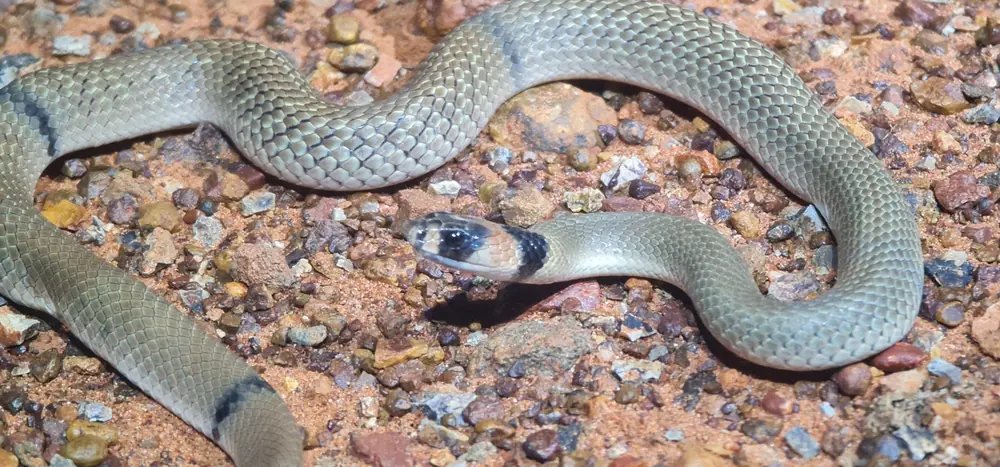
University of Queensland research describes a change in brown-snake venom alongside a change in diet. Young brown snakes specialise in reptile prey, while adults of several species broaden their diet to include mammals. The venom’s effects change too.
The 2017 study found an age-related shift towards venom that acts on blood clotting. It also found an exception: the ringed brown snake, Pseudonaja modesta, did not make that same shift as an adult.
This is a useful counterexample to a universal baby-versus-adult rule. It is not a way to predict the effects of a bite from the snake’s size or markings. The eastern brown snake profile and our juvenile appearance guide explain why a reference photograph may look different from the animal you saw.
Can baby snakes control their venom?
A common explanation says babies are more dangerous because they cannot control the amount they inject. Wildlife ecologists Damian Michael, Dale Nimmo and Skye Wassens identify that explanation as unsupported.
The brown-snake study above examines venom activity, not how much a juvenile chooses or manages to inject during a defensive bite. It should not be used as proof of venom control. Equally, the unsupported story is not evidence that every baby empties its venom glands whenever it bites.
Does a small snake need a different response?
No. Do not use small size or a young-looking pattern as reassurance. A photograph alone may not establish the animal’s age, and identifying a species does not make handling it safe.
For any suspected human snakebite, call 000 for an ambulance. Keep the person still and follow the Australian snakebite first-aid guidance and emergency operator’s instructions. Do not wait to establish the snake’s age or compare its venom with an adult’s.