Some young snakes change colour or lose conspicuous markings as they grow. An adult photograph may therefore be a poor match for a juvenile of the same species. The change depends on the species: there is no single “baby snake” pattern.
Eastern brown snakes: markings can fade
Young eastern brown snakes can have a dark patch on the head and neck, and some have dark bands along the body. The Australian Museum explains that these markings usually fade with maturity, although some populations retain bands into adulthood.
That means a banded young eastern brown may look quite different from a plain-coloured adult. It also means bands alone cannot establish that a snake is young, or that it is an eastern brown. The brown snake and lookalikes guide covers the broader identification problem.
Green pythons: a different colour as they grow
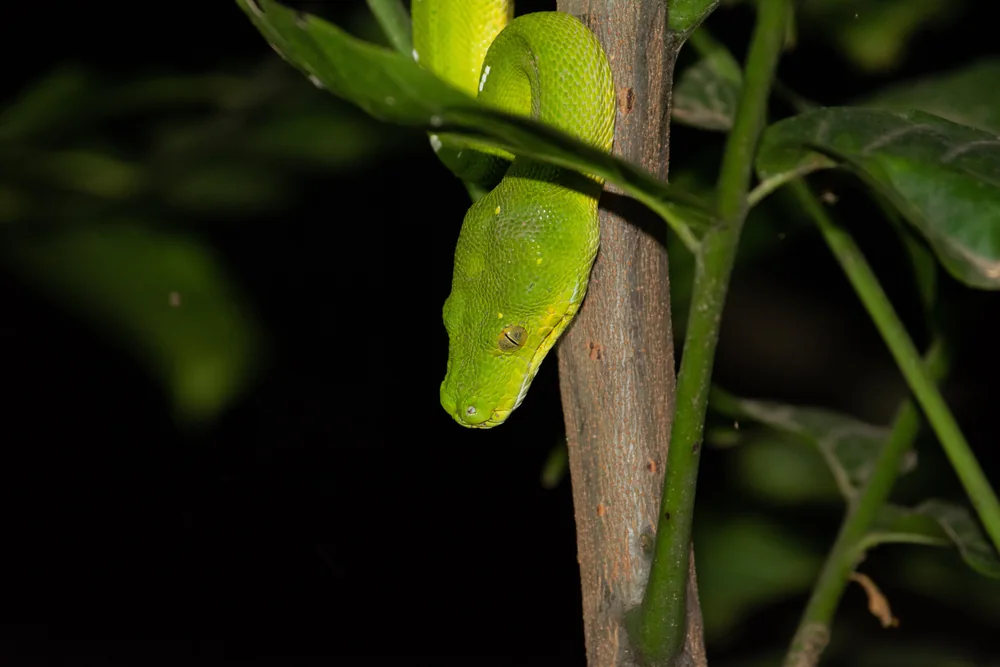
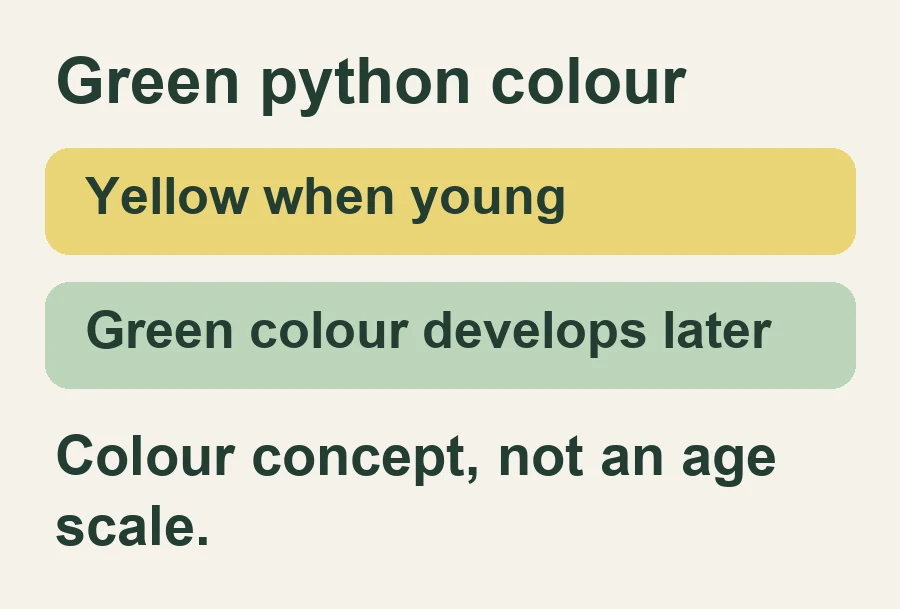
The green python provides a more striking example: young snakes can be yellow before developing their adult green colour. The Australian Reptile Park account describes this change in Morelia viridis.
There is evidence for a camouflage benefit in this species. Research by Wilson, Heinsohn and Endler found that juvenile and adult colours provide camouflage from bird predators in the different habitats used as the snakes grow. Colour change accompanies changes in where and how they forage.
That finding explains the value of the change in this python. It does not establish why every other snake’s juvenile markings change.
Breeding also varies between species. See which Australian snakes lay eggs or have live young.
What this means when comparing photographs
Check whether a reference shows a juvenile or an adult, and whether the species account describes age-related variation. Compare location and the full set of visible features as well as colour. A mismatch with one adult photograph is not enough to exclude a species.
Do not use a young-looking appearance as a safety test. Keep your distance from an unidentified snake, and use the photo identification guide if you already have an image taken safely. Our guide to baby snakes and venom examines the claim that young snakes are more dangerous than adults.