
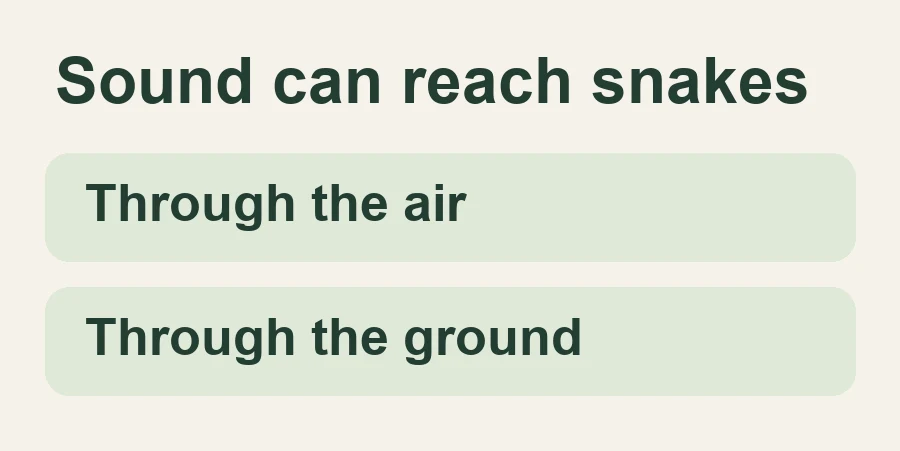
Yes, snakes can hear. They can respond to sound travelling through the air as well as vibrations through the ground. But hearing a sound and reliably moving away from it are different things. Making noise is not a dependable plan for dealing with a snake you have found.
No visible ears does not mean deaf
Snakes do not have external ears like ours. The University of Queensland’s explanation of its hearing research challenges the familiar idea that they can only detect footsteps through the ground.
In the 2023 Sound garden study, researchers observed 19 captive snakes across five genera in a controlled room. They tested three sound bands, including two that did not produce measured ground vibration. Responses to those sounds showed that the ground was not the only route involved.
Did every snake move away?
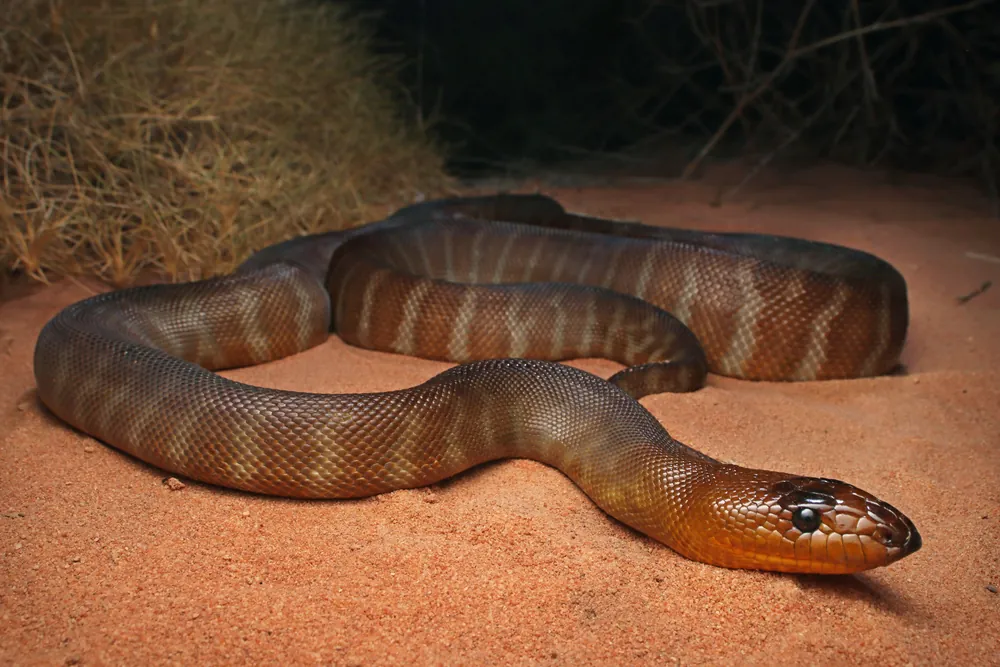
No. In the study, woma pythons tended to move away from one sound treatment and towards another. Taipans, brown snakes and death adders were more likely to move away from the sound source. The response depended on the group and the sound being played.
That matters when interpreting an encounter. A snake that stays still has not demonstrated that it cannot hear, and one that moves has not necessarily reacted in the way you intended.
What about shouting or snake-repellent devices?
The experiment was not a household test of shouting, stomping or a commercial repellent. Its authors identify captive animals as a limitation and call for controlled research on wild snakes, including repellent devices. It would be a leap to turn this study into a promise that noise keeps a garden clear.
Hearing research can help explain how snakes perceive their surroundings. It cannot tell you that a particular device will keep a particular property free of snakes. For another way snakes gather information, see why they flick their tongues.
What should you do with a snake nearby?
Give it space instead of approaching to test its reaction. Keep children and pets away. If it is indoors or needs removal, contact a qualified local catcher; the indoor snake guide covers that situation.
For practical changes around a property, see what attracts snakes to gardens. A sound experiment is useful evidence about perception, but it is not a replacement for managing shelter and access around the home.