
Food, cover and access to water can make a garden useful to snakes. The most practical changes are to reduce rodent food, tidy hiding places around the house and keep frequently used areas easy to see. These measures reduce opportunities for encounters; they cannot certify a yard as snake-free.


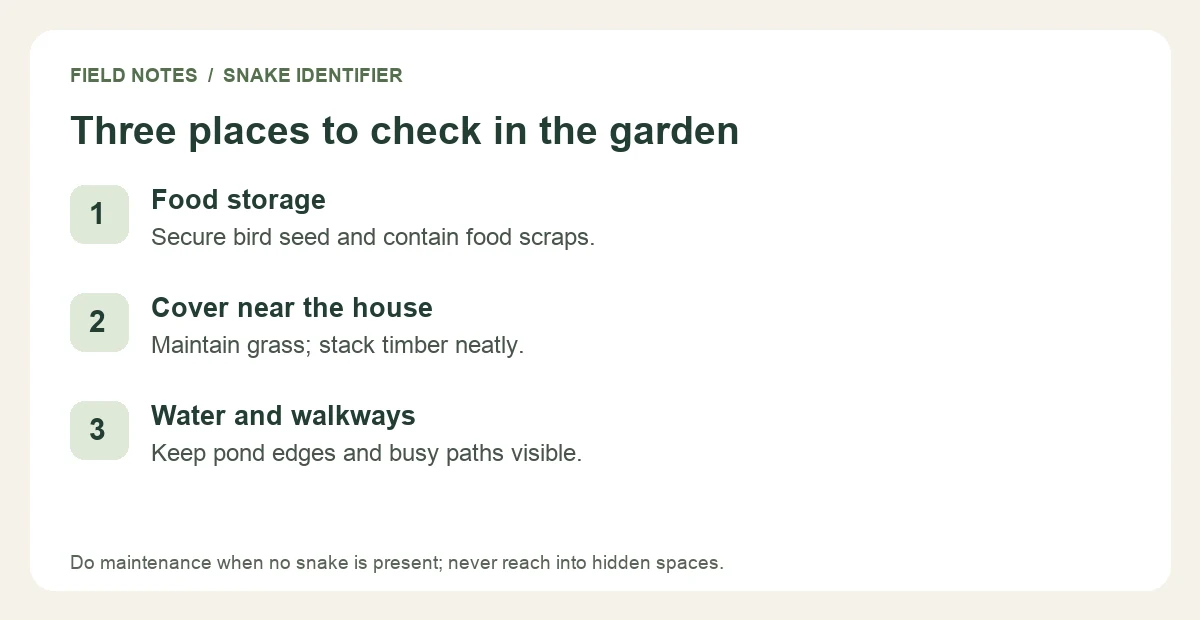
Start with food storage
Bird seed and food scraps can support rodents, which in turn provide food for snakes. Store seed in rodent-resistant containers and use a closed compost bin for scraps. Check feeding areas for spilled food. Queensland’s living-with-snakes guide also recommends making aviaries resistant to rats and snakes.
Make the space around the house easier to inspect
Maintain the lawn and stack timber neatly. Focus first on the route to the washing line, shed, bins and children’s play areas. Focus on visibility around busy areas; there is no need to clear the whole garden.
Do not put a hand under stored sheets, into hollow logs or through grass where you cannot see. Queensland Education’s prevention guidance recommends checking concealed spaces and doing grounds maintenance in colder months, when snakes are less active. Colder weather is not a guarantee that a hiding place is empty.


Keep water features visible
The South Australian snake-safety factsheet recommends maintaining the vegetation around ponds and pools so snakes can be seen from a distance. It also suggests placing wildlife water away from the house. Place water where people can give visiting wildlife space.
For a closer look at noise and repellent claims, see what snake hearing research actually shows.
If you see a snake while gardening
Stop the job and move away. Do not continue mowing towards it or dismantle the pile where it disappeared. Arrange professional removal if needed. For a snake that has entered a building, follow the indoor encounter steps.
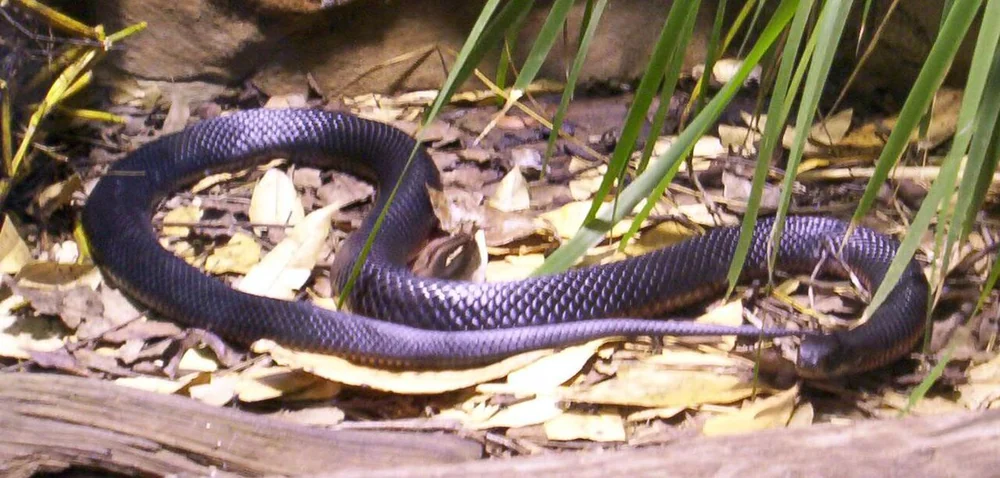
Browse the backyard snake profiles to learn about species that may visit gardens. If sightings recur, our home-range guide explains how snakes use an area and why another sighting may not be the same individual.
Related: A snake inside the house · Snakes near water
Sources checked 25 September 2026: Queensland Government: living with snakes; Queensland Education: preventing snake bites; SA Department for Environment and Water: snake safety; Australian Museum: Red-bellied Black Snake; Australian Museum: Eastern Brown Snake; NSW Environment and Heritage: snakes.
For a suspected bite in a dog or cat, read our pet snake-bite guide and seek immediate veterinary care.