
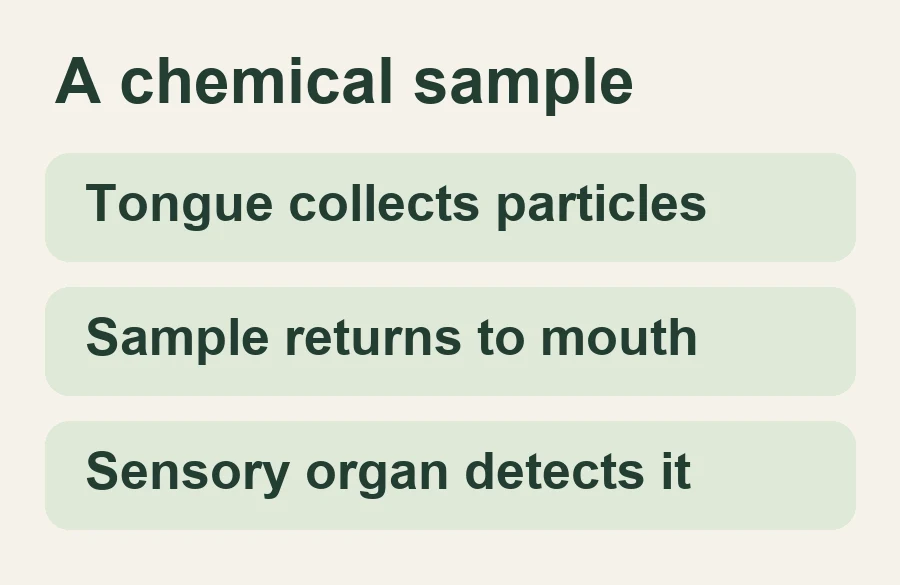
A snake flicks its tongue to collect chemical information about its surroundings. It is part of the animal’s sense of smell. The tongue picks up particles and brings them back into the mouth for a specialised sensory organ to detect.
How does the tongue help with smell?
Queensland Museum explains that odour particles stick to the extended tongue and are transferred to an organ in the roof of the mouth. The visible flick is the sampling step: the snake is gathering information from outside its body.
People often describe this as “tasting the air”. That is a useful everyday expression, but it can hide the distinction between collecting a sample and sensing it. The tongue carries the chemical material; the specialised organ processes the smell information.
Why is the tongue forked?
The two tips can sample different points at the same time. Research on forked tongues supports their role in following chemical trails, including those left by prey and other snakes. Comparing samples across a trail helps an animal locate it.

An Australian example: following ants
The Australian Museum’s blackish blind snake account describes tongue-flicking and following ant trails to nests. This small burrowing snake offers a clear example of chemical clues helping an animal find food.
The snake diet guide explains the different foods Australian species eat. Tongue-flicking helps explain the search for a meal, rather than telling us what every snake eats.

Does a flick mean it is about to bite?
Tongue-flicking by itself does not establish that. Collecting chemical information is not the same observation as striking or feeding. Describe the flick you saw without treating it as a reliable test of the snake’s intentions.
Snakes also detect other kinds of information. The hearing guide covers sound and ground vibrations.