
Australian snakes eat a wide range of animals, but each species has its own diet. Some hunt rodents; others feed on fish or tiny insect young. Their place in the environment includes both eating prey and being eaten by other animals.
Not every snake is a mouse-eater
Eastern brown snakes eat introduced rats and mice, as well as frogs, reptiles, birds and other mammals. The Australian Museum account describes a varied diet, rather than a rodent-only one. Read more about the difference between venomous and poisonous.

.jpg)
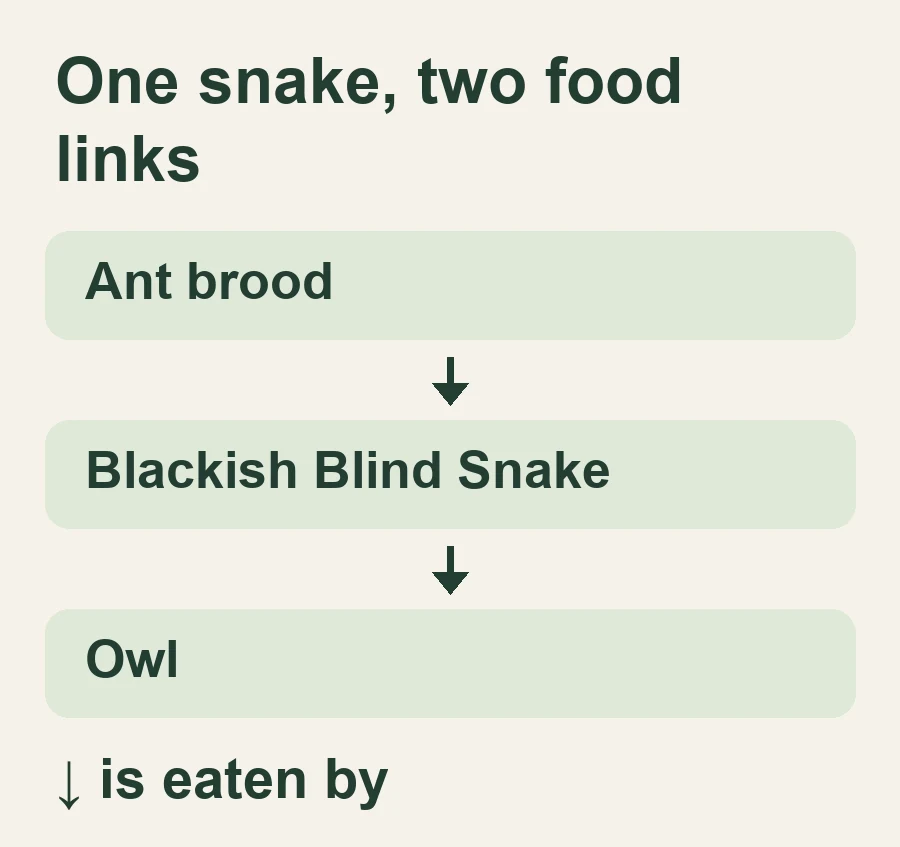
The blackish blind snake, Anilios nigrescens, offers a very different example. The Museum’s blind snake account describes following ant trails to nests and eating insect eggs and larvae among its food. A small burrowing snake is part of a different feeding story from a large snake hunting mammals. The tongue-flicking guide explains how chemical clues help a snake follow a trail.

At sea, the yellow-bellied sea snake eats fish. The species account describes it hunting at the water’s surface. For the mechanics of swallowing, see how snake jaws accommodate a meal.
Snakes are food for other animals too
Eastern brown snakes have birds of prey among their predators. Blind snakes are eaten by owls and other snakes, including bandy-bandies. These examples show why a snake is not simply the animal at the end of a food chain.
Queensland’s wildlife guidance describes snakes as important middle-order predators: they affect the animals they eat and provide food for predators above them. That role extends beyond whether a particular species eats pests around a house.
Does that mean you should keep one in your yard?
A snake’s ecological role is not a reason to catch, move or encourage one as pest control. If a snake appears, give it space. If removal is needed, contact a licensed local catcher.
For practical household measures, use the garden guide. Understanding the diet helps explain an encounter; it does not make handling the animal safe.