

Elapidae
Coastal Taipan
Oxyuranus scutellatus
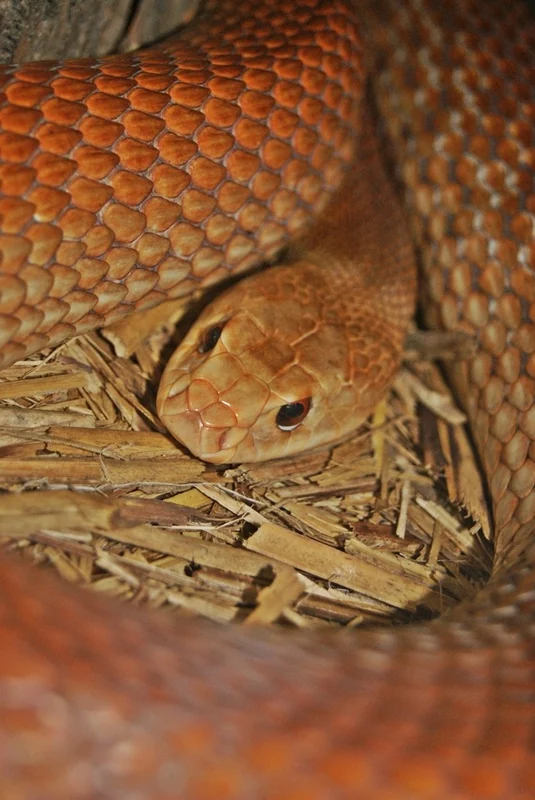
A large snake of northern and north-eastern Australia, often with a pale face and a noticeably narrower neck. Its body may be reddish-brown, dark brown or almost black. Colour alone can easily lead to confusion with brown snakes or mulga snakes.
Highly venomous
Identification and appearance
The long, deep head stands out from the neck. The face and especially the snout tend to be paler than the body; this contrast is often strongest in juveniles. The head can darken as the animal grows. Seasonal colour changes add further variation, so a single reference photograph cannot show every appearance.
Other names
Eastern Taipan
Typical length
Adults average about 2 m; a reliably measured captive animal reached 2.9 m. Larger reported lengths are less certain.
Body build
robust
Head appearance
deep, rectangular, distinct from neck
Key identification features
- Pale snout and face often contrast with body
- Deep head distinct from slender neck
- Large snake, frequently around two metres
Where it is found
From north-eastern NSW through Queensland and the northern Northern Territory to northern Western Australia. Occurrence is regional, not a continuous promise of presence along every part of that arc.
Habitat
Coastal Taipans inhabit warm, wetter coastal regions including monsoon forest, sclerophyll forest, woodland and grassy areas such as grazing paddocks and cane fields. They shelter in abandoned animal burrows, hollow logs and piles of vegetation or litter.
Activity
Mainly active by day, especially in the morning; it may hunt after dark in very hot conditions.
Diet
Mostly mammals such as rats and mice, with birds also recorded. Rodent-rich agricultural habitats can supply abundant prey.
Reproduction
Lays eggs. Published clutches commonly contain around eleven, with a wider recorded range of three to twenty-one.
Medical significance
Potentially life-threatening envenoming. Its appearance should never be tested by moving closer, provoking a response or attempting a capture.
What to do if you encounter one
Stop and allow ample room for retreat. In long grass or cane-country tracks, back away along a clear route without following the snake into vegetation. Use any photograph already taken from a safe distance rather than trying for a closer head shot.
Similar-looking snakes
A pale face and clear neck are supporting clues, not proof. Brown snakes and mulga snakes can look similar from above or in poor light.

Photo: Donald Hobern from Copenhagen, Denmark · CC BY 2.0 (Licence)
Elapidae
Eastern Brown Snake
Pseudonaja textilis
An Eastern Brown Snake is not always brown. Adults can be tan, orange-brown or nearly black, while young snakes may have striking dark bands. A relatively small head and slender body are more useful clues than the name alone.
Open identification guide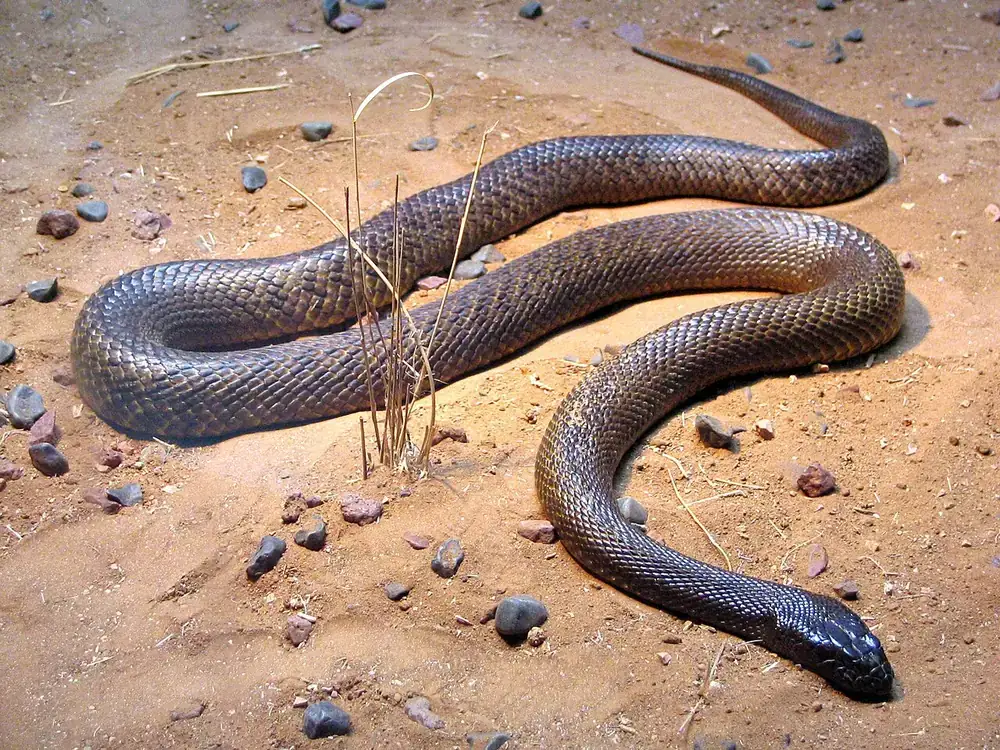
Photo: Photo by XLerate · CC BY-SA 3.0 (Licence)
Elapidae
Inland Taipan
Oxyuranus microlepidotus
A large brown snake of the remote Channel Country, strongly associated with cracking clay soils. The head is generally darker than the body, which can change noticeably with the season. It is unlikely to be the snake seen in an ordinary coastal backyard.
Open identification guide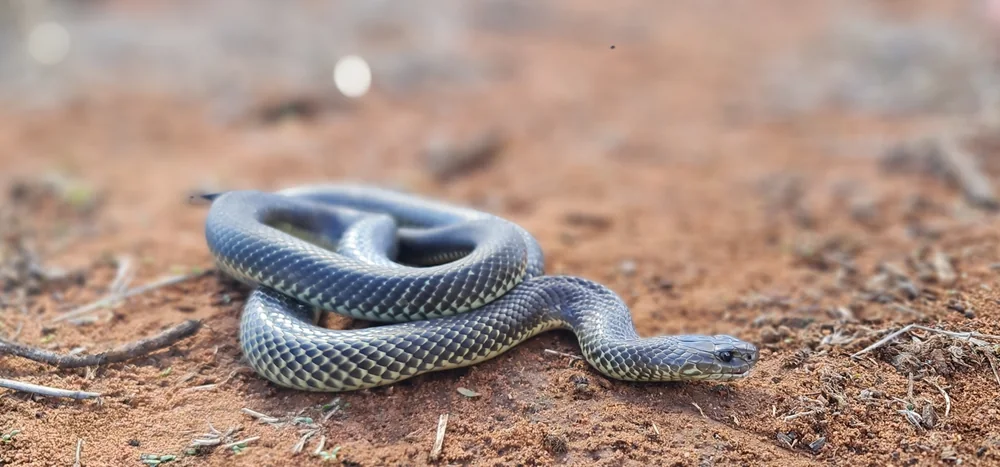
Photo: Max Tibby · CC0 1.0 (Licence)
Elapidae
Mulga Snake
Pseudechis australis
A large, variable snake widespread across most of Australia.
Open identification guideTaxonomy notes
Australian animals belong to the Australian form O. s. scutellatus; Papuan populations are not additional Australian species records.
Sources checked
- Australian Museum — Coastal Taipan (2026-09-25)
- AROD — Coastal Taipan (2026-09-25)
- Western Australian Museum — Taipan research (2026-09-25)
Still not sure?
Compare this snake with more clues.
A profile is a guide, not a reason to approach or handle a snake.