

Photographed in the Great Central Road area, Western Australia.
Elapidae
Western Desert Taipan
Oxyuranus temporalis
A very slender desert taipan with tan-brown to chocolate-brown upperparts, a paler head and sometimes faint herringbone lines. Confirmed material includes Western Australia; an older Central Ranges record near the NT region remains tentative.
Highly venomous
Identification and appearance
A very slender, elongate taipan with tan-brown to chocolate-brown upperparts, a paler beige-brown head and sometimes faint herringbone lines. Field confirmation requires specialists.
Other names
Central Ranges taipan
Typical length
AROD lists a species average of about 152 cm and a separately reported maximum of 180 cm.
Body build
slender
Head appearance
rounded snout
Key identification features
- Very slender and elongate body.
- Tan-brown to chocolate-brown upperparts, sometimes with faint herringbone lines.
- Paler beige-brown head and black iris.
Where it is found
Confirmed material includes Western Australia, including the Walter James Range and Great Victoria Desert. An older Central Ranges/NT record could not be confirmed because the specimen was lost; the SA border near the type locality is not a confirmed occurrence.
Habitat
Western Desert Taipans live in arid desert country in Western Australia.
Diet
Small mammals
Reproduction
Egg-laying.
Medical significance
For any suspected snakebite, call 000 and follow snakebite first aid. Do not wait for identification.
What to do if you encounter one
Keep well clear and leave a route towards cover. Do not chase, corner, handle or inspect it. If it is inside a building, keep people and pets away and contact a qualified local snake remover.
Similar-looking snakes
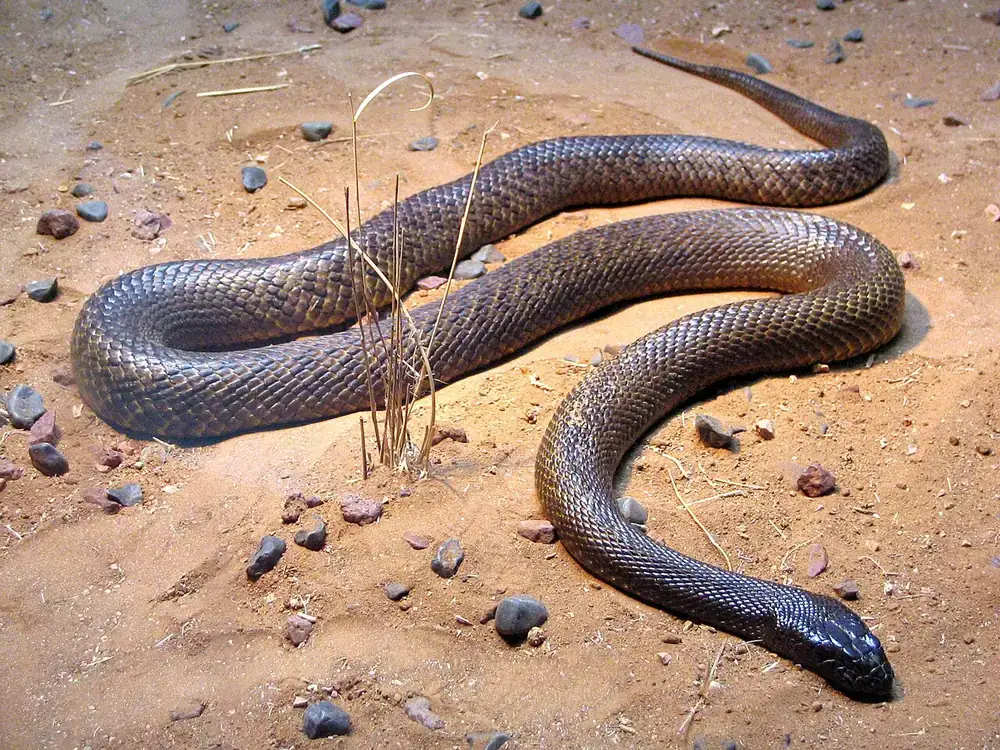
Photo: Photo by XLerate · CC BY-SA 3.0 (Licence)
Elapidae
Inland Taipan
Oxyuranus microlepidotus
A large brown snake of the remote Channel Country, strongly associated with cracking clay soils. The head is generally darker than the body, which can change noticeably with the season. It is unlikely to be the snake seen in an ordinary coastal backyard.
Open identification guide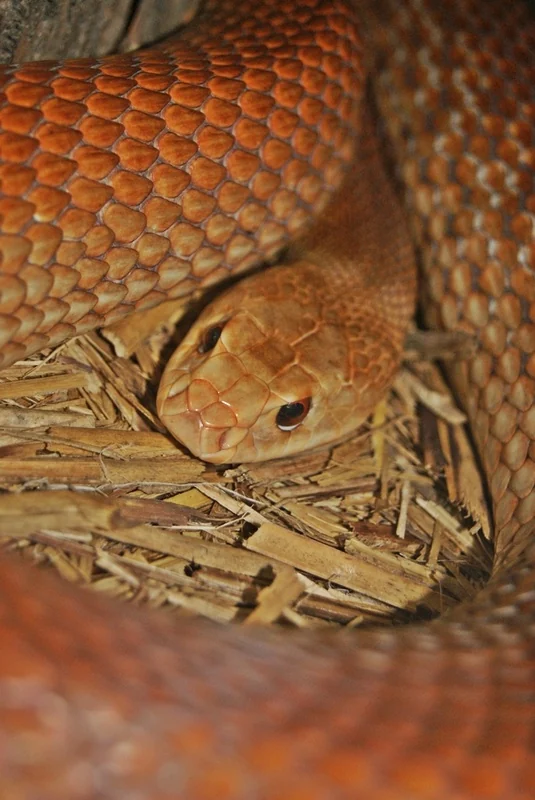
Photo: Danny S. · CC BY-SA 4.0 (Licence)
Elapidae
Coastal Taipan
Oxyuranus scutellatus
A large snake of northern and north-eastern Australia, often with a pale face and a noticeably narrower neck. Its body may be reddish-brown, dark brown or almost black. Colour alone can easily lead to confusion with brown snakes or mulga snakes.
Open identification guideTaxonomy notes
The 2012 redescription adds adult Great Victoria Desert material in WA. A historical Central Ranges record near the NT region was considered likely but could not be confirmed because the specimen was lost; SA is a border reference, not a confirmed occurrence.
Sources checked
Still not sure?
Compare this snake with more clues.
A profile is a guide, not a reason to approach or handle a snake.