
A snake beside a creek, dam or pool is not necessarily a harmless “water snake”. Several Australian species use freshwater habitats, including venomous snakes. The location is a clue to habitat, not a diagnosis of the species.
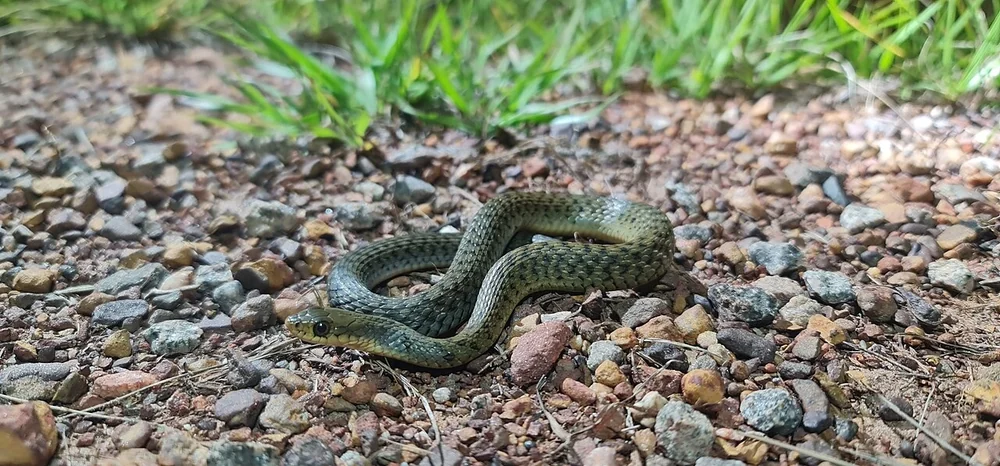

Keelbacks are one possibility in the north and northeast
The keelback is also called the freshwater snake. The Australian Museum places it around rivers and floodplains from the Kimberley across northern Australia to far northeastern NSW. That range is an important check: the name is not a default identification for a snake at a southern creek.
Keelbacks are non-venomous, but they resemble the venomous rough-scaled snake. Queensland’s keelback account expressly warns about this confusion. Do not try to resolve it by touching the scales or inspecting the animal at close range.
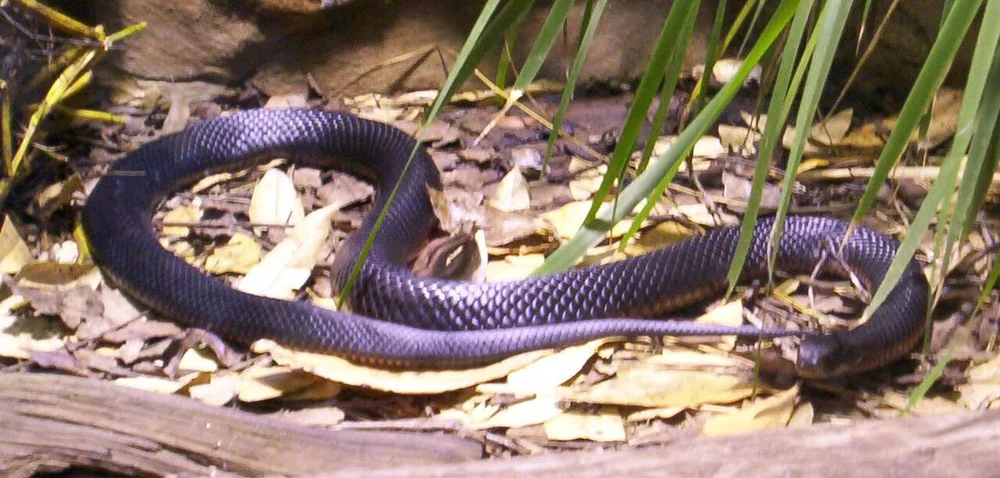
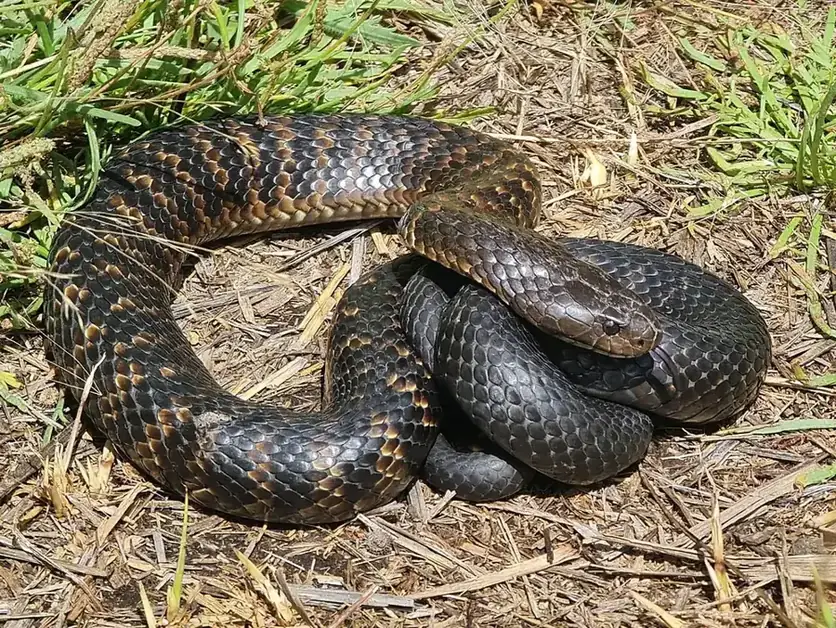
Red-bellied black snakes and tiger snakes use water too
The red-bellied black snake is associated with moist habitats and hunts both on land and in water. Tiger snakes also occur around wetlands and waterways. Either can be relevant within its own distribution; neither is present at every Australian pond.


What matters in an identification request
Include the town or region and specify the setting: freshwater creek, farm dam, backyard swimming pool or coast. Keep that detail separate from your interpretation. “Swimming in a dam” is an observation; “water snake” may be an assumption.

If there is a snake in a swimming pool
Keep people and pets clear and contact a qualified local catcher for advice. Do not get into the water or attempt to lift the snake with pool equipment.
Around a garden pond, maintain clear sightlines along the places people walk. The South Australian safety guide recommends keeping grass low and garden edges maintained near water features. You can make an encounter easier to avoid without trying to identify the animal first.
Browse more snakes found near water, including the Arafura file snake.
Flooding and beach strandings need different responses. Read about snakes after rain and flooding or finding a possible sea snake on a beach.
Related: Black snake comparisons · Garden attractants
Sources checked 25 September 2026: Australian Museum: the Australian keelback; Queensland Government: keelback; Australian Museum: Red-bellied Black Snake; Australian Museum: Tiger Snake; Australian Museum: Rough-scaled Snake; SA Department for Environment and Water: snake safety; NSW Environment and Heritage: snakes.