Skip to content

Discover Australia’s snakes. From a safe distance.Snake bite? Call 000

A creek, pond or wetland can help narrow a snake sighting, but it does not identify the snake on its own. This directory collects profiles whose researched habitat includes creeks or wetlands.

A shared habitat, different snakes

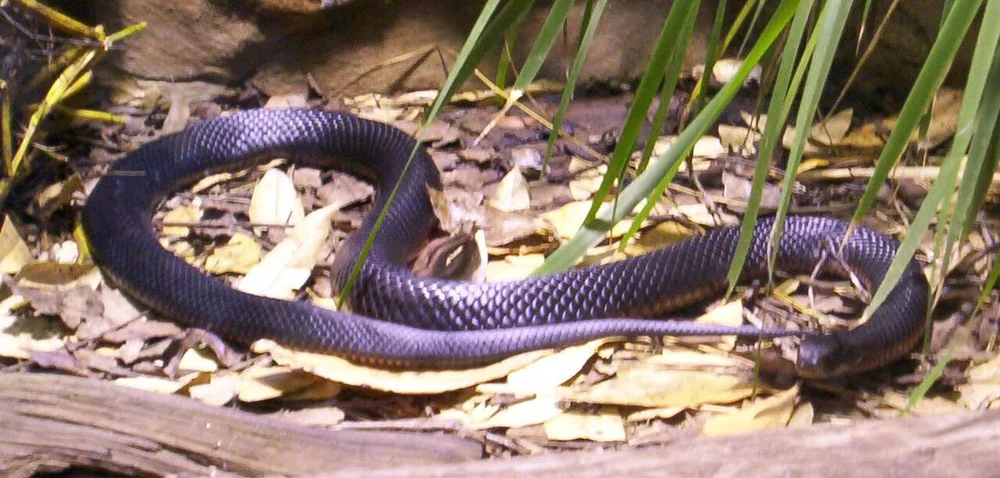
For example, Red-bellied Black Snakes are often found around freshwater, as described by the Australian Museum. Queensland’s regional snake guide also describes keelbacks near freshwater and coastal brackish areas. These examples should not be treated as an exhaustive shortlist for every region.

Compare your state, the surrounding habitat and visible markings. A snake swimming or resting beside water still needs the same space as one on dry land.

Compare a snake by location and appearance · Browse all snake profiles

Creek and wetland profiles

Selected from creek or wetland habitat records. This is a freshwater-edge browsing group, not a sea-snake directory or a guarantee of local occurrence.

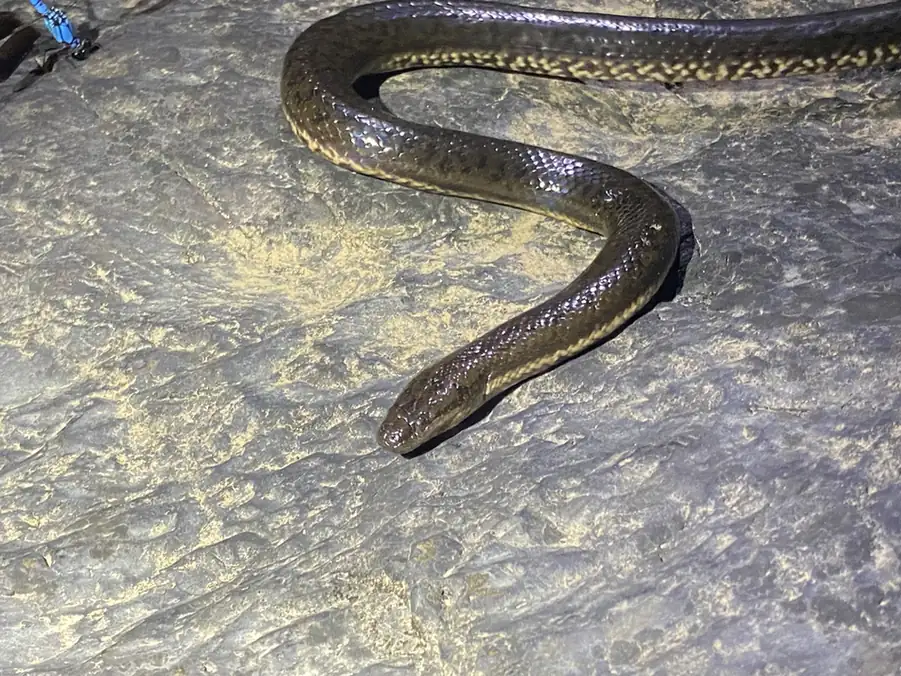
Arafura file snake underwater at Lawn Hill Creek, Queensland.

Photo: garywwilson · CC BY 4.0 (Licence)

Acrochordidae

Arafura File Snake

Acrochordus arafurae

The Arafura File Snake is an aquatic northern Australian snake with loose skin and a dark, mesh-like pattern. It lives mainly in freshwater streams and billabongs but also enters estuaries and the sea.

Non-venomous in the consulted field-guide source.

Open identification guide

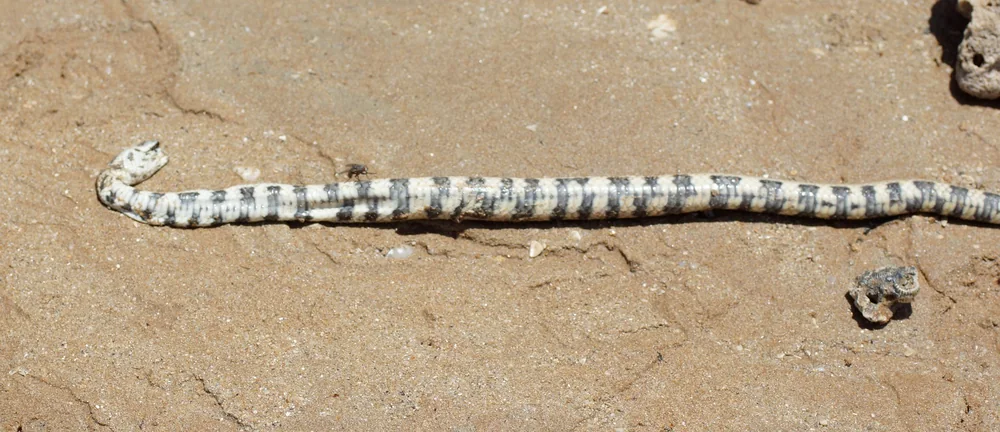
Black-and-white photograph of an Arafura Smooth Sea Snake lying in a loose curve on muddy ground.

Collected at Wickham Point, Northern Territory. Black-and-white journal photograph; whether the specimen was live or preserved when photographed is not stated. This image cannot show its living colour.

Photo: T. Parkin · CC BY 4.0 (Licence)

Elapidae

Arafura Smooth Sea Snake

Parahydrophis mertoni

A little-known venomous sea snake recorded in northern Australian coastal waters, including mangrove estuaries around Darwin.

Venomous

Open identification guide

Deceased Barkly death adder photographed on a road at Marrakai, Northern Territory. Body posture is not representative of a living snake.

Deceased Barkly death adder photographed on a road at Marrakai, Northern Territory. Body posture is not representative of a living snake.

Photo: Max Tibby · CC0 1.0 (Licence)

Elapidae

Barkly Death Adder

Acanthophis hawkei

Barkly Death Adder is a stout-bodied death adder associated with the black-soil plains of the Barkly Tableland and fragmented populations in western Queensland and the Northern Territory.

Highly venomous

Open identification guide

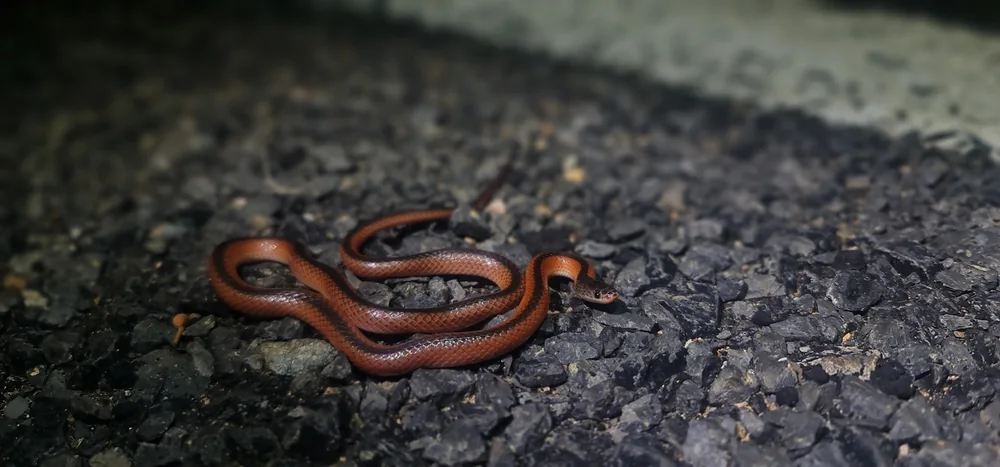
Black-striped Snake (Cryptophis nigrostriatus) coiled on gravel.

Photo: Max Tibby · CC0 1.0 (Licence)

Elapidae

Black-striped Snake

Cryptophis nigrostriatus

Black-striped Snake is recorded in north-eastern Queensland from Rockhampton to the Torres Strait; southern New Guinea is a separate foreign occurrence. It is slender, reddish-brown to pink above with a dark stripe along the body.

Venomous

Open identification guide

Bockadam (Cerberus australis) head close-up in shallow water.

Photo: Max Tibby · CC0 1.0 (Licence)

Homalopsidae

Bockadam

Cerberus australis

Bockadam is a northern Australian water snake recorded from coastal Queensland, the Northern Territory and Western Australia. Revised accounts describe variable grey to red colouration, with plain or partly patterned forms and a possible stripe behind the eye.

Weakly venomous (rear-fanged)

Open identification guide

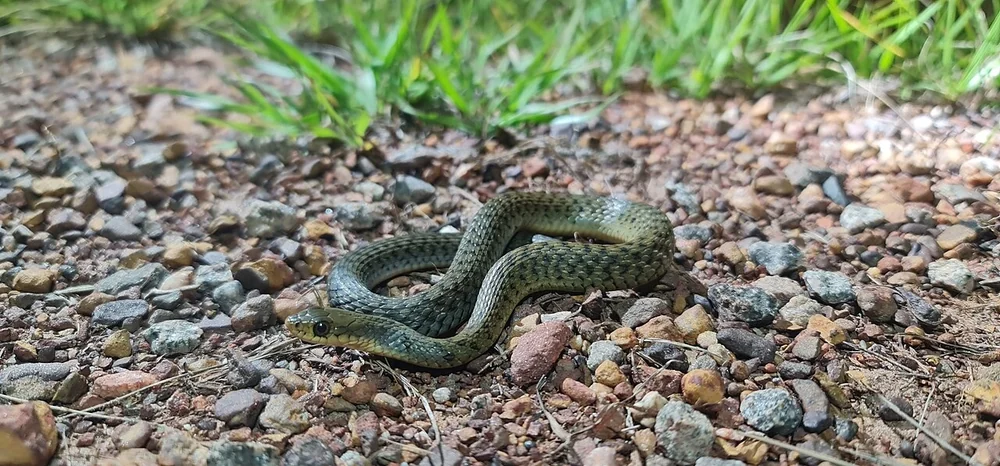
Common keelback coiled on gravel

Photo: Max Tibby · CC0 (Licence)

Colubridae

Common Keelback

Tropidonophis mairii

A small non-venomous snake often found around freshwater in northern and eastern Australia. Its grey or olive-brown body commonly carries broken dark bands. It closely resembles the venomous rough-scaled snake, so neither the waterside setting nor rough-looking scales proves an identification.

Non-venomous

Open identification guide

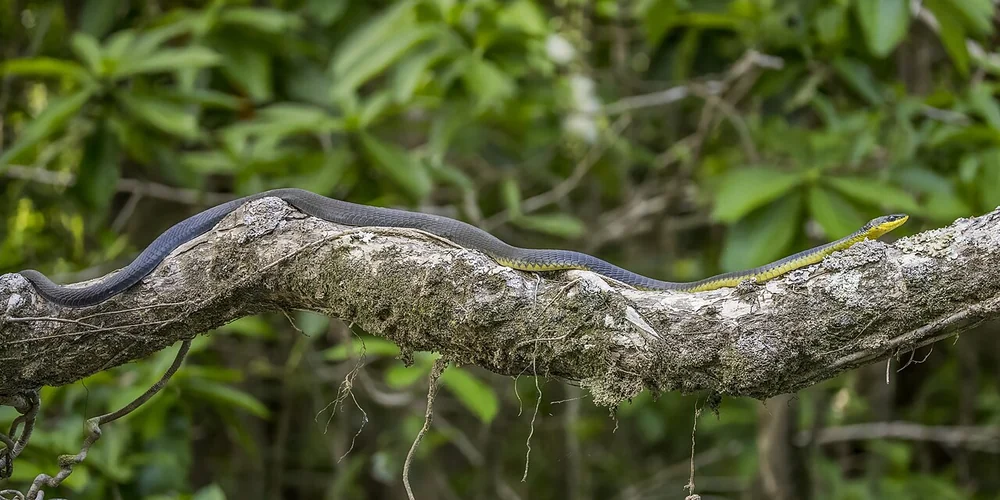
Common tree snake stretched along a branch in the Daintree rainforest

Photo: Charles J. Sharp · CC BY-SA 4.0 (Licence)

Colubridae

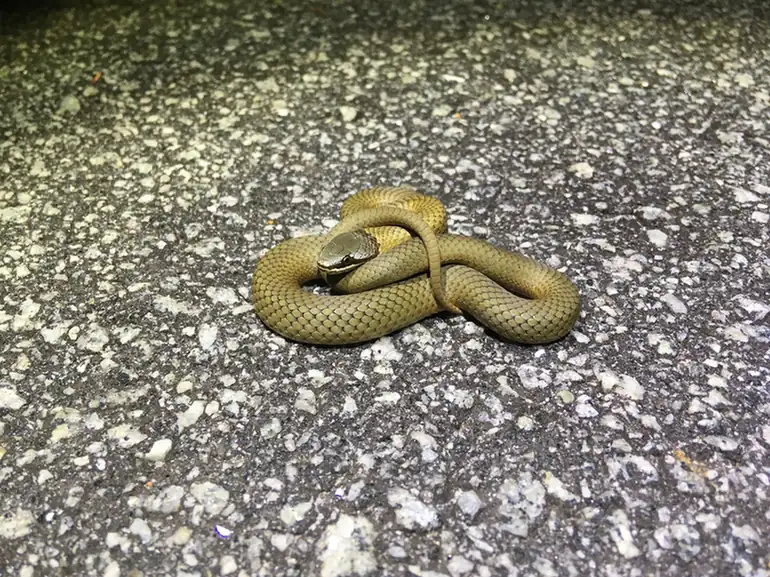
Green Tree Snake

Dendrelaphis punctulatus

A very slender, agile snake with a long tail, often seen moving through gardens or low branches. Despite the name it may be olive, brown, black or even blue. Green colour is only one possible appearance of this non-venomous species.

Non-venomous

Open identification guide

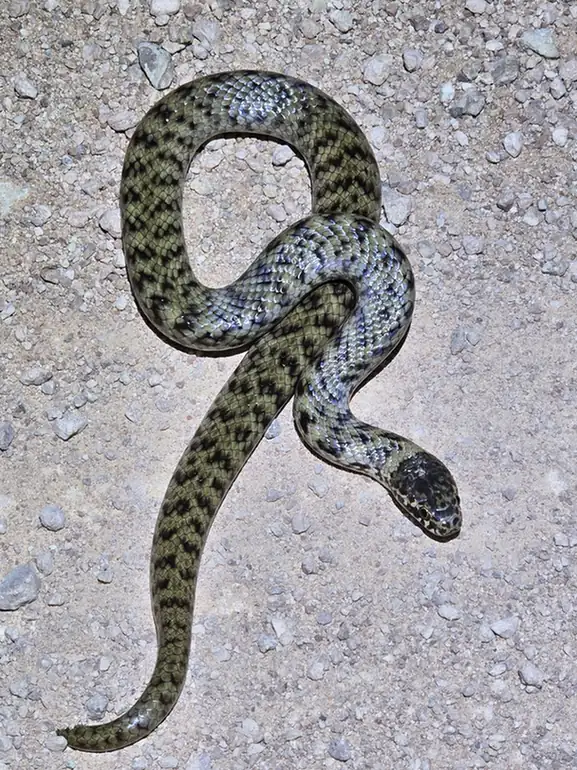
Grey Snake (Hemiaspis damelii) on pavement.

Photo: Max Tibby · CC0 1.0 (Licence)

Elapidae

Grey Snake

Hemiaspis damelii

A plain grey to olive-grey snake associated with floodplains and temporary wetlands in NSW and Queensland. Young snakes have a dark head marking that reduces with age.

Venomous

Open identification guide

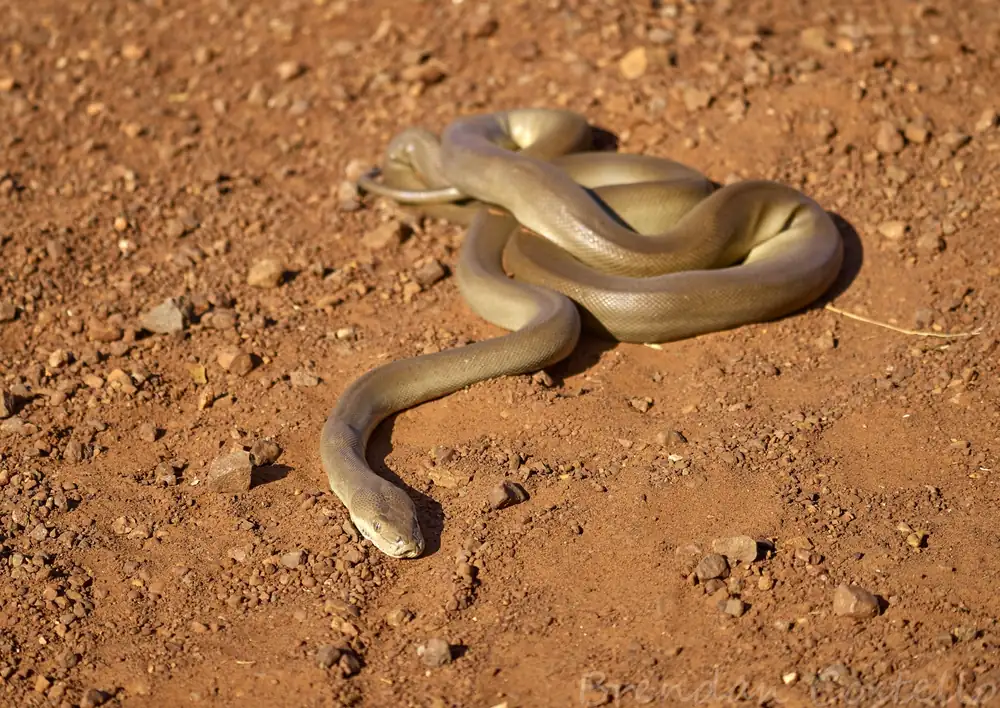
Olive Python (Liasis olivaceus) coiled on soil.

Photo: Brendan Costello · CC BY 4.0 (Licence)

Pythonidae

Olive Python

Liasis olivaceus

A very large olive python of drier northern Australia. The Pilbara subspecies occurs in Western Australia, while the species-level range also includes the Northern Territory and Queensland.

Non-venomous

Open identification guide

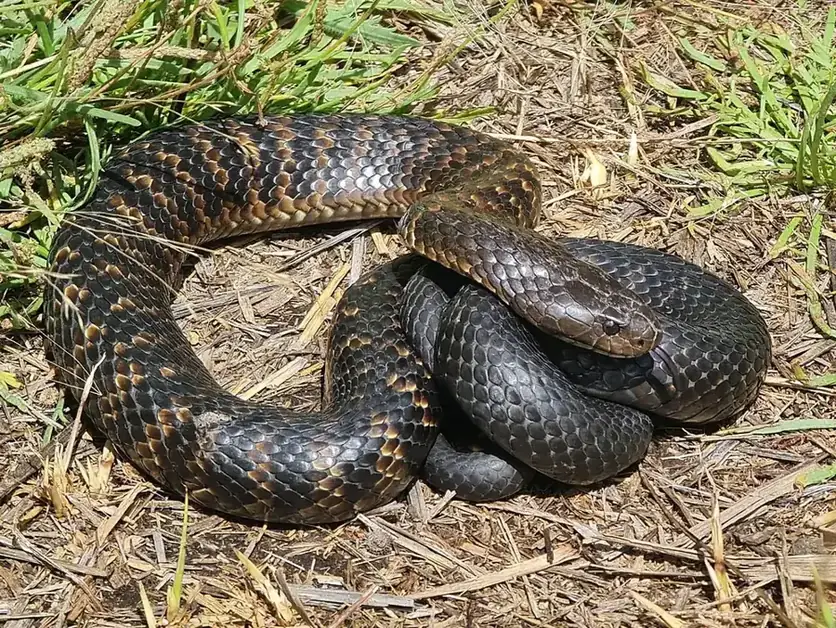
Tiger snake showing banded body and broad head on grass

Photo: Max Tibby · CC0 (Licence)

Elapidae

Tiger Snake

Notechis scutatus

Tiger snakes may be banded, faintly marked or completely plain. They are robust snakes associated with many southern wetlands, but also occur in drier habitats. A black snake in Tasmania, or one without stripes, can still be a tiger snake.

Highly venomous

Open identification guide