
Typhlopidae
Black-tailed Blind Snake
Anilios guentheri
A slender blind snake with a dark tail, recorded in the Northern Territory and Western Australia.
Non-venomous
A short snake may be a small adult or a youngster of a larger species. Browse these examples, then compare location, markings and the full identification notes.
Each example has a size account or reported total-length figure of 60 cm or less. The note beside each profile explains whether it comes from a museum account, a measured specimen series or a secondary reference. Some figures rely on limited observations and may be incomplete.
These are browsing examples, not a complete list of small species or established adult-size limits. A sample maximum is only the largest animal in that sample. Known conflicting records are excluded.
Young snakes can belong to much larger species. Size does not establish venom status or make a snake safe to approach or handle.
Compare a snake by location and appearance · Browse all snake profiles
Read the source and measurement basis beside each profile. These examples are not an exhaustive classification or a guide to safety.
Typhlopidae
Anilios guentheri
A slender blind snake with a dark tail, recorded in the Northern Territory and Western Australia.
Non-venomous
Secondary reported maximum: AROD reports a maximum total length of 40 cm. This secondary figure is not an established adult-size limit. Storr (1981) measured a total-length sample maximum of 28.8 cm (10 specimens); that sample does not establish a species maximum.
Sources: AROD — secondary size report · Storr (1981) — measured series

Photo: dhfischer · CC BY 4.0 (Licence)
Typhlopidae
Anilios endoterus
A small inland blind snake recorded across five mainland states.
Non-venomous
Secondary reported maximum: AROD reports a maximum total length of 40 cm. This secondary figure is not an established adult-size limit. Storr (1981) measured a total-length sample maximum of 37.6 cm (10 specimens); that sample does not establish a species maximum.
Sources: AROD — secondary size report · Storr (1981) — measured series
Typhlopidae
Anilios broomi
A very small blind snake from north-east Queensland, with a possible additional South Australian record needing reconciliation.
Non-venomous
Secondary reported maximum: AROD reports a maximum total length of 25 cm. This secondary figure is not an established adult-size limit.
Sources: AROD — secondary size report
Typhlopidae
Anilios kimberleyensis
A slender blind snake of the Kimberley and adjacent Northern Territory, with a flat head and rounded snout.
Non-venomous
Secondary reported maximum: AROD reports a maximum total length of 30 cm. This secondary figure is not an established adult-size limit. Storr (1981) measured a total-length sample maximum of 29.6 cm (2 specimens); that sample does not establish a species maximum.
Sources: AROD — secondary size report · Storr (1981) — measured series
Typhlopidae
Anilios diversus
The Northern Blind Snake is a small, pale blind snake recorded from northern Australia, including the Northern Territory, Queensland and Western Australia.
Non-venomous
Secondary reported maximum: AROD reports a maximum total length of 35 cm. This secondary figure is not an established adult-size limit. Storr (1981) measured a total-length sample maximum of 35.2 cm (22 specimens); that sample does not establish a species maximum.
Sources: AROD — secondary size report · Storr (1981) — measured series
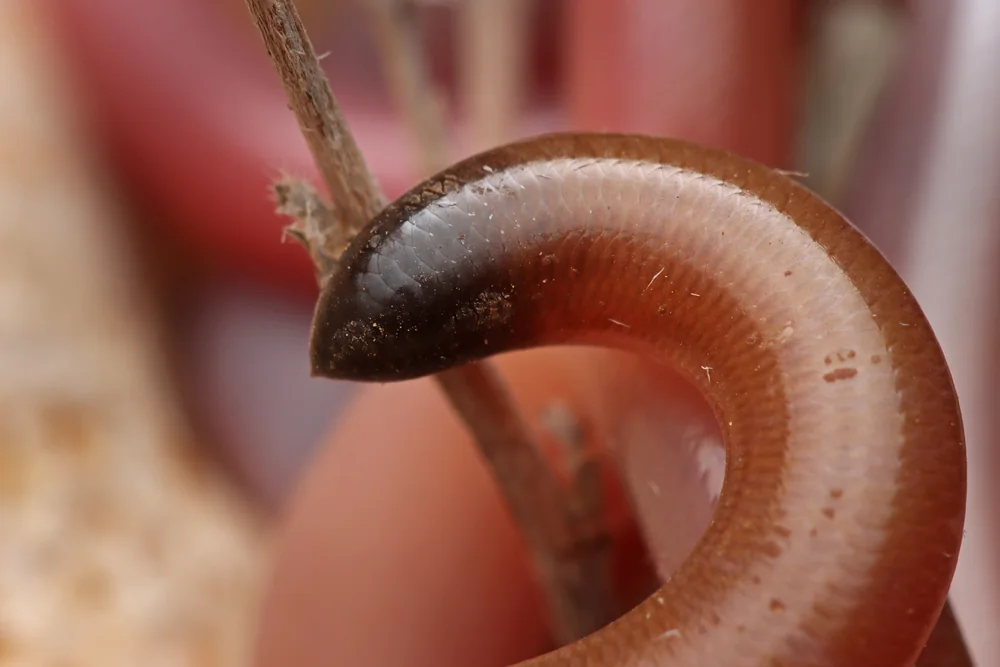
Photo: Connor Margetts · CC0 1.0 (Licence)
Typhlopidae
Anilios grypus
The Northern Long-beaked Blind Snake is a very slender blind snake from northern Australia, recognised in specialist descriptions by its beaked snout and dark tail.
Non-venomous
Secondary reported maximum: AROD reports a maximum total length of 45 cm. This secondary figure is not an established adult-size limit. Storr (1981) measured a total-length sample maximum of 41.5 cm (53 specimens); that sample does not establish a species maximum.
Sources: AROD — secondary size report · Storr (1981) — measured series
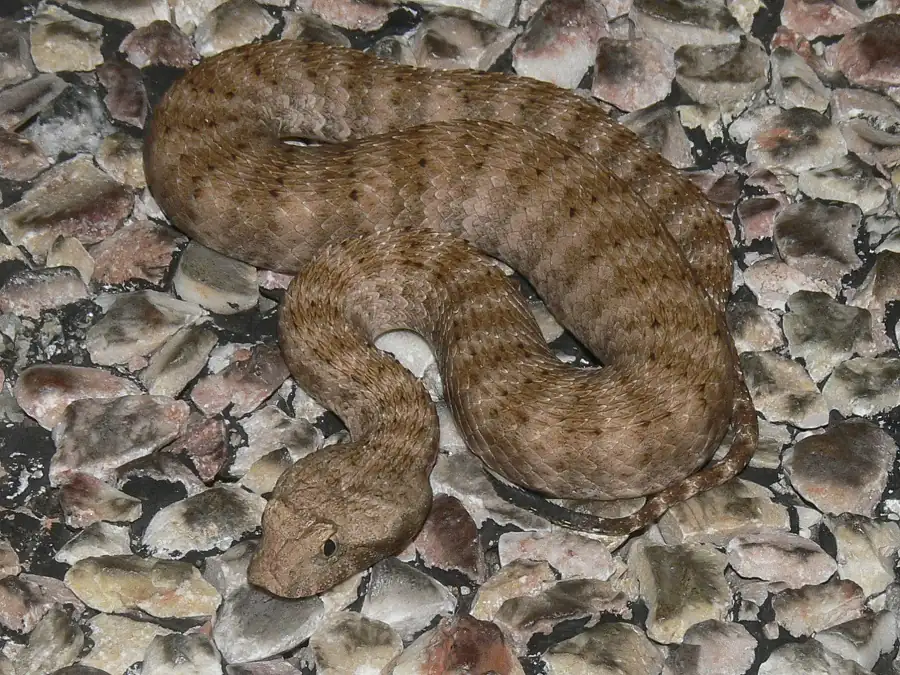
Photo: dhfischer · CC BY 4.0 (Licence)
Elapidae
Acanthophis wellsi
Pilbara Death Adder is a banded death adder recorded from stony soils in the Pilbara region of Western Australia.
Dangerously venomous
Measured-series total maximum: Aplin and Donnellan (1999) recorded a maximum total length of 52 cm among 35 measured specimens. This is a sample maximum, not a species-wide or adult-size limit.
Sources: Aplin and Donnellan (1999), Table 1

Photo: Noah Kirkland · CC BY 4.0 (Licence)
Elapidae
Antaioserpens albiceps
Plain-nosed Burrowing Snake is recorded in north-eastern Queensland. It is orange to brown with a dark nape band, head flecks and a reticulated appearance from dark-edged scales.
Venomous
Secondary reported maximum: AROD reports a maximum total length of 40 cm. This secondary figure is not an established adult-size limit.
Sources: AROD — secondary size report
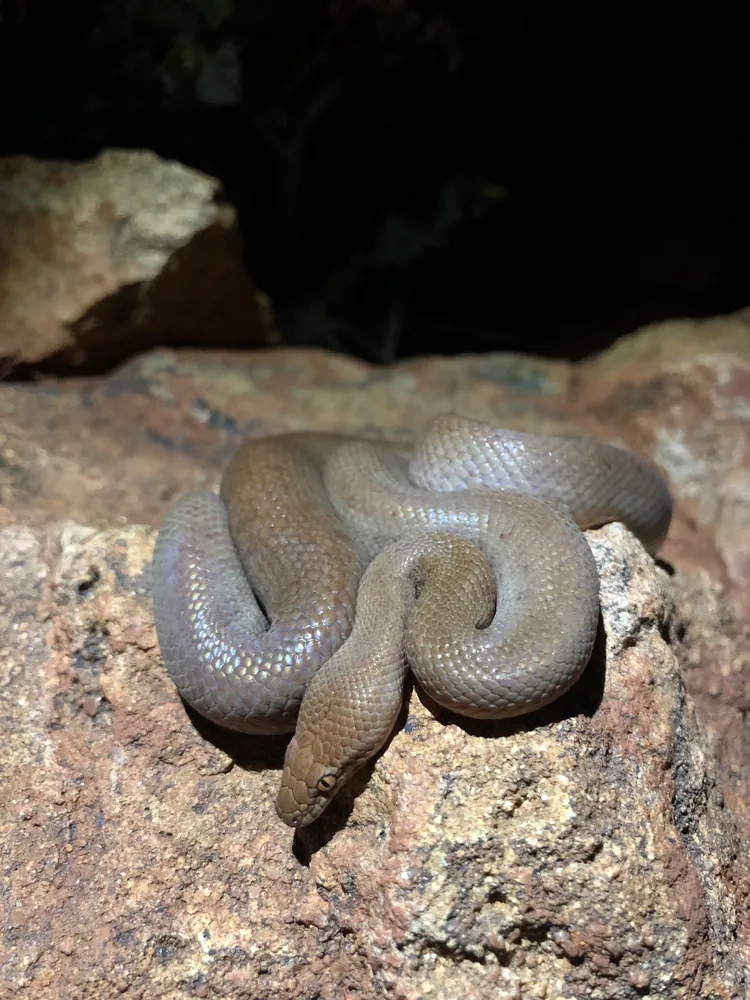
Photo: Connor Margetts · CC BY 4.0 (Licence)
Pythonidae
Antaresia perthensis
The Pygmy Python is a very small Western Australian python with reddish-brown colouring and irregular darker spots. It is associated with rocky scrub and termite mounds in the Pilbara region.
Non-venomous
Museum size account: WA Museum describes this python as typically growing up to 60 cm. This is a museum size account, not an absolute maximum.
Sources: WA Museum — Pygmy Python
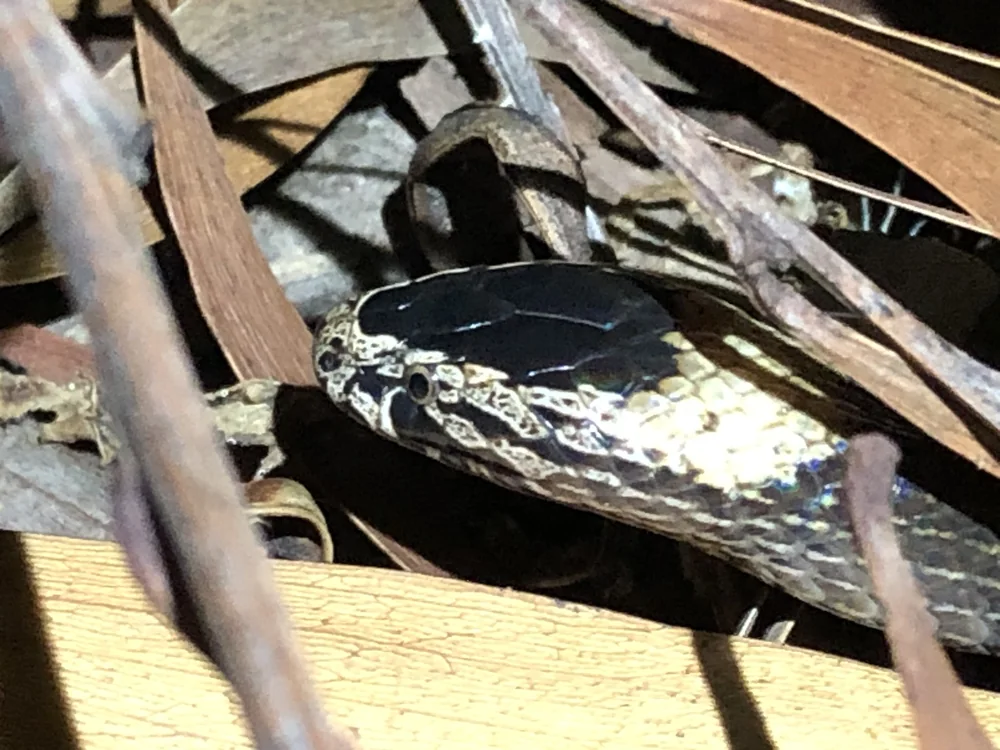
Photo: Greg Tasney · CC BY-SA 4.0 (Licence)
Elapidae
Cacophis harriettae
The White-crowned Snake is a small dark snake of moist eastern Australian habitats. It has a broad white collar across the nape and a dark head.
Venomous
Secondary reported maximum: AROD reports a maximum total length of 56 cm. This secondary figure is not an established adult-size limit. Queensland Government describes growth to 40 cm; this supports a small-size example but does not confirm the exact 56 cm figure.
Sources: AROD — secondary size report · Queensland Government — size account