Skip to content

Discover Australia’s snakes. From a safe distance.Snake bite? Call 000

State guide

Snakes recorded in VIC

Use the identifier with a location clue, then compare the profiles below.

Use the identifier

Profiles for this area

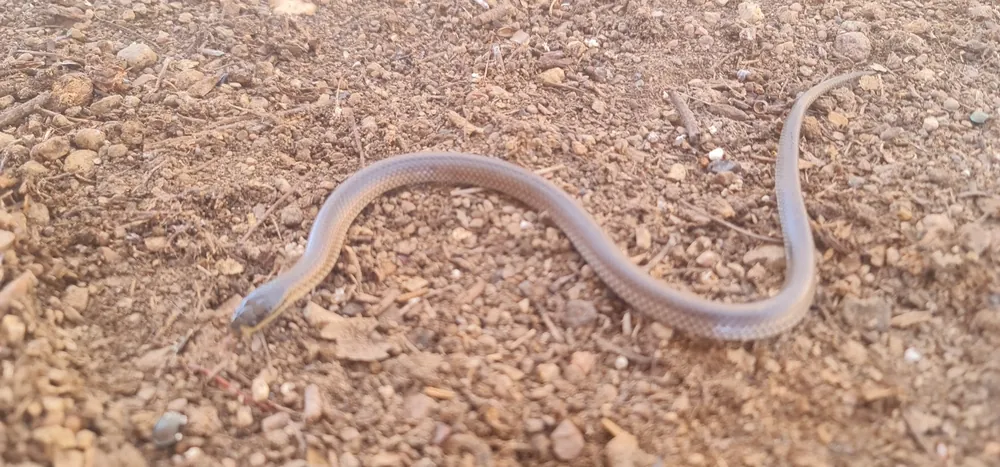
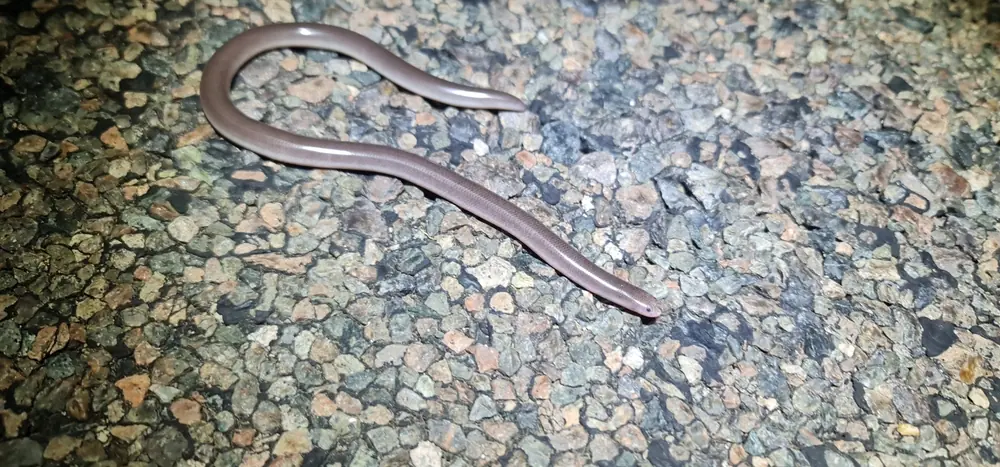
Anilios ligatus photographed on gravel at Basalt, Queensland.

Photo: Max Tibby · CC0 1.0 (Licence)

Typhlopidae

Robust Blind Snake

Anilios ligatus

The Robust Blind Snake is a widespread Australian blind snake with a moderately stout body. Specialist descriptions separate it from similar forms using the rounded snout and head scales.

Non-venomous

Open identification guide

Fat blind snake (Anilios pinguis) photographed on bare ground at Muja, Western Australia.

Photo: David Thompson · CC BY 4.0 (Licence)

Typhlopidae

Fat Blind Snake

Anilios pinguis

The Fat Blind Snake is a stout blind snake recorded from South Australia, Victoria and Western Australia in the current Reptile Database account. AROD uses the older common name Rotund Blind Snake.

Non-venomous

Open identification guide

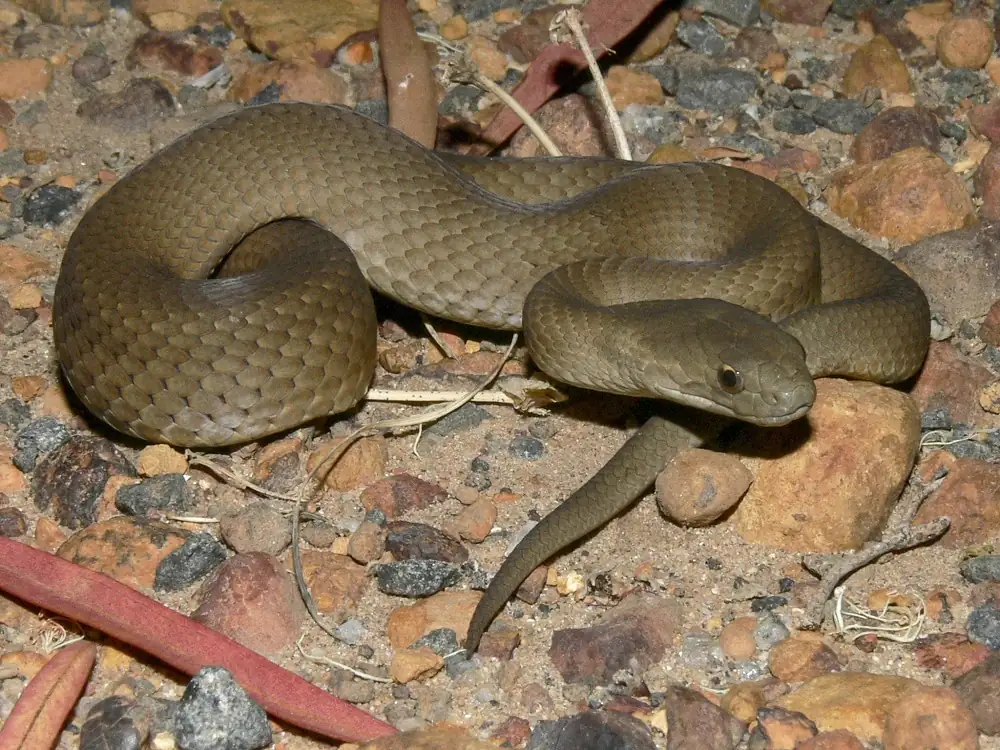
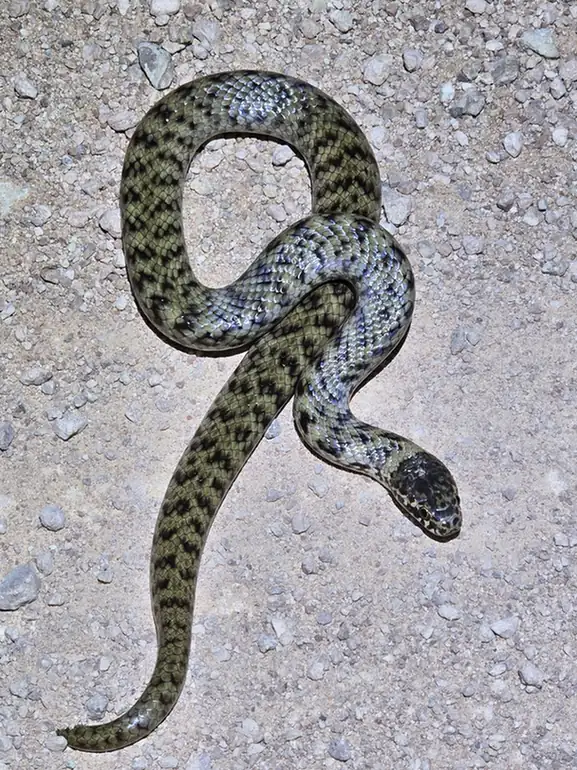
Bardick (Echiopsis curta) coiled on gravel.

Photo: dhfischer · CC BY 4.0 (Licence)

Elapidae

Bardick

Echiopsis curta

A short, stout snake with a broad head and generally plain olive-brown, brown or reddish-brown upperparts. Its separated populations include south-western NSW, Victoria, South Australia and Western Australia.

Venomous

Open identification guide

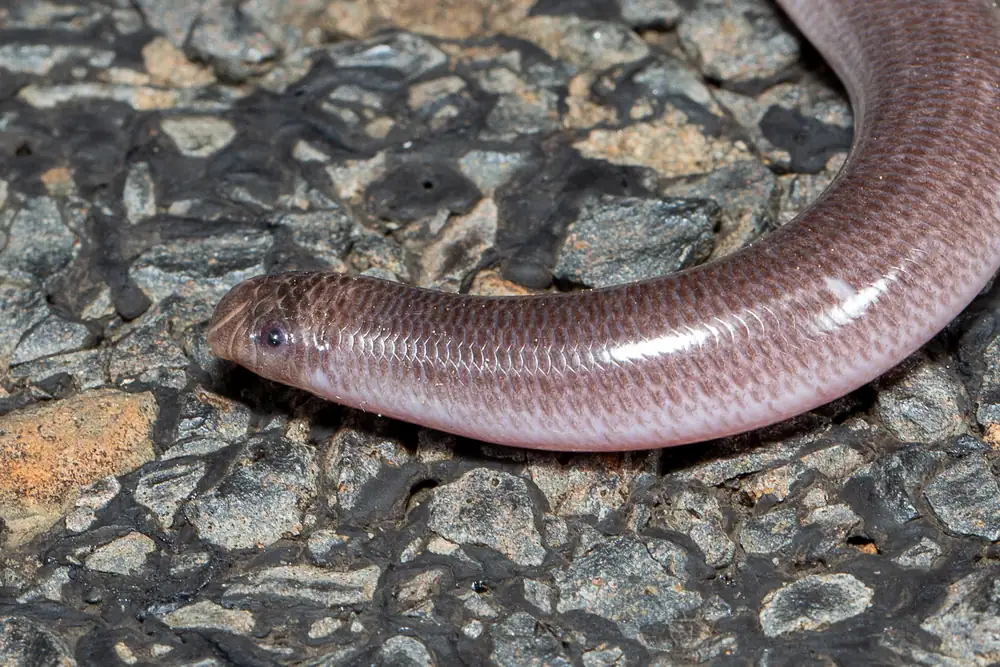
Deceased Blackish Blind Snake (Anilios nigrescens) specimen lying on a road.

Blackish Blind Snake (Anilios nigrescens), photographed dead on a road.

Photo: Max Tibby · CC0 (Licence)

Typhlopidae

Blackish Blind Snake

Anilios nigrescens

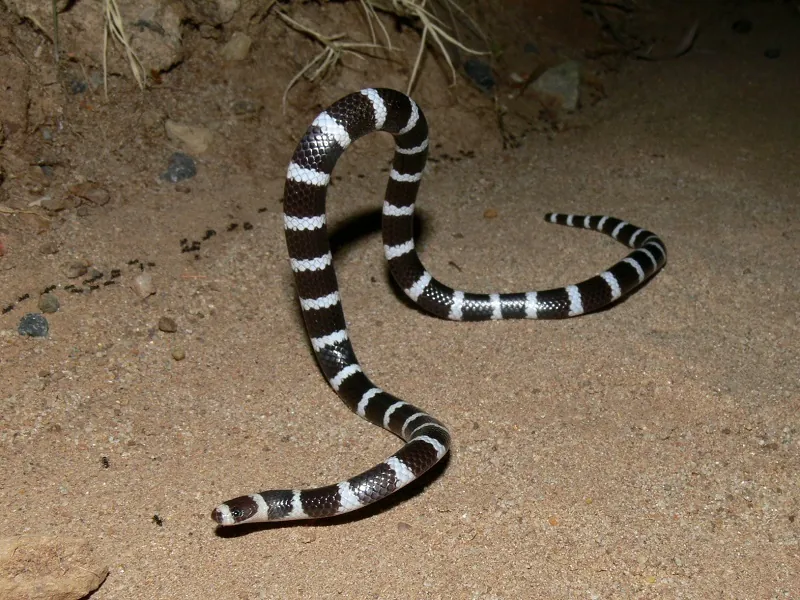
A glossy, worm-like burrowing snake from eastern Australia. It has a nearly uniform body thickness, tiny eyes and a very short tail. Recognising a blind snake is usually easier than telling which blind-snake species it is.

Non-venomous
Open identification guide

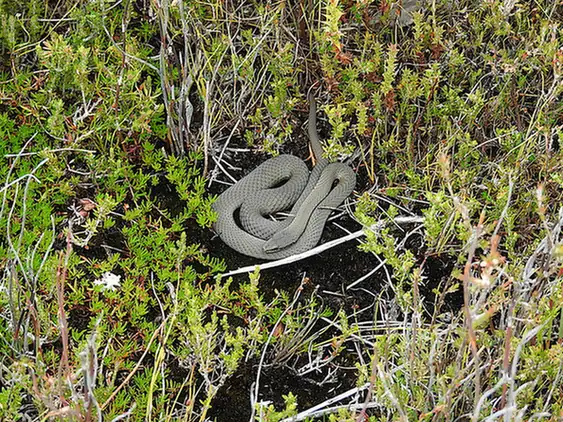
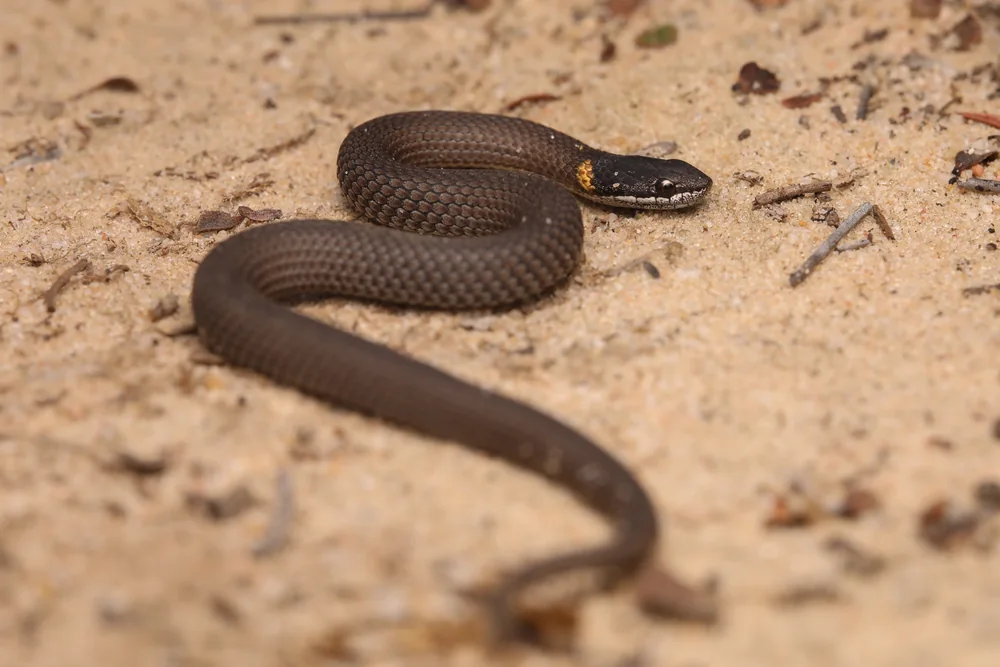
White-lipped Snake (Drysdalia coronoides) coiled among low shrubs.

Photo: george_vaughan · CC0 1.0 (Licence)

Elapidae

White-lipped Snake

Drysdalia coronoides

White-lipped Snake is recorded across south-eastern Australia, including Tasmania and New South Wales. It varies from olive-brown and grey to reddish brown or dark grey, with a white stripe on the upper lip and no pale or dark nape band.

Venomous

Open identification guide

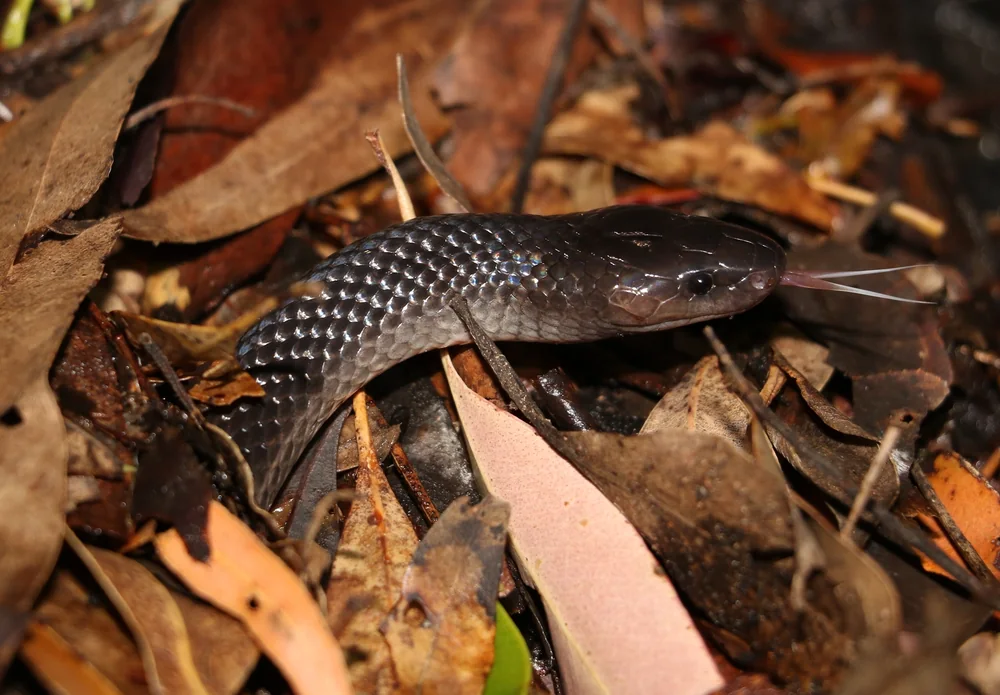
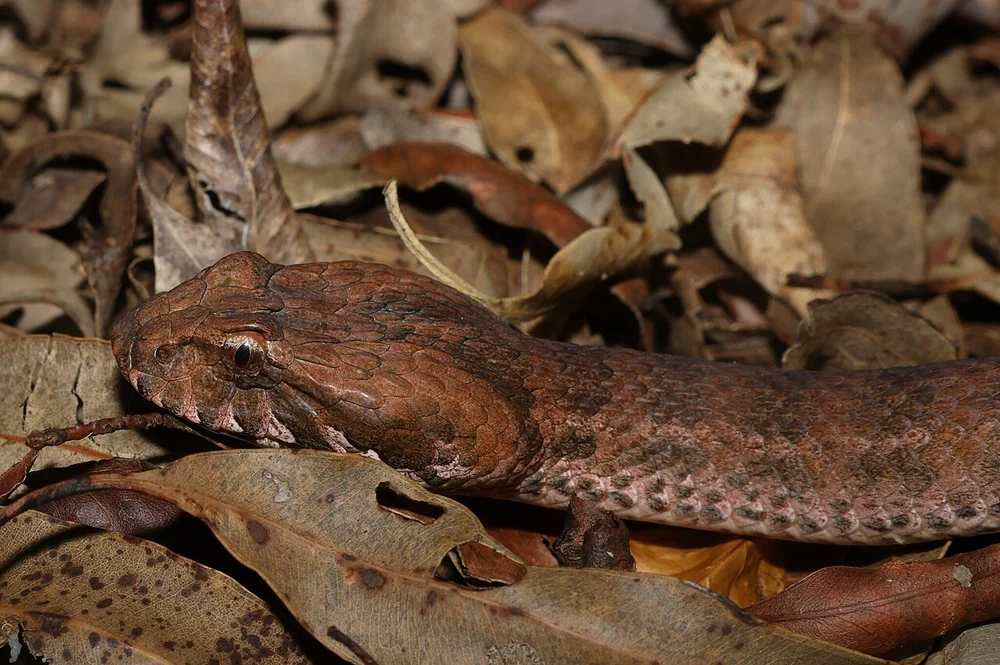
Common death adder among dry leaves

Photo: Greg Tasney · CC BY-SA 4.0 (Licence)

Elapidae

Common Death Adder

Acanthophis antarcticus

A short, heavy-bodied snake with a broad head and a fine tail. Death adders often remain concealed in leaf litter instead of moving away early. Their camouflage and habit of waiting for prey make the shape of the whole animal particularly useful to notice.

Highly venomous

Open identification guide

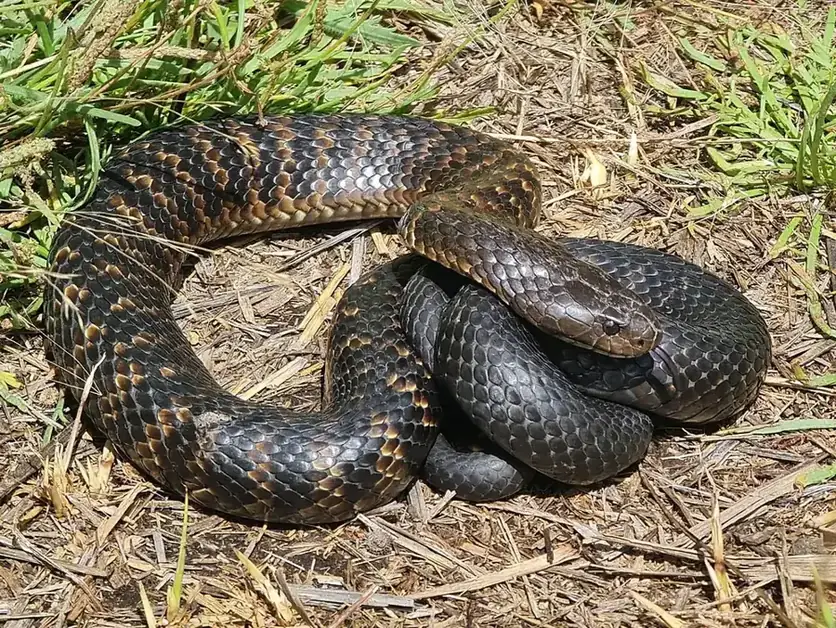
Tiger snake showing banded body and broad head on grass

Photo: Max Tibby · CC0 (Licence)

Elapidae

Tiger Snake

Notechis scutatus

Tiger snakes may be banded, faintly marked or completely plain. They are robust snakes associated with many southern wetlands, but also occur in drier habitats. A black snake in Tasmania, or one without stripes, can still be a tiger snake.

Highly venomous

Open identification guide

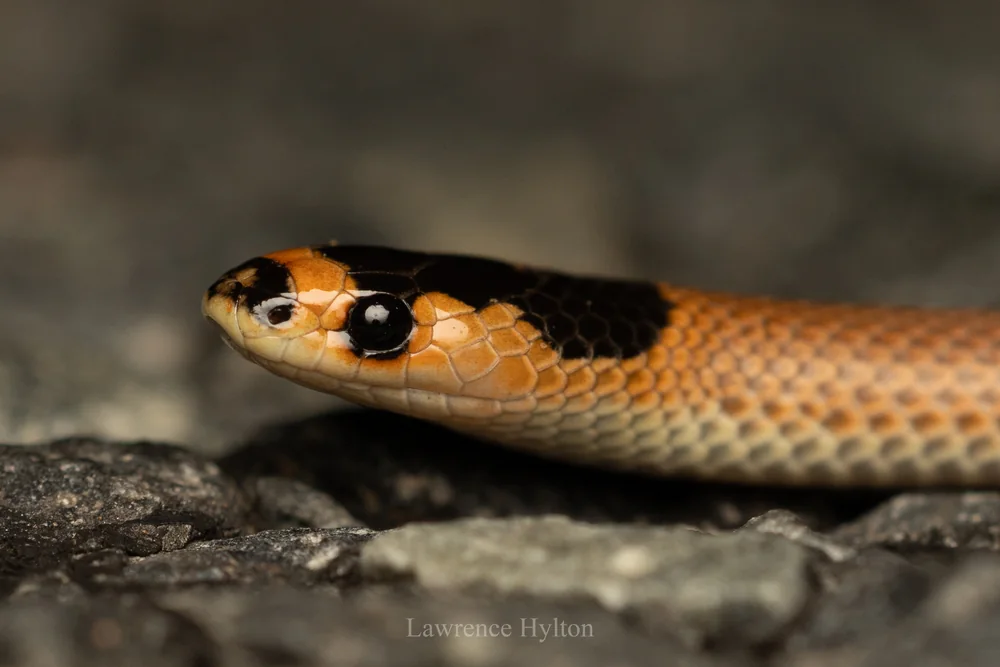
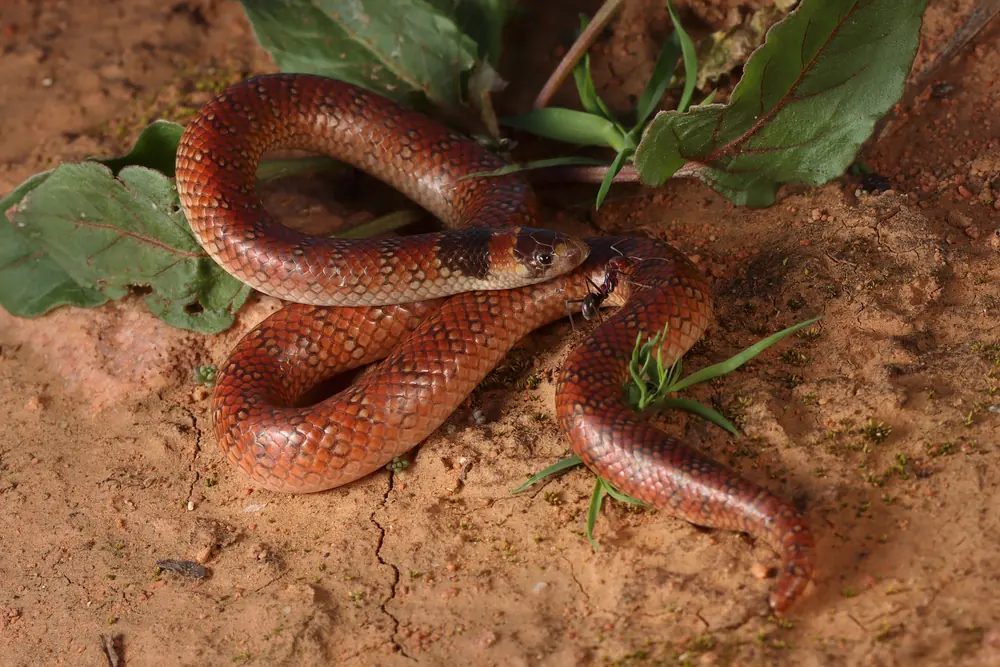
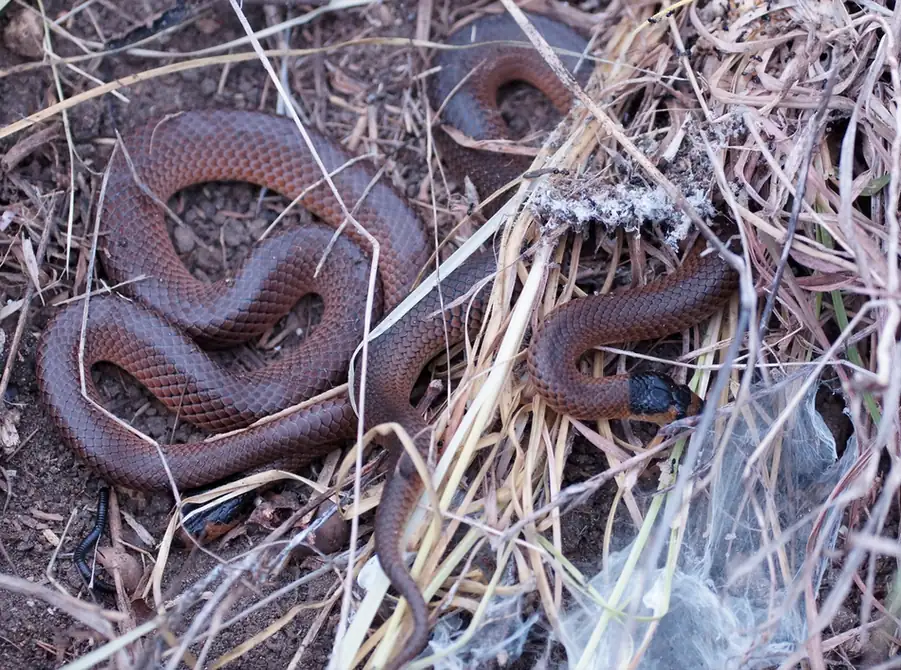
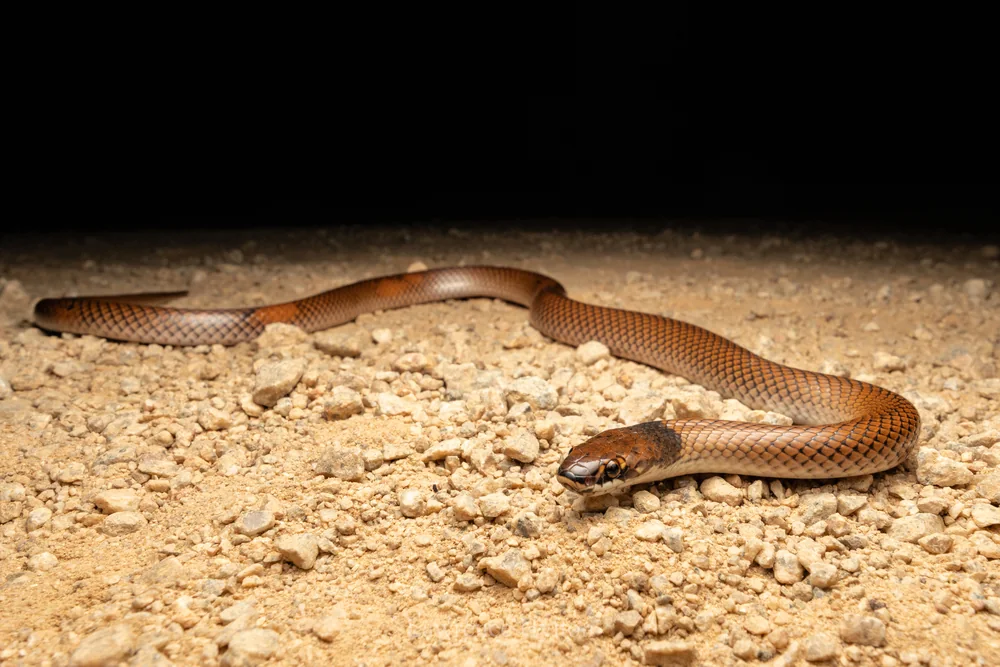
Red-naped Snake (Furina diadema) coiled on soil.

Photo: Max Tibby · CC0 1.0 (Licence)

Elapidae

Red-naped Snake

Furina diadema

A slender red-brown snake with a black head and nape, pale belly and a red or orange nape patch enclosed by black. Its checked range spans NSW, Queensland, SA, Victoria and the ACT.

Venomous

Open identification guide

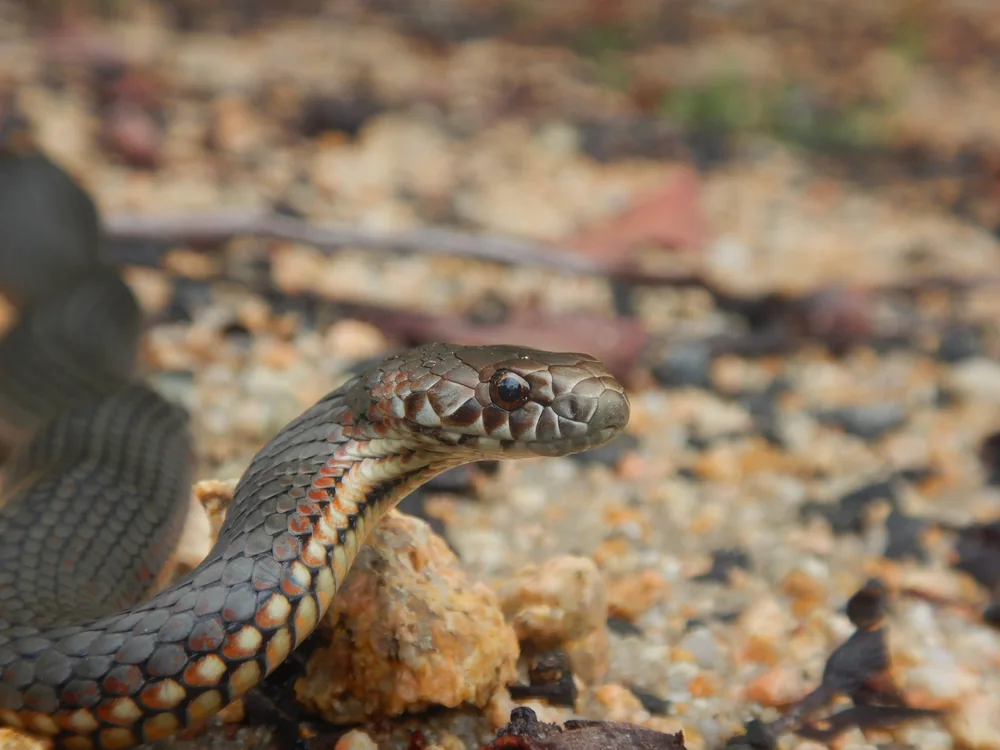
Yellow-faced Whip Snake (Demansia psammophis) among dry leaves and sand.

Photo: James K. Douch · CC BY-SA 4.0 (Licence)

Elapidae

Yellow-faced Whip Snake

Demansia psammophis

Yellow-faced Whip Snake is an eastern Australian species recorded in NSW, QLD, VIC, SA and ACT. It is variable in grey, olive, yellow and brown tones, with a dark facial line and dark-edged scales that can give a reticulated appearance.

Venomous

Open identification guide