Photo: Max Tibby · CC0 1.0 (Licence)
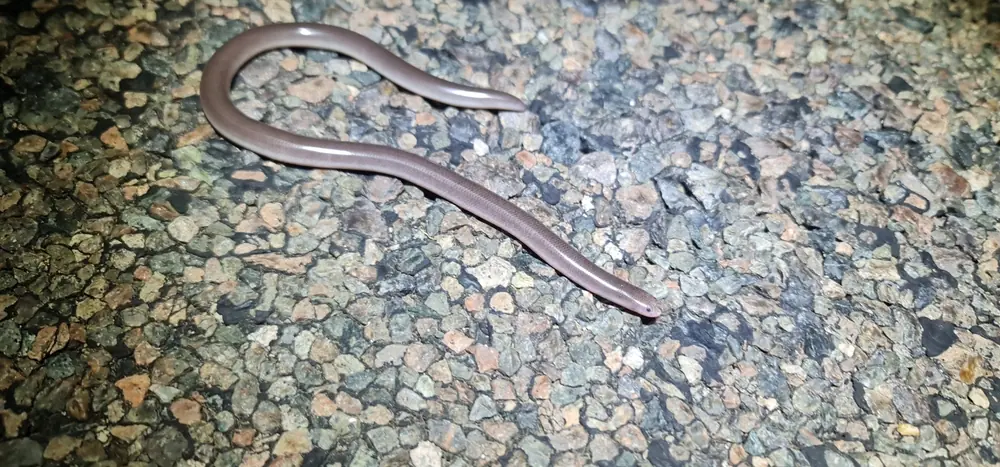
Typhlopidae
Anilios ligatus
The Robust Blind Snake is a widespread Australian blind snake with a moderately stout body. Specialist descriptions separate it from similar forms using the rounded snout and head scales.
Non-venomous
Open identification guide →
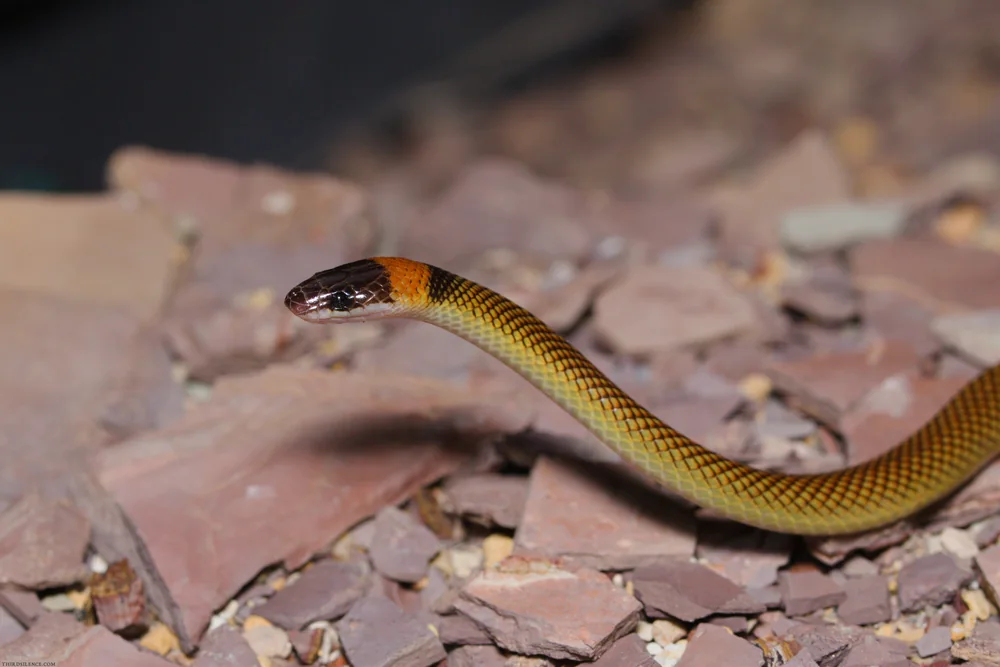
Photo: Third Silence · CC BY-SA 4.0 (Licence)
Elapidae
Furina ornata
A small northern Australian snake recognised by a red nape blotch not completely enclosed by black.
Venomous
Open identification guide →
No photograph available
Elapidae
Suta nigriceps
A stout southern Australian snake with a dark head and a variable dark stripe along the back.
Venomous
Open identification guide →
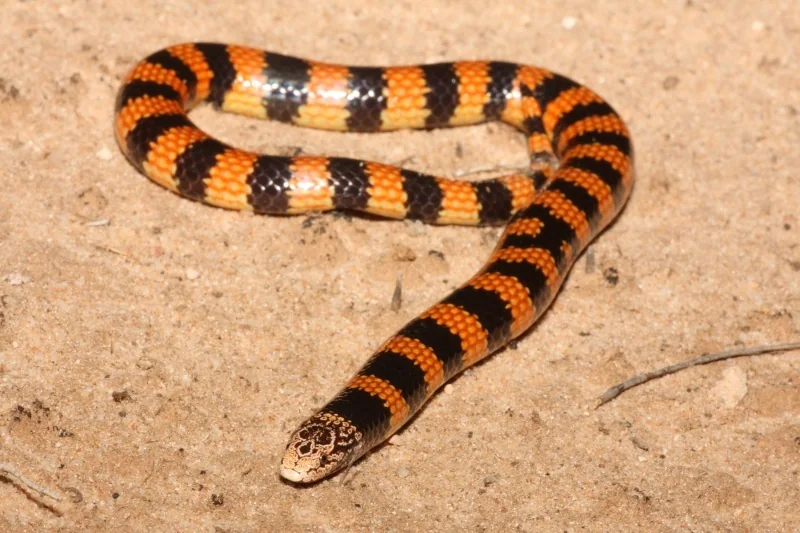
Photo: dhfischer · CC BY 4.0 (Licence)
Elapidae
Simoselaps bertholdi
A small venomous burrowing snake with records in Western Australia, South Australia and the Northern Territory.
Venomous
Open identification guide →

Photo: David Thompson · CC BY 4.0 (Licence)
Typhlopidae
Anilios pinguis
The Fat Blind Snake is a stout blind snake recorded from South Australia, Victoria and Western Australia in the current Reptile Database account. AROD uses the older common name Rotund Blind Snake.
Non-venomous
Open identification guide →
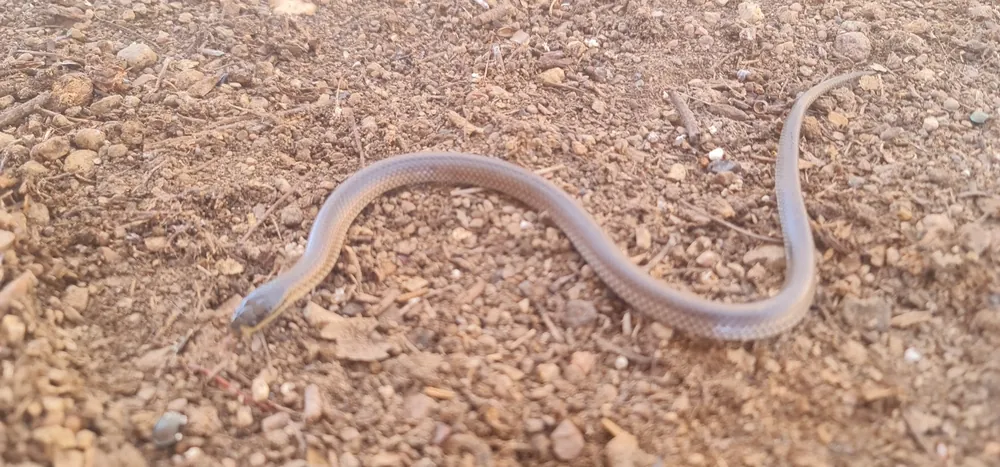
Photo: Max Tibby · CC0 1.0 (Licence)
Elapidae
Suta dwyeri
A small snake associated with rocky shelter in parts of eastern Australia.
Venomous
Open identification guide →

Photo: dhfischer · CC BY 4.0 (Licence)
Typhlopidae
Anilios endoterus
A small inland blind snake recorded across five mainland states.
Non-venomous
Open identification guide →
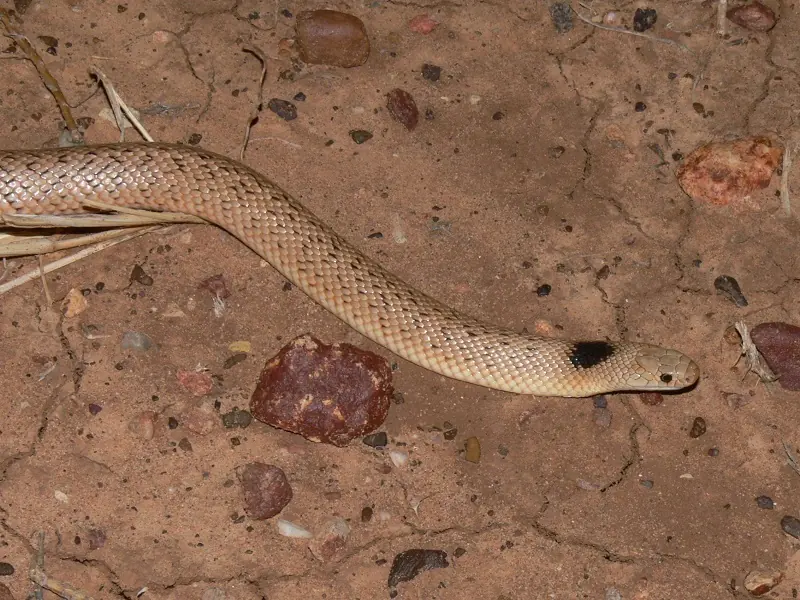
Photo: dhfischer · CC BY 4.0 (Licence)
Elapidae
Pseudonaja guttata
Speckled Brown Snake is a variable brown snake of arid grasslands and black-soil plains in the Northern Territory, Queensland and north-eastern South Australia.
Dangerously venomous
Open identification guide →
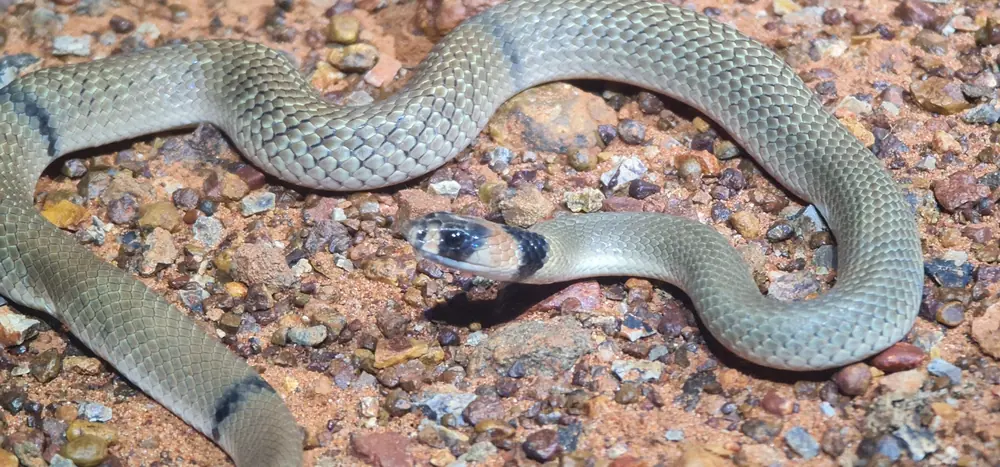
Photo: Max Tibby · CC0 1.0 (Licence)
Elapidae
Pseudonaja modesta
Ringed Brown Snake is a small inland brown snake with a black head and nape band and narrow body bands that may fade with age.
Venomous
Open identification guide →
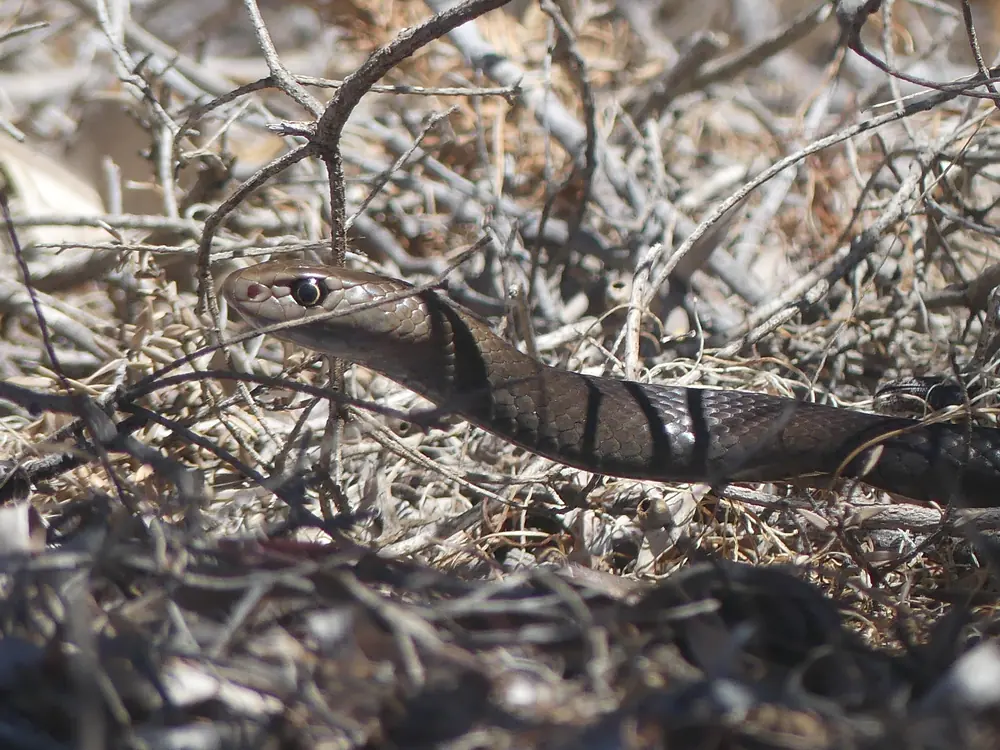
Photo: Valentin Moser · CC BY 4.0 (Licence)
Elapidae
Pseudonaja affinis
A dangerously venomous brown-snake relative of Western and South Australia.
Dangerously venomous
Open identification guide →

Photo: Connor Margetts · CC0 1.0 (Licence)
Pythonidae
Morelia imbricata
A non-venomous python of southern Western Australia and parts of South Australia.
Non-venomous
Open identification guide →
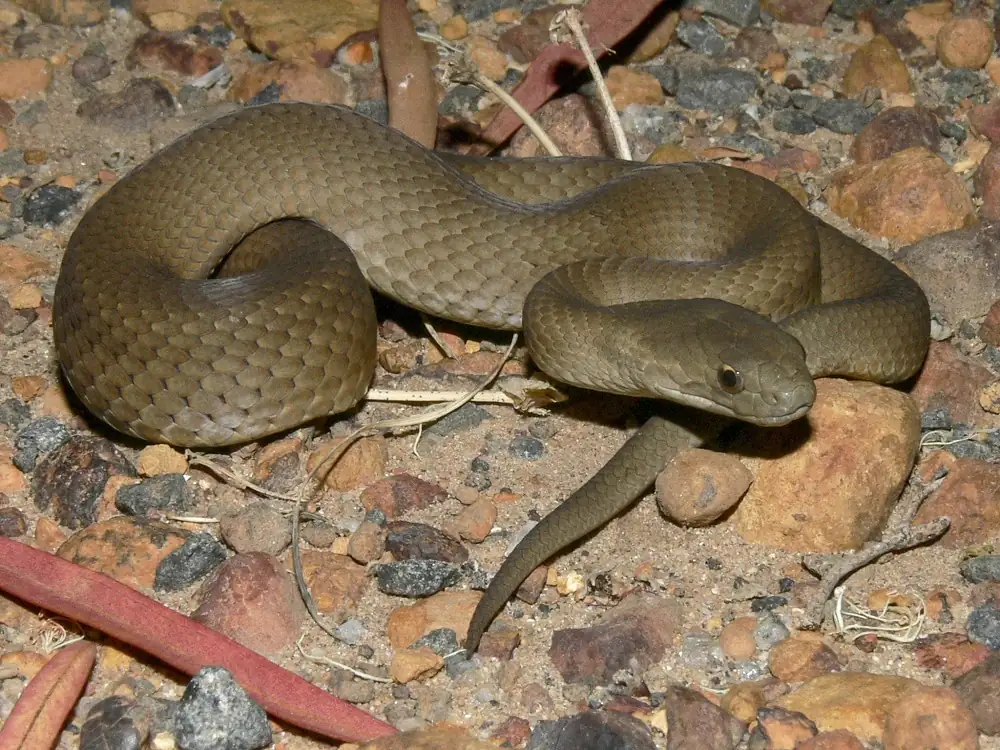
Photo: dhfischer · CC BY 4.0 (Licence)
Elapidae
Echiopsis curta
A short, stout snake with a broad head and generally plain olive-brown, brown or reddish-brown upperparts. Its separated populations include south-western NSW, Victoria, South Australia and Western Australia.
Venomous
Open identification guide →

Photo: Max Tibby · CC0 1.0 (Licence)
Elapidae
Acanthophis pyrrhus
A banded death adder of sandy and stony deserts across inland Australia. Its red or orange colouring blends with many desert soils.
Dangerously venomous
Open identification guide →
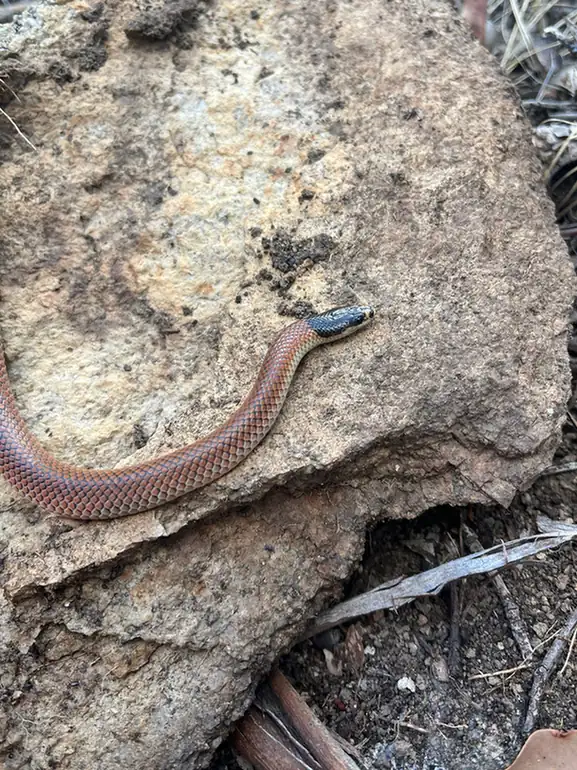
Photo: evaladyman · CC0 1.0 (Licence)
Elapidae
Suta gouldii
A slender hooded snake found in Western Australia and across the Nullarbor into South Australia.
Venomous
Open identification guide →
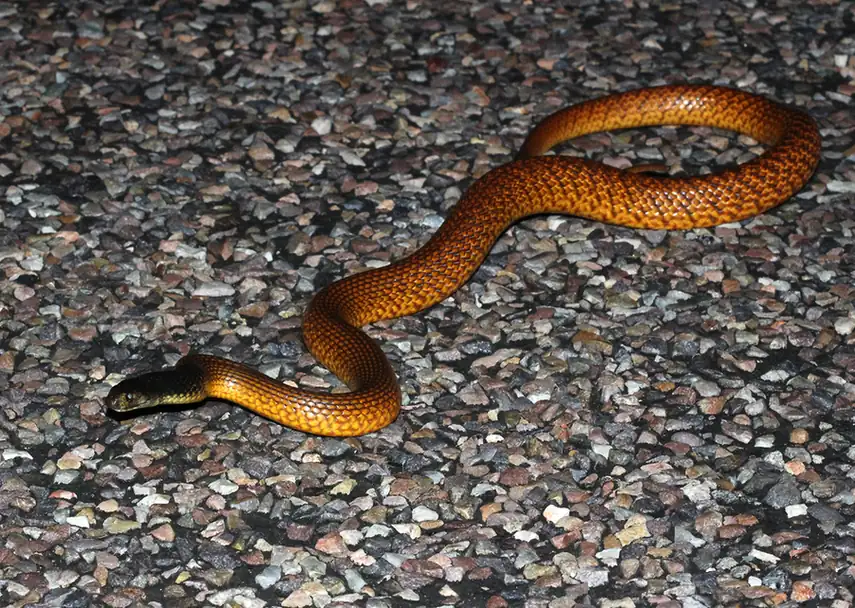
Photo: Lachlan Copeland · CC BY-SA 4.0 (Licence)
Elapidae
Pseudonaja mengdeni
A slender inland brown snake with yellow, orange or brown body forms and variable dark markings.
Venomous
Open identification guide →

Photo: Max Tibby · CC0 1.0 (Licence)
Elapidae
Pseudonaja aspidorhyncha
A slender brown snake of inland southern Australia, with variable body banding.
Venomous
Open identification guide →

Photo: dhfischer · CC BY 4.0 (Licence)
Typhlopidae
Anilios bituberculatus
A widespread Australian blind snake with a slender body and a long snout. Specialist descriptions refer to a three-lobed snout outline when viewed from above.
Non-venomous
Open identification guide →
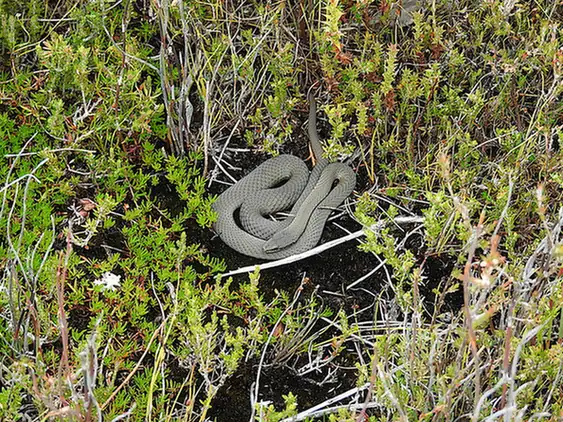
Photo: george_vaughan · CC0 1.0 (Licence)
Elapidae
Drysdalia coronoides
White-lipped Snake is recorded across south-eastern Australia, including Tasmania and New South Wales. It varies from olive-brown and grey to reddish brown or dark grey, with a white stripe on the upper lip and no pale or dark nape band.
Venomous
Open identification guide →

Photo: Andrew Mercer (www.baldwhiteguy.co.nz) · CC BY-SA 4.0 (Licence)
Pythonidae
Morelia spilota
A patterned python that can live in woodland, gardens and buildings as well as less disturbed habitats. Brown and cream blotches are common, but some forms have much darker bodies with pale spots. The diamond python is included within this variable species.
Non-venomous
Open identification guide →

Photo: Hugo Innes · CC BY 4.0 (Licence)
Pythonidae
Antaresia childreni
A non-venomous python whose accepted species concept includes northern and inland Australian forms.
Non-venomous
Open identification guide →
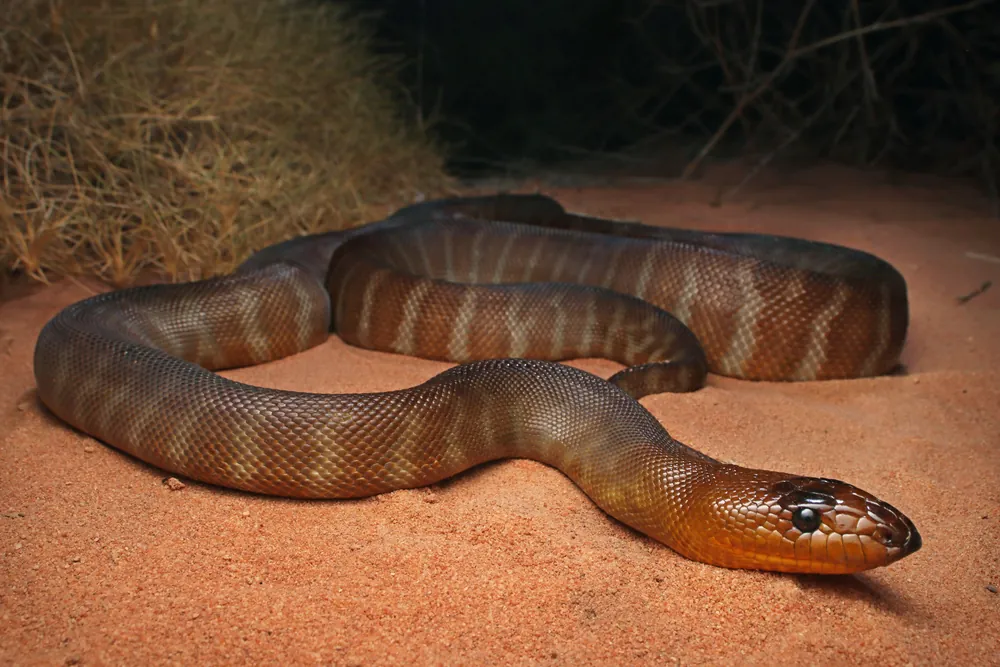
Photo: Connor Margetts · CC0 1.0 (Licence)
Pythonidae
Aspidites ramsayi
A large python with a pale yellow- to reddish-brown background and numerous dark bands. Juveniles may show a dark eye patch that often fades with age; the species occupies arid and semi-arid inland Australia.
Non-venomous
Open identification guide →

Photo: Max Tibby · CC0 1.0 (Licence)
Elapidae
Austrelaps superbus
A variable venomous copperhead of lowland south-eastern Australia.
Dangerously venomous
Open identification guide →
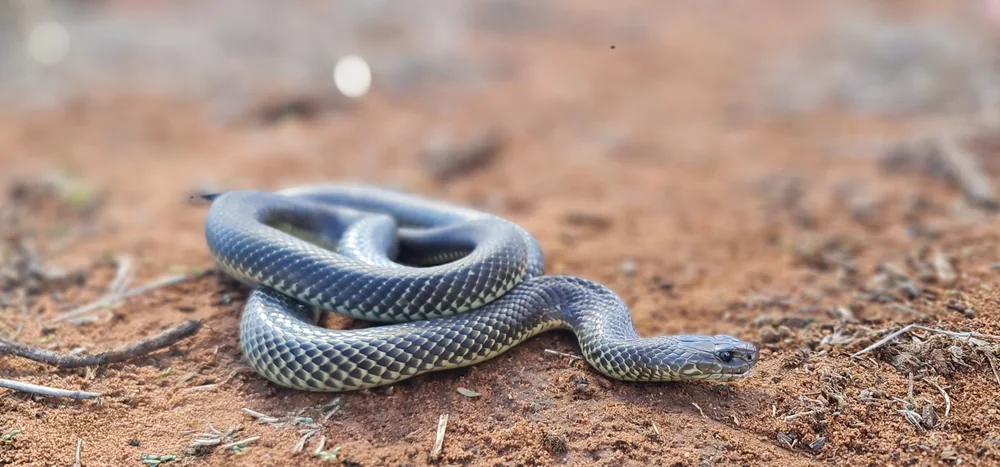
Photo: Max Tibby · CC0 1.0 (Licence)
Elapidae
Pseudechis australis
A large, variable snake widespread across most of Australia.
Dangerously venomous
Open identification guide →
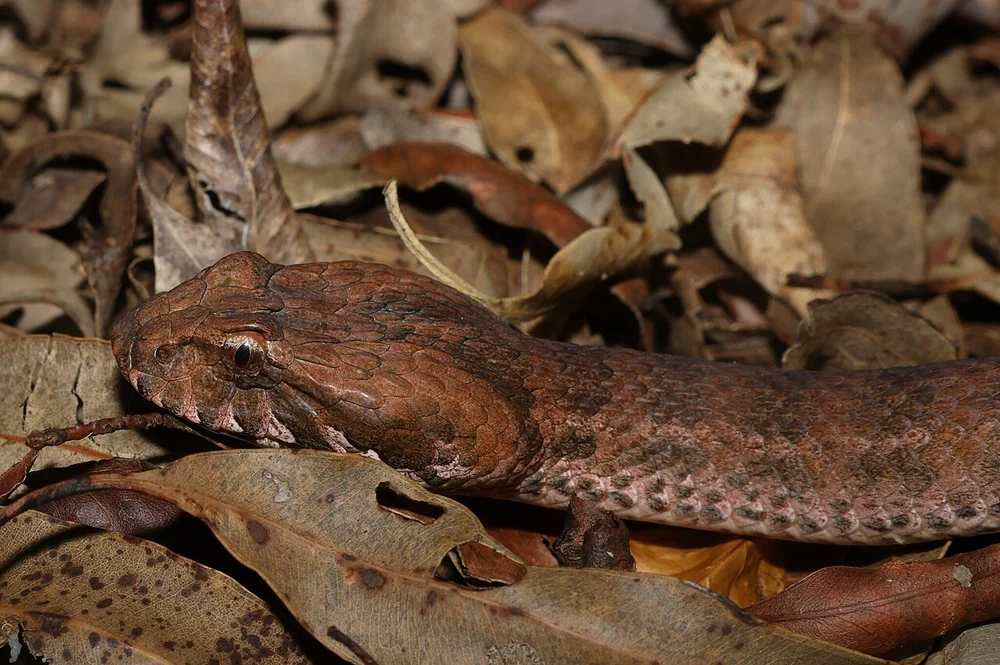
Photo: Greg Tasney · CC BY-SA 4.0 (Licence)
Elapidae
Acanthophis antarcticus
A short, heavy-bodied snake with a broad head and a fine tail. Death adders often remain concealed in leaf litter instead of moving away early. Their camouflage and habit of waiting for prey make the shape of the whole animal particularly useful to notice.
Highly venomous
Open identification guide →
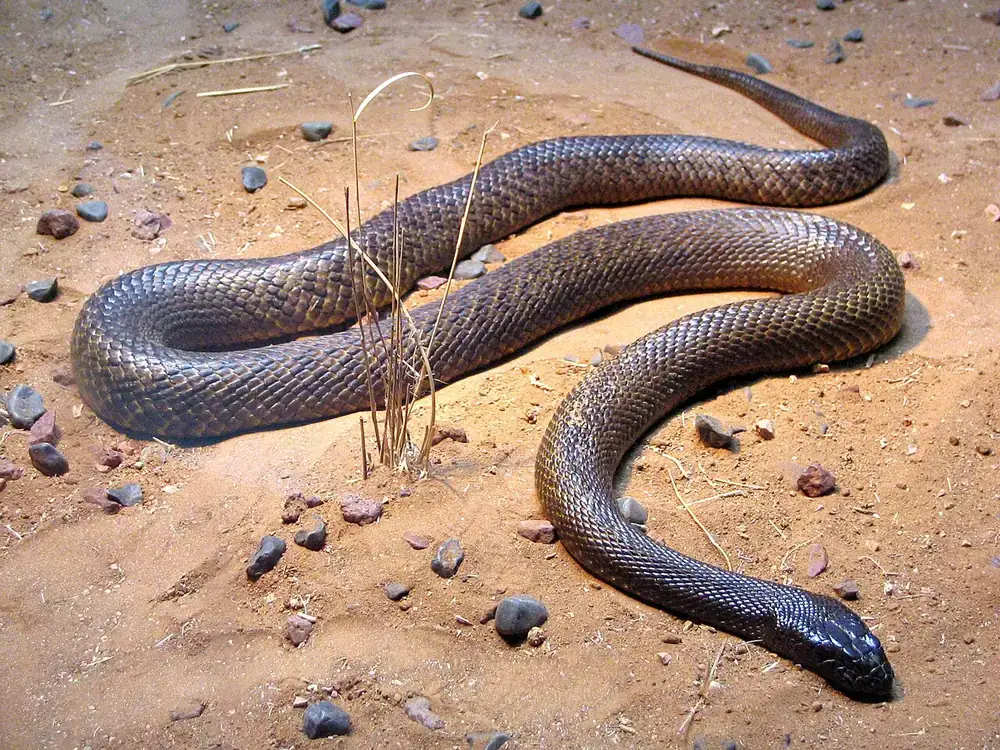
Photo: Photo by XLerate · CC BY-SA 3.0 (Licence)
Elapidae
Oxyuranus microlepidotus
A large brown snake of the remote Channel Country, strongly associated with cracking clay soils. The head is generally darker than the body, which can change noticeably with the season. It is unlikely to be the snake seen in an ordinary coastal backyard.
Highly venomous
Open identification guide →
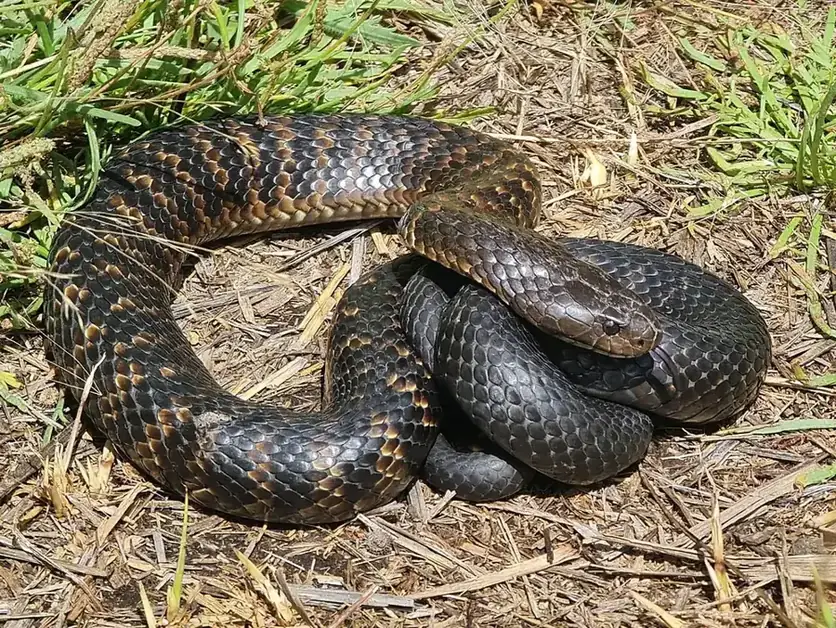
Photo: Max Tibby · CC0 (Licence)
Elapidae
Notechis scutatus
Tiger snakes may be banded, faintly marked or completely plain. They are robust snakes associated with many southern wetlands, but also occur in drier habitats. A black snake in Tasmania, or one without stripes, can still be a tiger snake.
Highly venomous
Open identification guide →
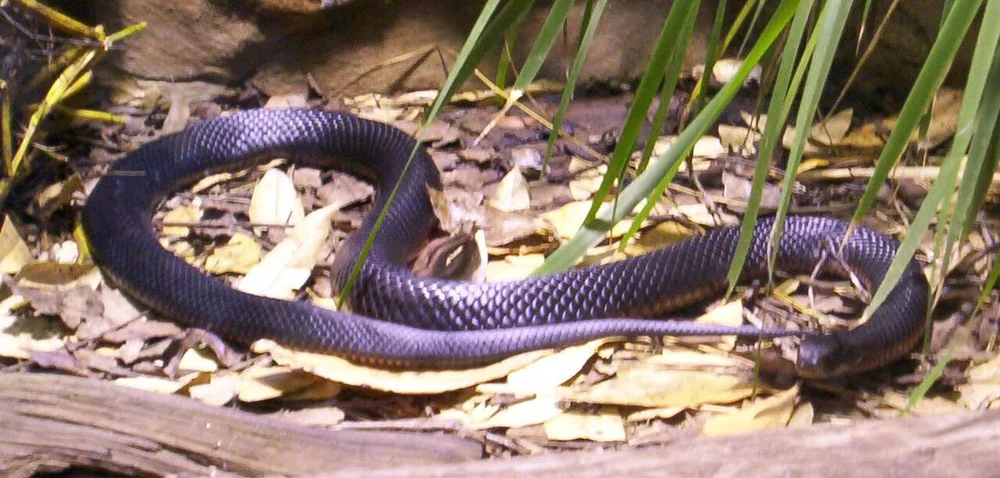
Photo: The original uploader was Figaro at English Wikipedia. · Public domain (Licence)
Elapidae
Pseudechis porphyriacus
A glossy black snake often seen around creeks, wetlands and farm dams in eastern Australia. Red or pink along the lower sides is a useful clue, but it can be hidden by the snake's position and is much paler in some northern animals.
Venomous
Open identification guide →

Photo: Donald Hobern from Copenhagen, Denmark · CC BY 2.0 (Licence)
Elapidae
Pseudonaja textilis
An Eastern Brown Snake is not always brown. Adults can be tan, orange-brown or nearly black, while young snakes may have striking dark bands. A relatively small head and slender body are more useful clues than the name alone.
Highly venomous
Open identification guide →
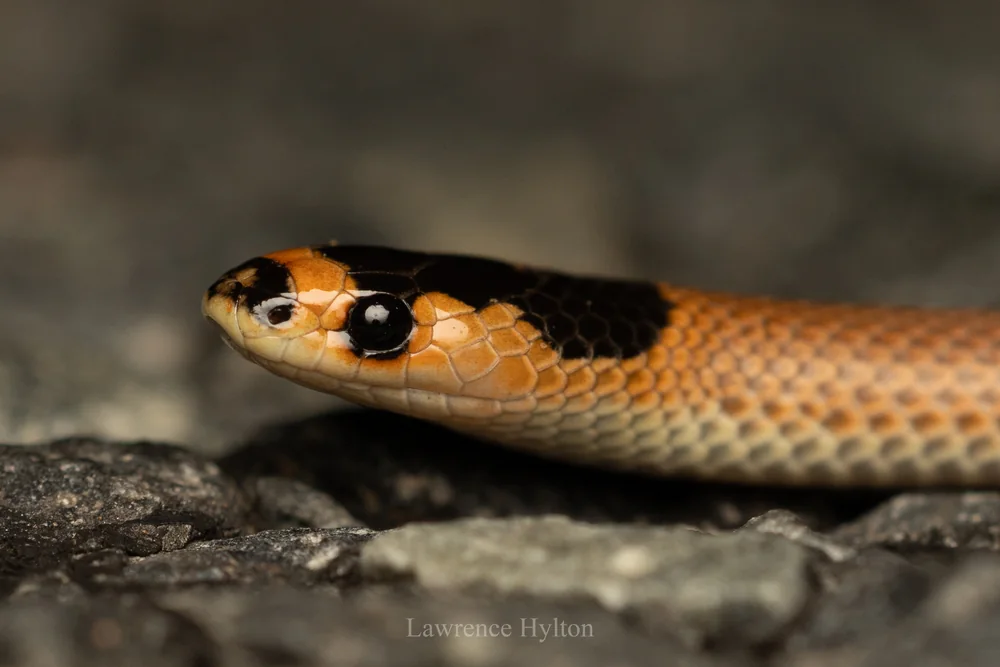
Photo: Lawrence Hylton · CC BY 4.0 (Licence)
Elapidae
Suta spectabilis
A brown to beige hooded snake of South Australia and adjoining western parts of Victoria and New South Wales.
Venomous
Open identification guide →

Photo: Lawrence Hylton · CC BY 4.0 (Licence)
Elapidae
Suta monachus
A slender hooded snake of inland Western Australia, South Australia and the south-western Northern Territory.
Venomous
Open identification guide →
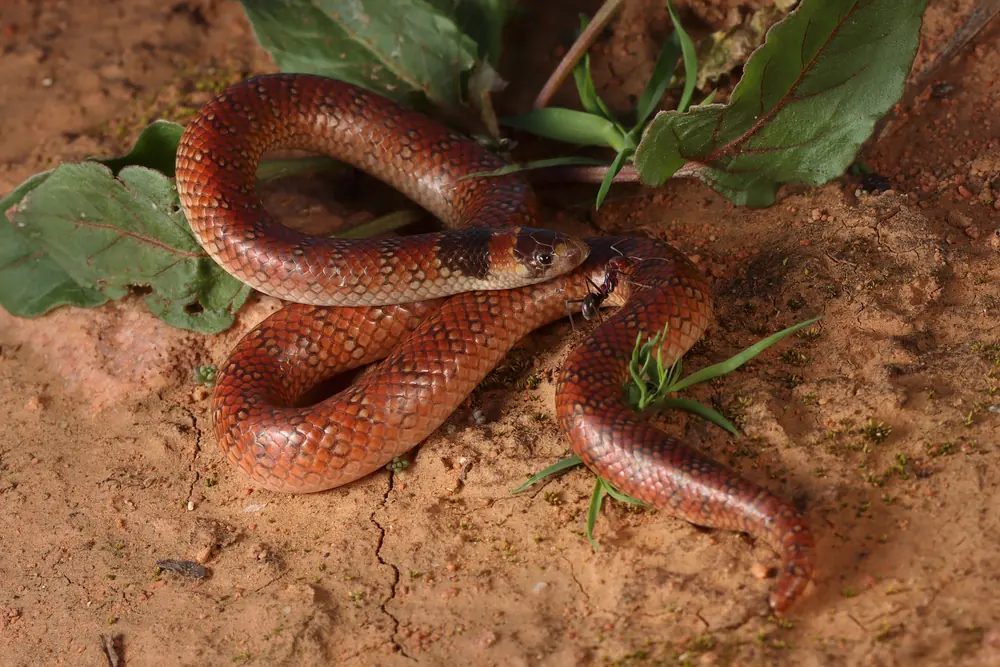
Photo: Connor Margetts · CC BY 4.0 (Licence)
Elapidae
Brachyurophis australis
The Australian Coral Snake is a small shovel-nosed snake with reddish colouring, a dark head and nape and narrow pale bands. It occurs across parts of eastern and southern mainland Australia.
Venomous
Open identification guide →

Photo: Max Tibby · CC0 1.0 (Licence)
Elapidae
Furina diadema
A slender red-brown snake with a black head and nape, pale belly and a red or orange nape patch enclosed by black. Its checked range spans NSW, Queensland, SA, Victoria and the ACT.
Venomous
Open identification guide →
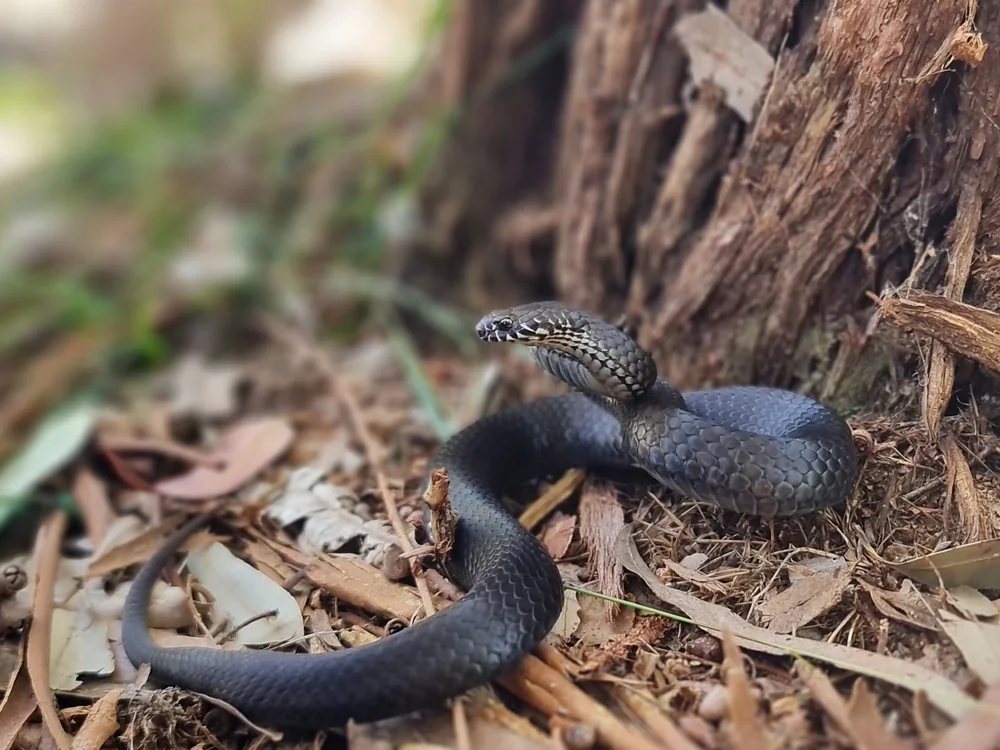
Photo: Max Tibby · CC0 1.0 (Licence)
Elapidae
Austrelaps labialis
Pygmy Copperhead is recorded from Kangaroo Island and adjacent mainland South Australia. It is usually brown to grey, sometimes with a dark dorsal stripe and nape bar, with heavily barred lips.
Dangerously venomous.
Open identification guide →
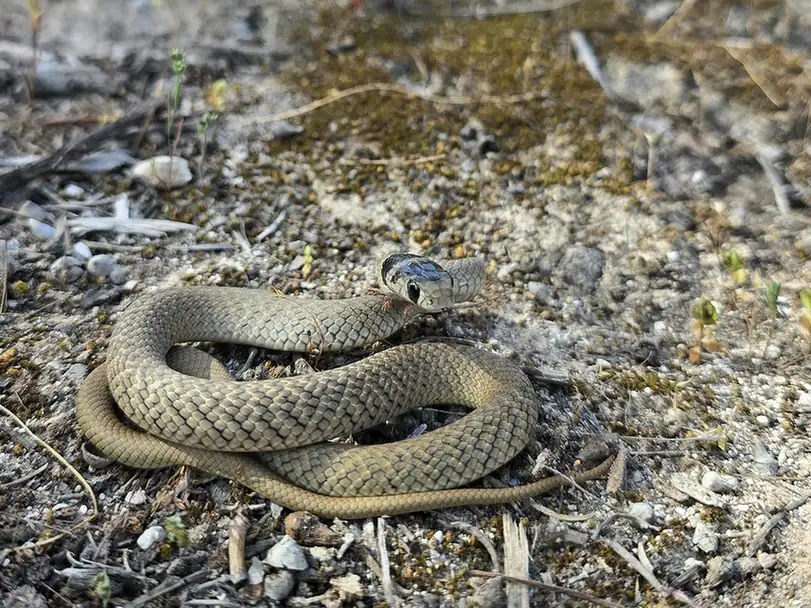
Photo: Max Tibby · CC0 1.0 (Licence)
Elapidae
Pseudonaja inframacula
A dangerously venomous snake recorded from South Australia’s Eyre and Yorke peninsulas, nearby islands and the Nullarbor coast.
Dangerously venomous
Open identification guide →
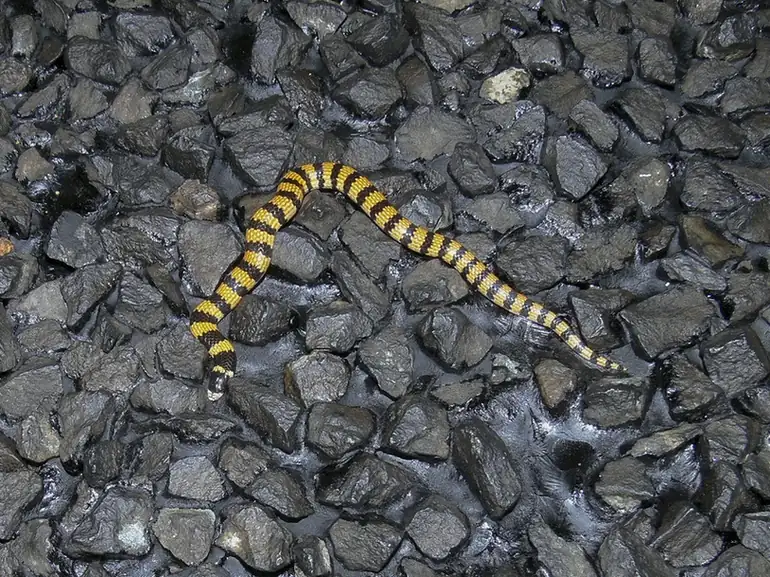
Photo: dhfischer · CC BY 4.0 (Licence)
Elapidae
Simoselaps anomalus
A small burrowing banded snake of the Northern Territory, South Australia and Western Australia.
Venomous
Open identification guide →

Photo: dhfischer · CC BY 4.0 (Licence)
Elapidae
Brachyurophis semifasciatus
A variable shovel-nosed snake with reddish-brown to orange colouration, a barred head and regular dark bands along the body. AROD mentions Queensland, but the current Reptile Database lists only southern Western Australia and South Australia, so the mapped range is partial.
Venomous
Open identification guide →
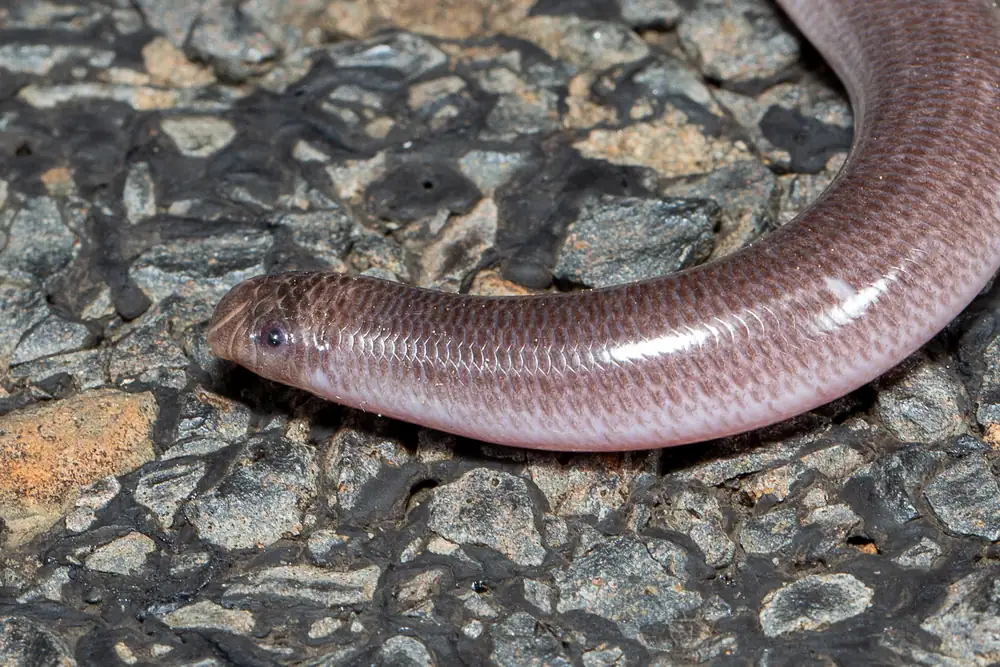
Photo: dhfischer · CC BY 4.0 (Licence)
Typhlopidae
Anilios bicolor
A relatively stout blind snake recorded across southern Australia.
Non-venomous
Open identification guide →

Photo: Max Tibby · CC0 1.0 (Licence)
Elapidae
Demansia cyanochasma
Desert Whip Snake is a venomous central Australian species ranging from southeastern inland Western Australia through South Australia and central/southern Northern Territory to south-western Queensland. It is bluish-grey to brown, with a cream-edged dark line across the snout.
Venomous
Open identification guide →
No photograph available
Typhlopidae
Anilios proximus
A relatively large blind snake of eastern and southern mainland Australia.
Non-venomous
Open identification guide →

Photo: James K. Douch · CC BY-SA 4.0 (Licence)
Elapidae
Demansia psammophis
Yellow-faced Whip Snake is an eastern Australian species recorded in NSW, QLD, VIC, SA and ACT. It is variable in grey, olive, yellow and brown tones, with a dark facial line and dark-edged scales that can give a reticulated appearance.
Venomous
Open identification guide →
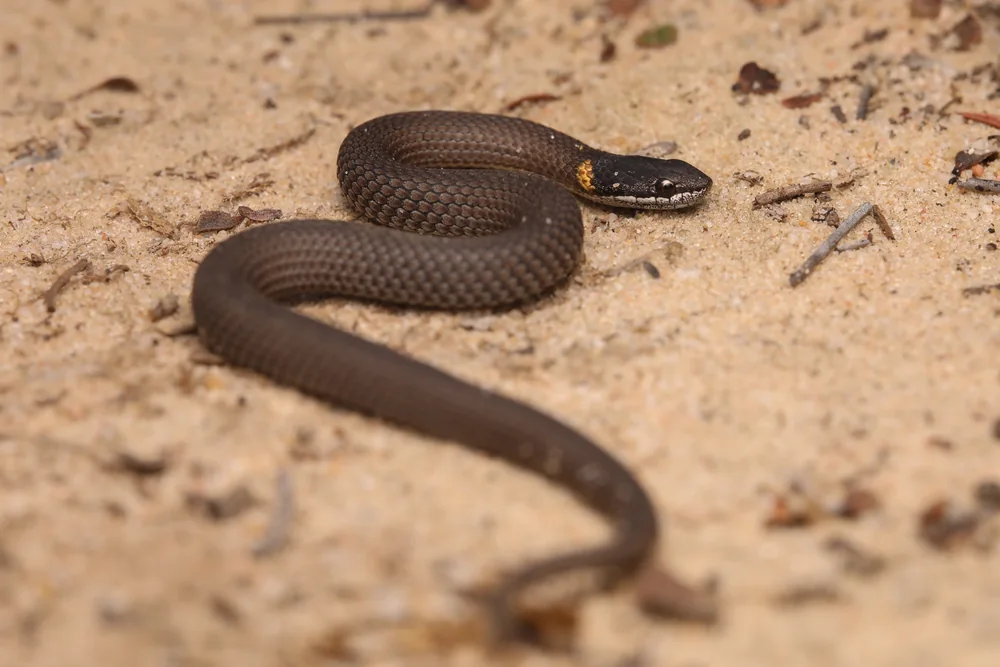
Photo: Joshua S. Martin · CC0 1.0 (Licence)
Elapidae
Drysdalia mastersii
A small venomous snake recorded from South Australia, Victoria and Western Australia.
Venomous
Open identification guide →
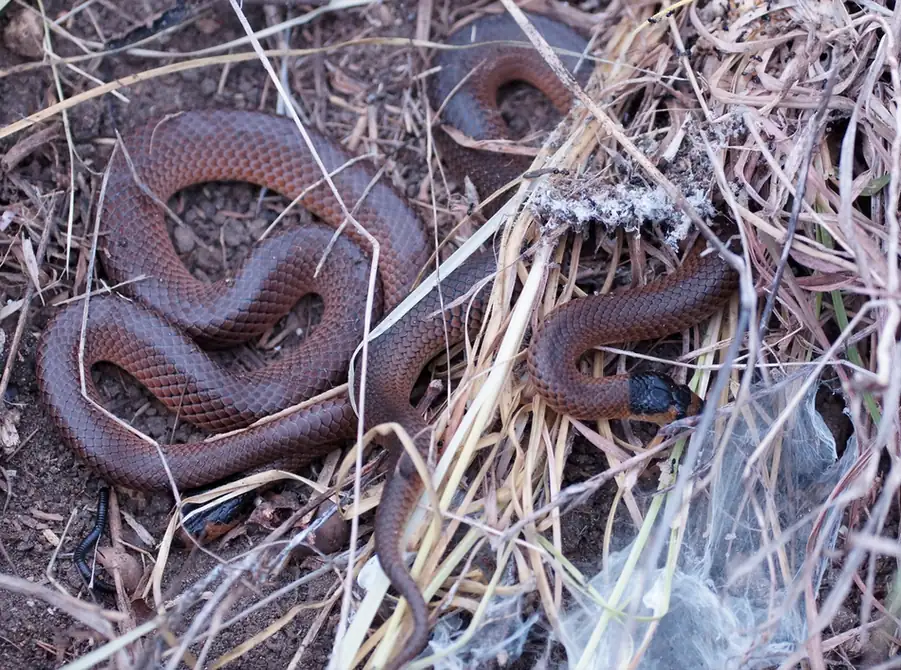
Photo: Rod Lowther · CC BY 4.0 (Licence)
Elapidae
Suta flagellum
A small venomous southern Australian snake also known as the Whip Hooded Snake.
Venomous
Open identification guide →
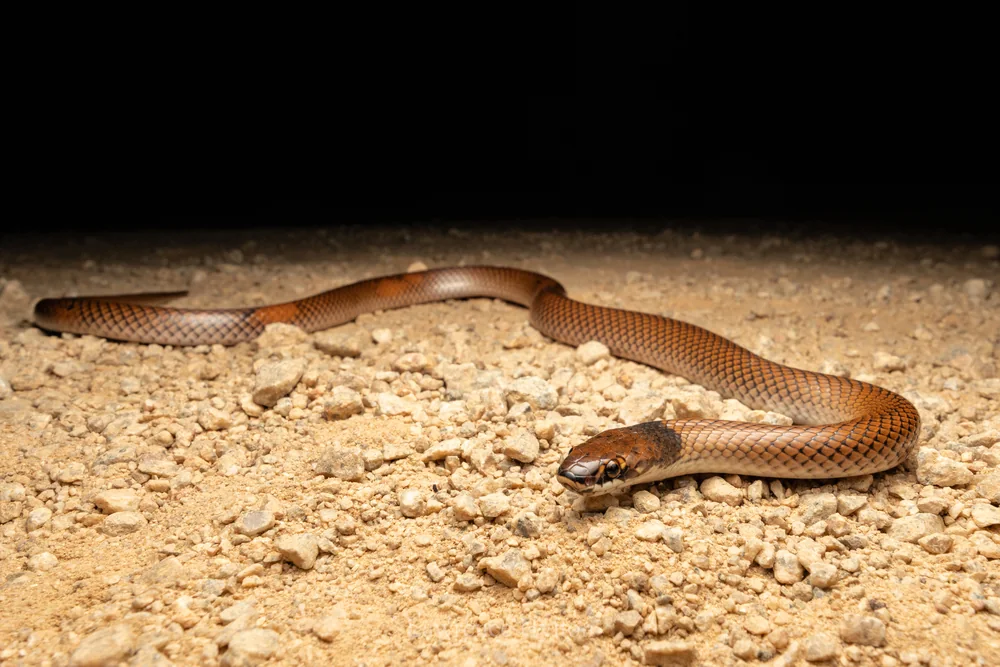
Photo: Lawrence Hylton · CC BY 4.0 (Licence)
Elapidae
Suta suta
A live-bearing Australian snake with brown to reddish-brown colouring, variable dark-edged scales and a darker head and nape.
Venomous
Open identification guide →
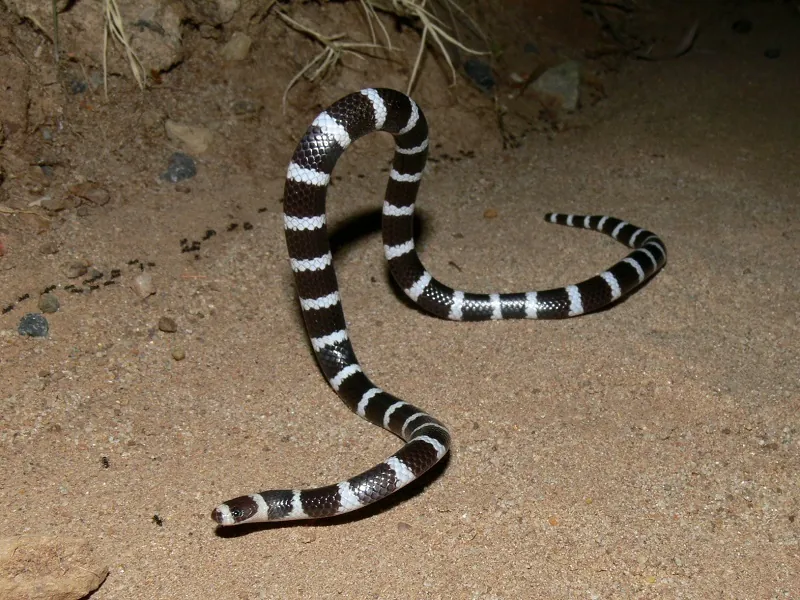
Photo: dhfischer · CC BY 4.0 (Licence)
Elapidae
Vermicella annulata
A snake with bold black-and-white rings around its body, found across much of eastern and central Australia.
Venomous
Open identification guide →

Photo: dhfischer · CC BY 4.0 (Licence)
Elapidae
Brachyurophis fasciolatus
A small burrowing snake with narrow dark bands across a pale body. Red and black flecks occur between the bands.
Venomous
Open identification guide →
No photograph available
Elapidae
Narophis bimaculatus
A very slender burrowing snake of Western Australia and South Australia.
Venomous
Open identification guide →

Photo: Max Tibby · CC0 1.0 (Licence)
Elapidae
Demansia rimicola
A brown-grey whipsnake with fine pale and dark lines along its sides. It inhabits cracking-clay country across parts of northern and inland eastern Australia.
Venomous
Open identification guide →
No photograph available
Typhlopidae
Anilios unguirostris
The Claw-snouted Blind Snake is a moderately slender blind snake recorded across northern and central parts of Australia. Its specialist diagnosis refers to a cutting edge at the tip of the snout.
Non-venomous
Open identification guide →

