
Spotted Sea Snake (Hydrophis ocellatus) stranded on a beach; condition not documented.
Photo: Vicki Kelly · CC BY 4.0 (Licence)
Elapidae
Hydrophis ocellatus
A venomous sea snake with spotted sides and oval or bar-like markings across its back, often fading with age.
Venomous
Open identification guide →

Spectacled Sea Snake (Hydrophis kingii) preserved museum specimen in a jar, labelled Disteira kingii.
Photo: A. C. Tatarinov · CC0 1.0 (Licence)
Elapidae
Hydrophis kingii
A marine snake with a dark head, pale rings around the eyes and grey bars across a yellowish body.
Venomous.
Open identification guide →
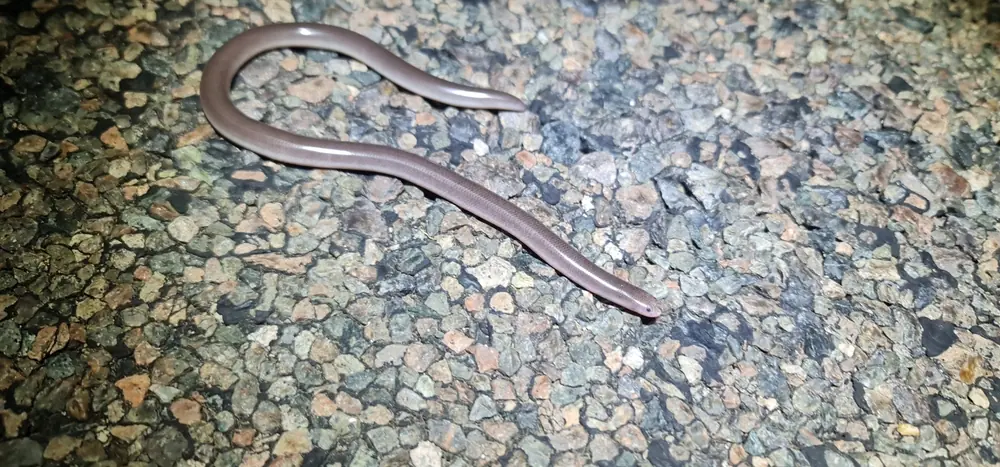
Photo: Max Tibby · CC0 1.0 (Licence)
Typhlopidae
Anilios ligatus
The Robust Blind Snake is a widespread Australian blind snake with a moderately stout body. Specialist descriptions separate it from similar forms using the rounded snout and head scales.
Non-venomous
Open identification guide →
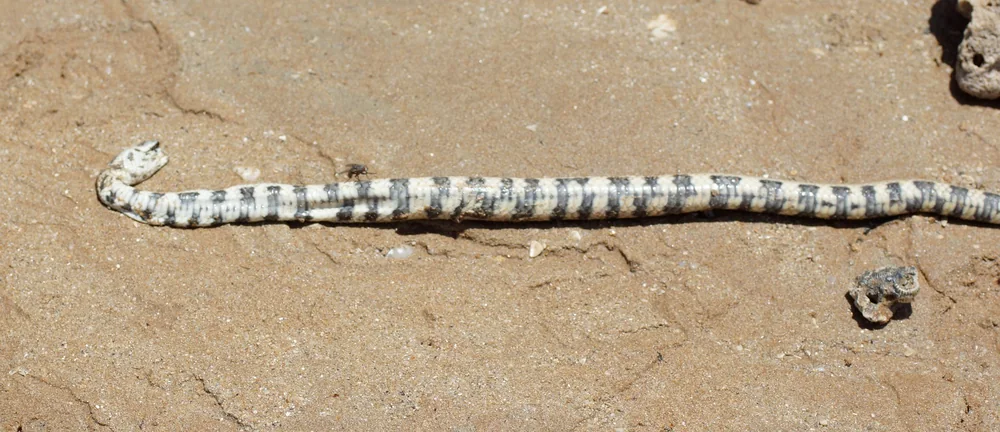
Port Darwin Sea Snake (Hydrelaps darwiniensis) deceased beach specimen.
Photo: Rod Lowther · CC BY 4.0 (Licence)
Elapidae
Hydrelaps darwiniensis
Port Darwin Sea Snake is a small mangrove and coastal sea snake with a light grey or yellowish body and many dark bands.
Venomous
Open identification guide →
No photograph available
Elapidae
Suta ordensis
A venomous snake recorded from northeastern Western Australia and the adjacent Northern Territory.
Venomous
Open identification guide →
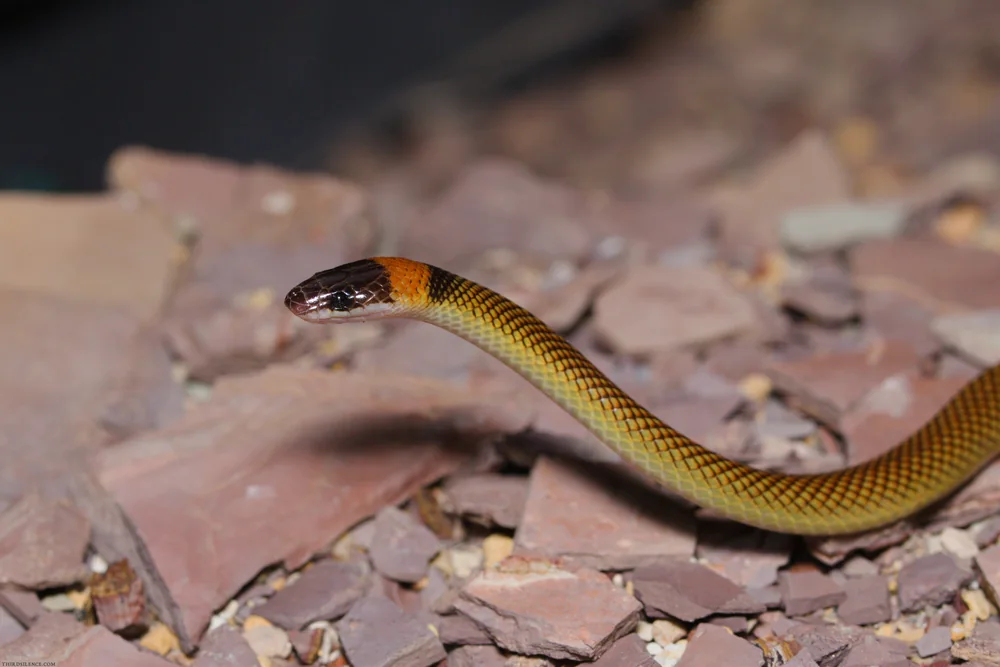
Photo: Third Silence · CC BY-SA 4.0 (Licence)
Elapidae
Furina ornata
A small northern Australian snake recognised by a red nape blotch not completely enclosed by black.
Venomous
Open identification guide →
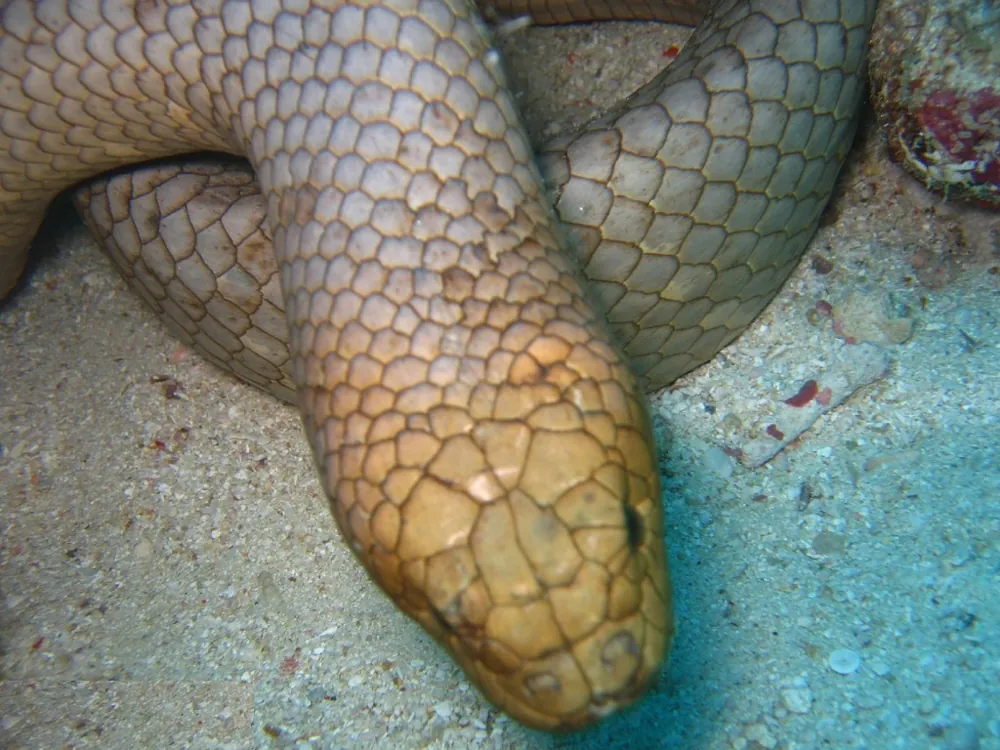
Photo: Richard Ling · CC BY-SA 2.0 (Licence)
Elapidae
Aipysurus laevis
A robust marine snake whose colour changes with age. Adults may be creamy-yellow or golden-brown; younger animals can have pale bands on a dark body.
Highly venomous
Open identification guide →
No photograph available
Elapidae
Ephalophis greyae
A small, banded sea snake recorded in mangrove creeks along the Western Australian coast.
Probably dangerously venomous
Open identification guide →
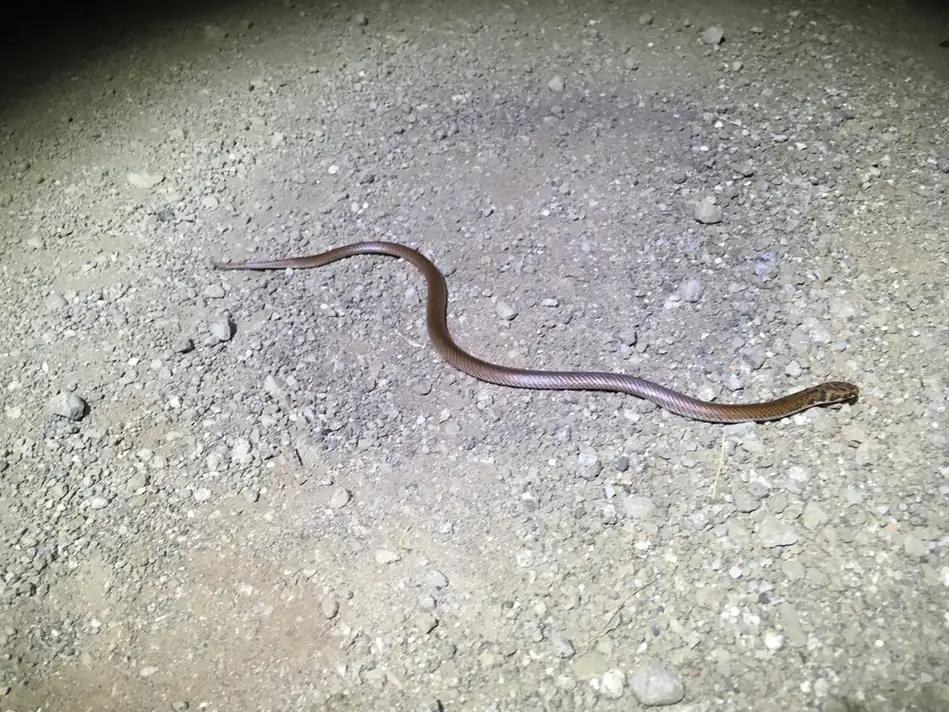
Photo: Donna Belder · CC BY 4.0 (Licence)
Elapidae
Suta punctata
A pale snake with darker scale markings, recorded in Western Australia, the Northern Territory and Queensland.
Venomous
Open identification guide →
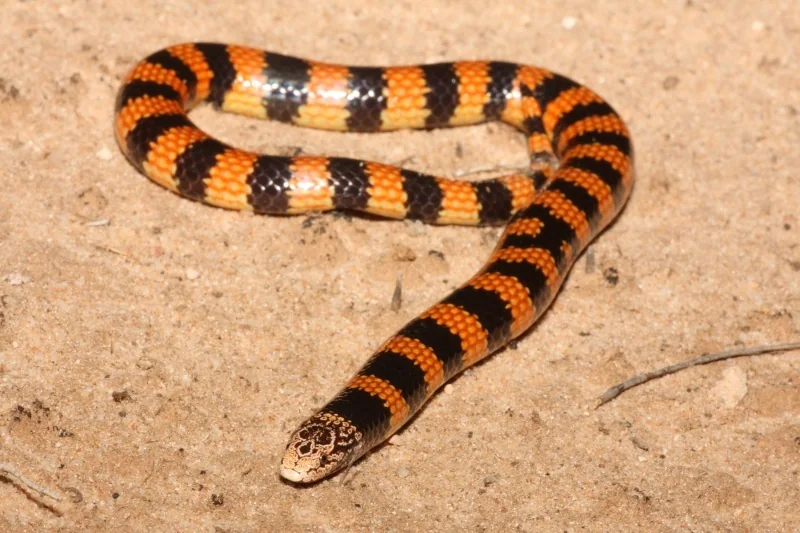
Photo: dhfischer · CC BY 4.0 (Licence)
Elapidae
Simoselaps bertholdi
A small venomous burrowing snake with records in Western Australia, South Australia and the Northern Territory.
Venomous
Open identification guide →

Photo: dhfischer · CC BY 4.0 (Licence)
Typhlopidae
Anilios endoterus
A small inland blind snake recorded across five mainland states.
Non-venomous
Open identification guide →
No photograph available
Typhlopidae
Anilios tovelli
A small blind snake described from the Darwin area in the Northern Territory.
Non-venomous
Open identification guide →
No photograph available
Typhlopidae
Anilios centralis
A slender blind snake described from the Alice Springs area in Central Australia.
Non-venomous
Open identification guide →
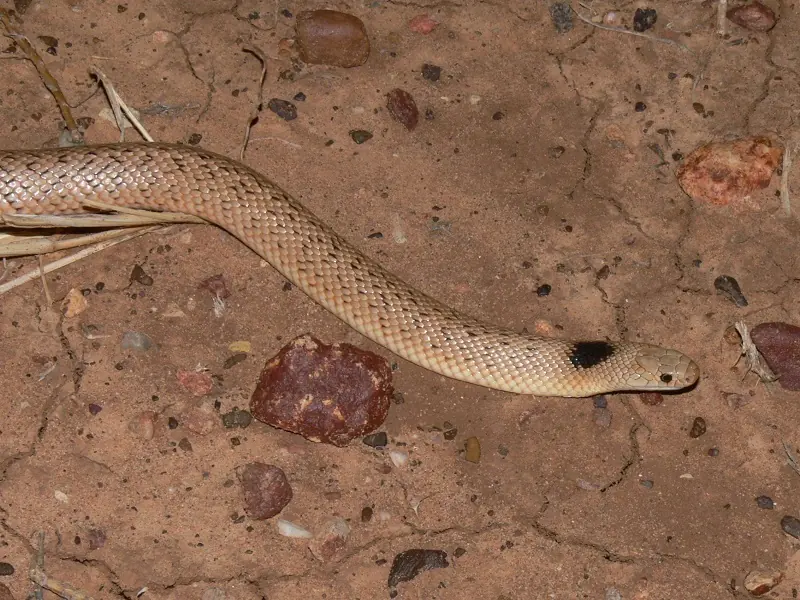
Photo: dhfischer · CC BY 4.0 (Licence)
Elapidae
Pseudonaja guttata
Speckled Brown Snake is a variable brown snake of arid grasslands and black-soil plains in the Northern Territory, Queensland and north-eastern South Australia.
Dangerously venomous
Open identification guide →
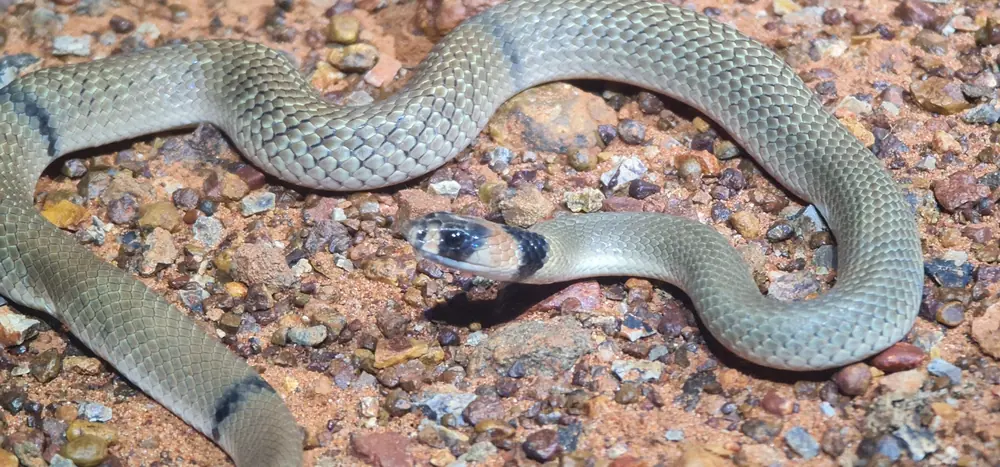
Photo: Max Tibby · CC0 1.0 (Licence)
Elapidae
Pseudonaja modesta
Ringed Brown Snake is a small inland brown snake with a black head and nape band and narrow body bands that may fade with age.
Venomous
Open identification guide →
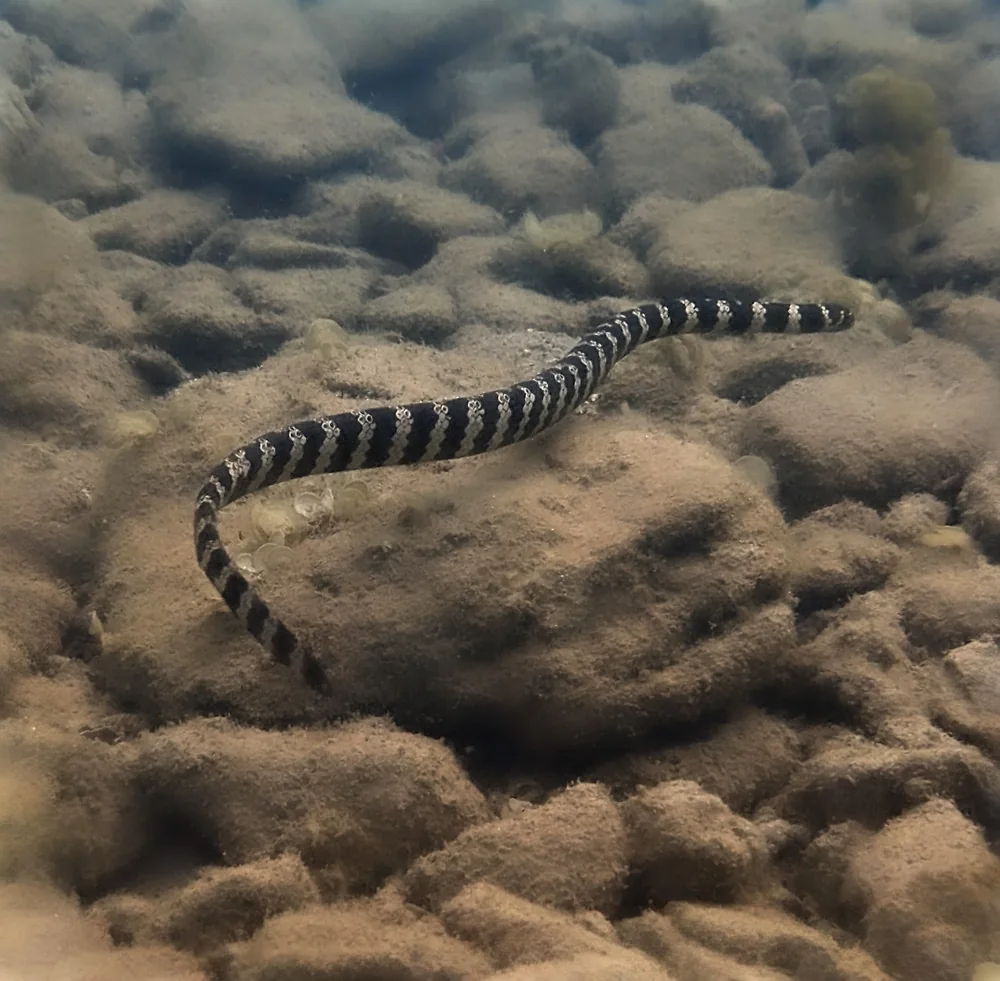
Photo: Ben Keen · CC0 1.0 (Licence)
Elapidae
Emydocephalus annulatus
An egg-eating marine snake with banded and dark colour forms.
Venom apparatus is greatly reduced; this does not mean the species is safe to handle.
Open identification guide →

Photo: dhfischer · CC BY 4.0 (Licence)
Pythonidae
Liasis fuscus
A large non-venomous python associated with northern waterways.
Non-venomous
Open identification guide →
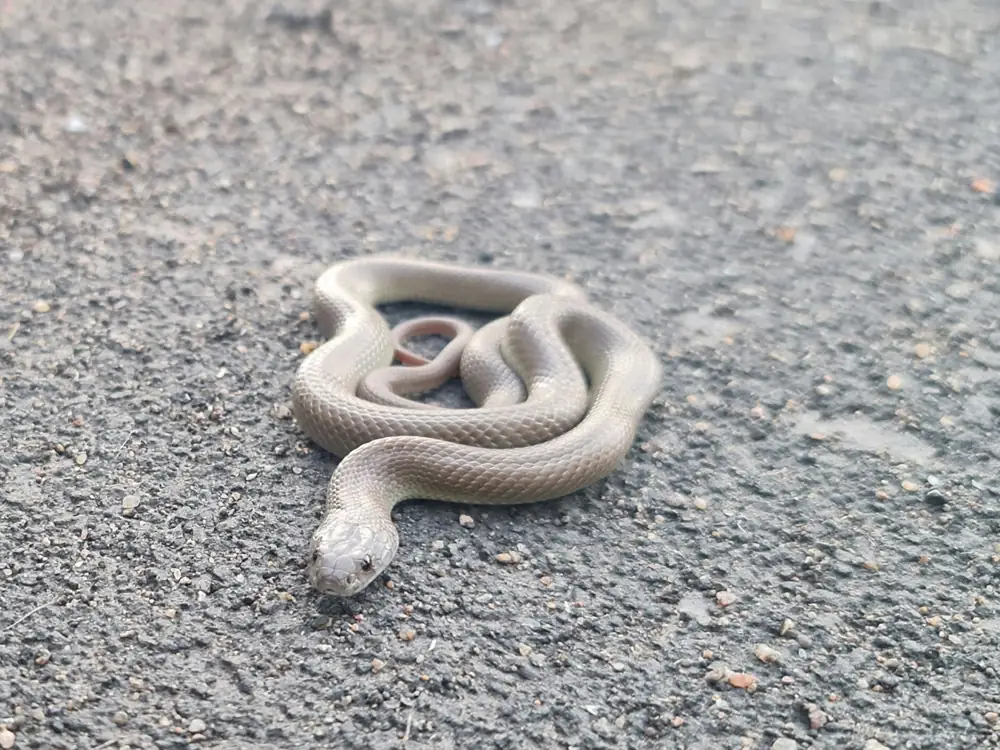
Photo: Max Tibby · CC0 1.0 (Licence)
Elapidae
Pseudechis weigeli
A venomous black-snake relative recorded in the Kimberley and the Northern Territory.
Dangerously venomous
Open identification guide →
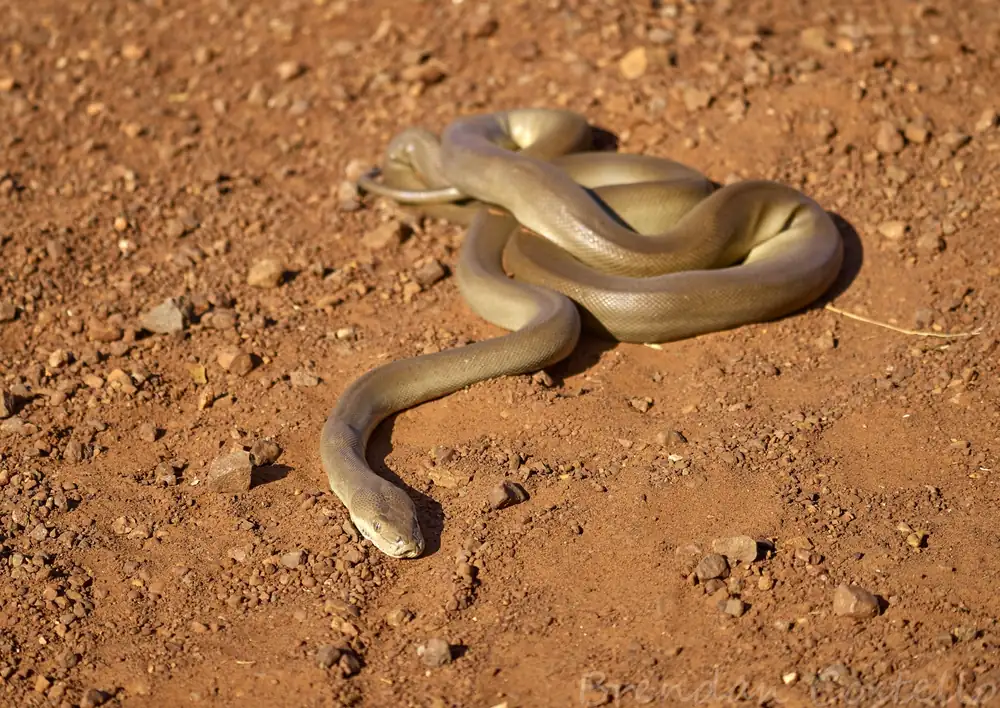
Photo: Brendan Costello · CC BY 4.0 (Licence)
Pythonidae
Liasis olivaceus
A very large olive python of drier northern Australia. The Pilbara subspecies occurs in Western Australia, while the species-level range also includes the Northern Territory and Queensland.
Non-venomous
Open identification guide →
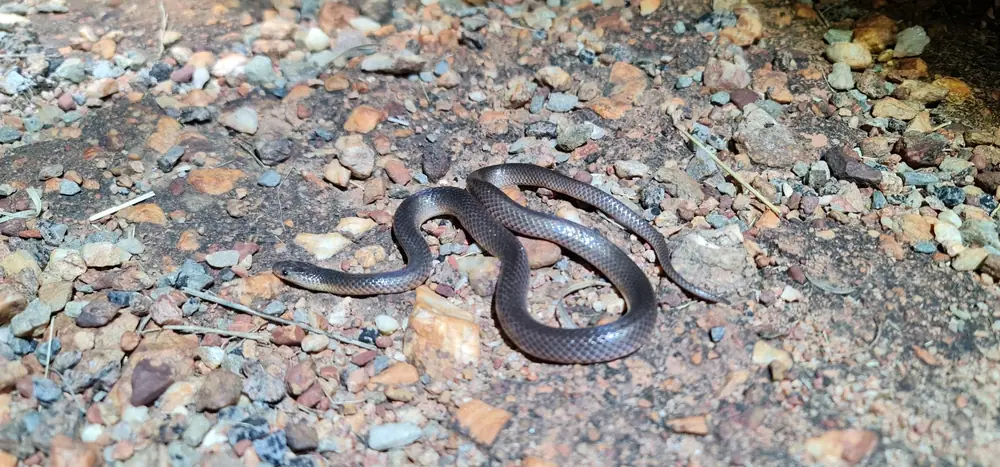
Photo: Max Tibby · CC0 1.0 (Licence)
Elapidae
Cryptophis pallidiceps
The Northern Small-eyed Snake is a secretive venomous snake of northern Australia. It can be brown, grey or black above, with paler yellow-orange flanks and a white belly.
Venomous
Open identification guide →

Deceased Barkly death adder photographed on a road at Marrakai, Northern Territory. Body posture is not representative of a living snake.
Photo: Max Tibby · CC0 1.0 (Licence)
Elapidae
Acanthophis hawkei
Barkly Death Adder is a stout-bodied death adder associated with the black-soil plains of the Barkly Tableland and fragmented populations in western Queensland and the Northern Territory.
Highly venomous
Open identification guide →

Photo: Max Tibby · CC0 1.0 (Licence)
Elapidae
Acanthophis pyrrhus
A banded death adder of sandy and stony deserts across inland Australia. Its red or orange colouring blends with many desert soils.
Dangerously venomous
Open identification guide →
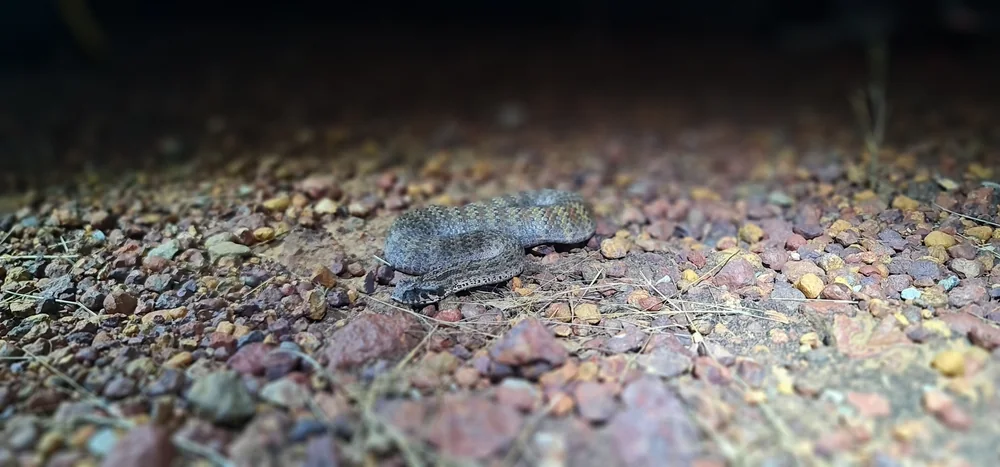
Photo: Max Tibby · CC0 1.0 (Licence)
Elapidae
Acanthophis rugosus
A stocky death adder of the Top End and north-western Queensland, usually marked with alternating pale and dark cross-bands. Some individuals have faint banding, so a brown or grey snake cannot be ruled out by colour alone.
Highly venomous
Open identification guide →
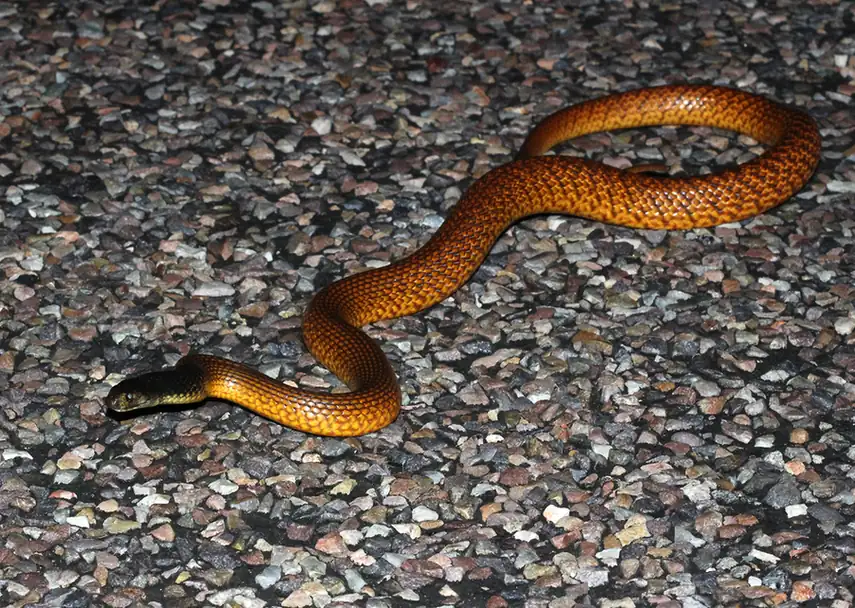
Photo: Lachlan Copeland · CC BY-SA 4.0 (Licence)
Elapidae
Pseudonaja mengdeni
A slender inland brown snake with yellow, orange or brown body forms and variable dark markings.
Venomous
Open identification guide →

Photo: Max Tibby · CC0 1.0 (Licence)
Elapidae
Pseudonaja aspidorhyncha
A slender brown snake of inland southern Australia, with variable body banding.
Venomous
Open identification guide →
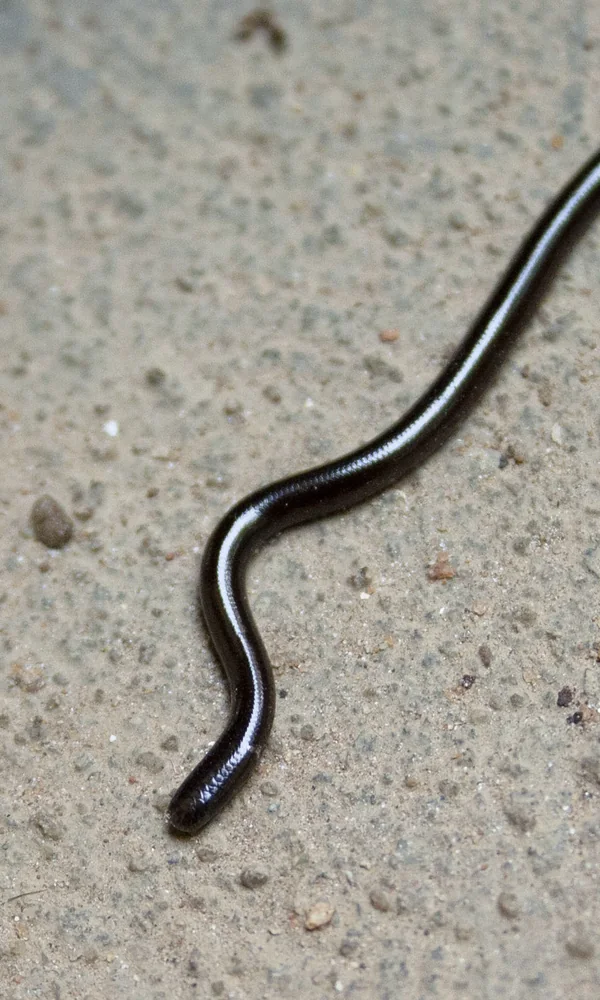
Photo: Siddarth Machado · CC BY 4.0 (Licence)
Typhlopidae
Indotyphlops braminus
A tiny introduced blind snake, usually shiny silver-grey, charcoal-grey or purple with a blunt head and tail. Australian records began around Darwin, the Torres Strait and Townsville, with the account describing continued spread.
Non-venomous
Open identification guide →
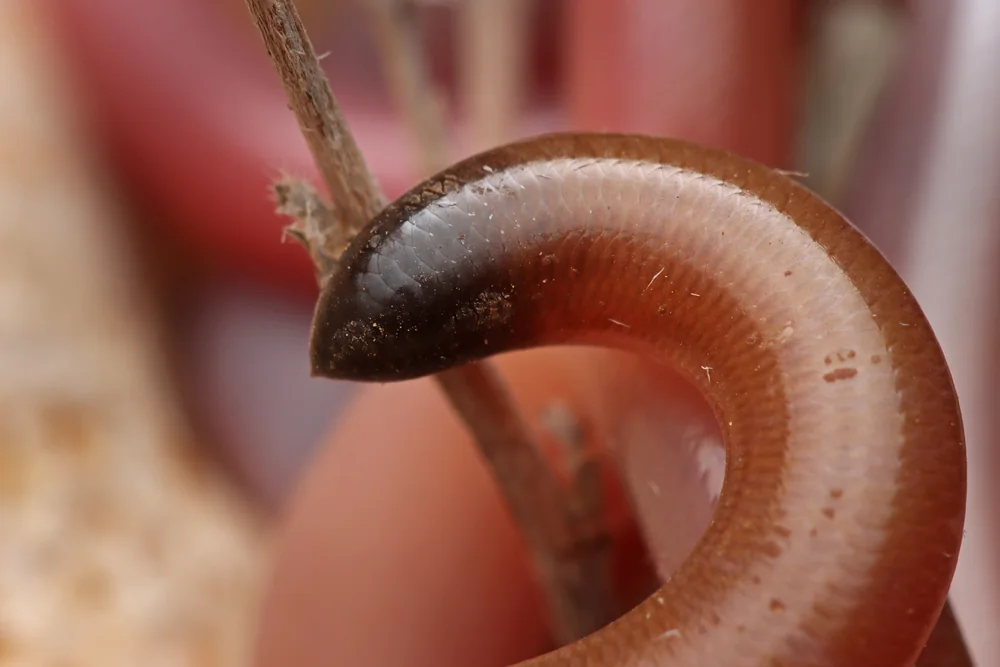
Photo: Connor Margetts · CC0 1.0 (Licence)
Typhlopidae
Anilios grypus
The Northern Long-beaked Blind Snake is a very slender blind snake from northern Australia, recognised in specialist descriptions by its beaked snout and dark tail.
Non-venomous
Open identification guide →

Photo: dhfischer · CC BY 4.0 (Licence)
Typhlopidae
Anilios bituberculatus
A widespread Australian blind snake with a slender body and a long snout. Specialist descriptions refer to a three-lobed snout outline when viewed from above.
Non-venomous
Open identification guide →
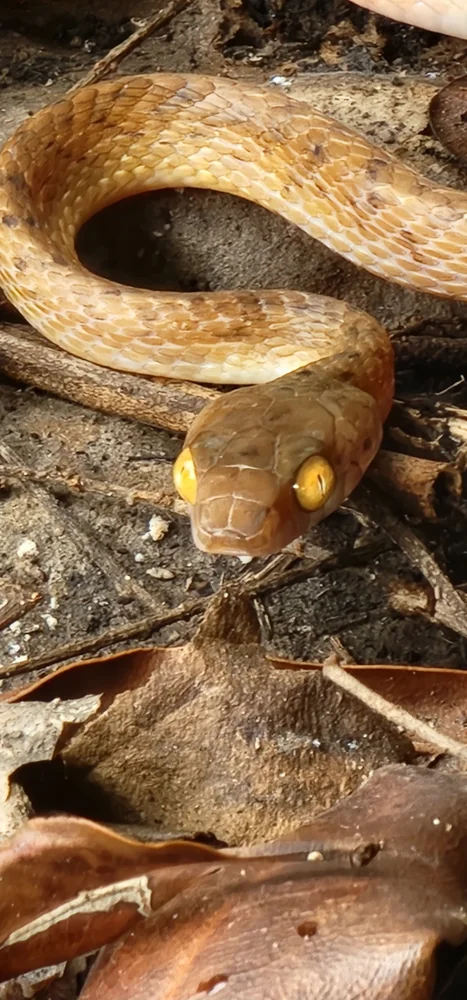
Photo: Bethlea Bell · CC0 1.0 (Licence)
Colubridae
Boiga irregularis
A slender tree snake with a large head, bulbous eyes and vertical pupils. Colour and banding vary across its northern and eastern Australian range, so appearance alone is not a safe approach cue.
Weakly venomous
Open identification guide →
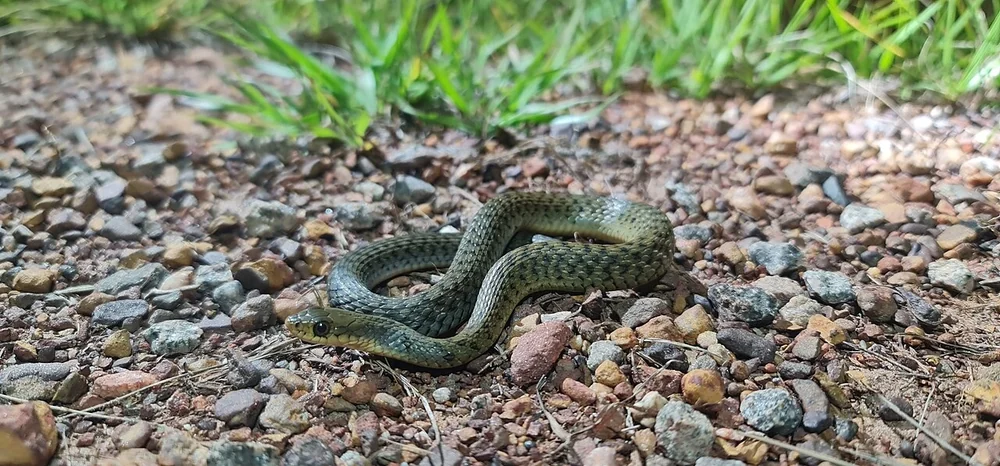
Photo: Max Tibby · CC0 (Licence)
Colubridae
Tropidonophis mairii
A small non-venomous snake often found around freshwater in northern and eastern Australia. Its grey or olive-brown body commonly carries broken dark bands. It closely resembles the venomous rough-scaled snake, so neither the waterside setting nor rough-looking scales proves an identification.
Non-venomous
Open identification guide →
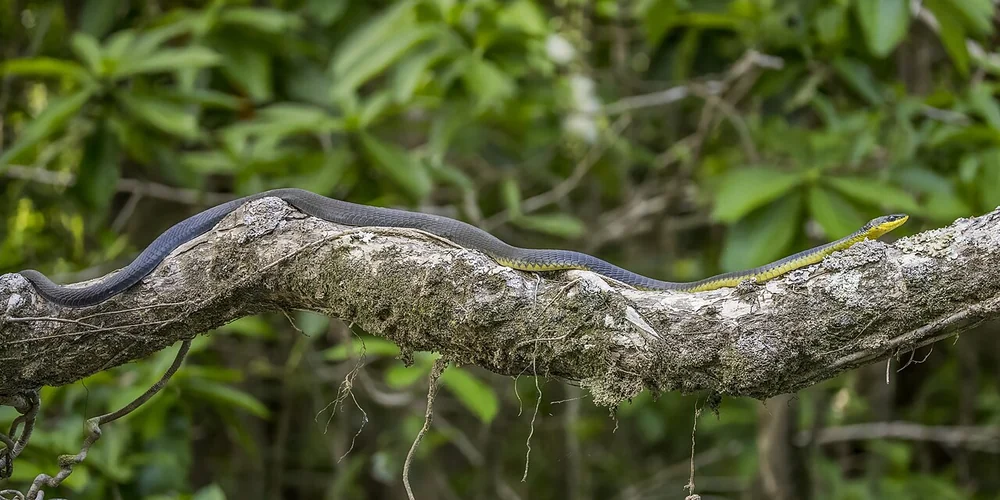
Photo: Charles J. Sharp · CC BY-SA 4.0 (Licence)
Colubridae
Dendrelaphis punctulatus
A very slender, agile snake with a long tail, often seen moving through gardens or low branches. Despite the name it may be olive, brown, black or even blue. Green colour is only one possible appearance of this non-venomous species.
Non-venomous
Open identification guide →
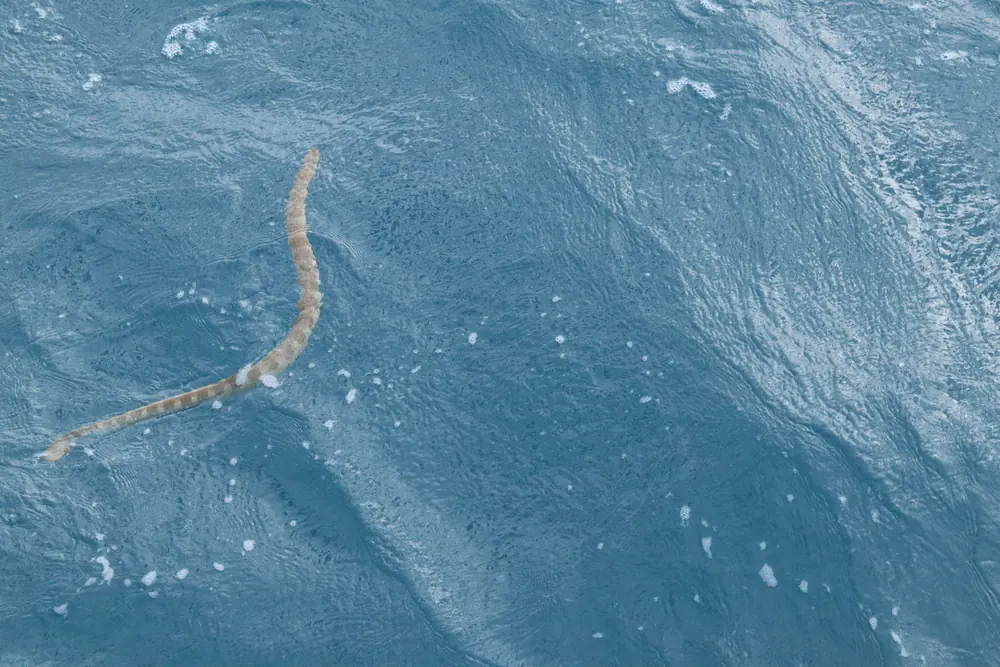
Photo: elawrey · CC BY 4.0 (Licence)
Elapidae
Hydrophis curtus
A marine snake with a greenish or yellowish back crossed by dark bands.
Venomous.
Open identification guide →
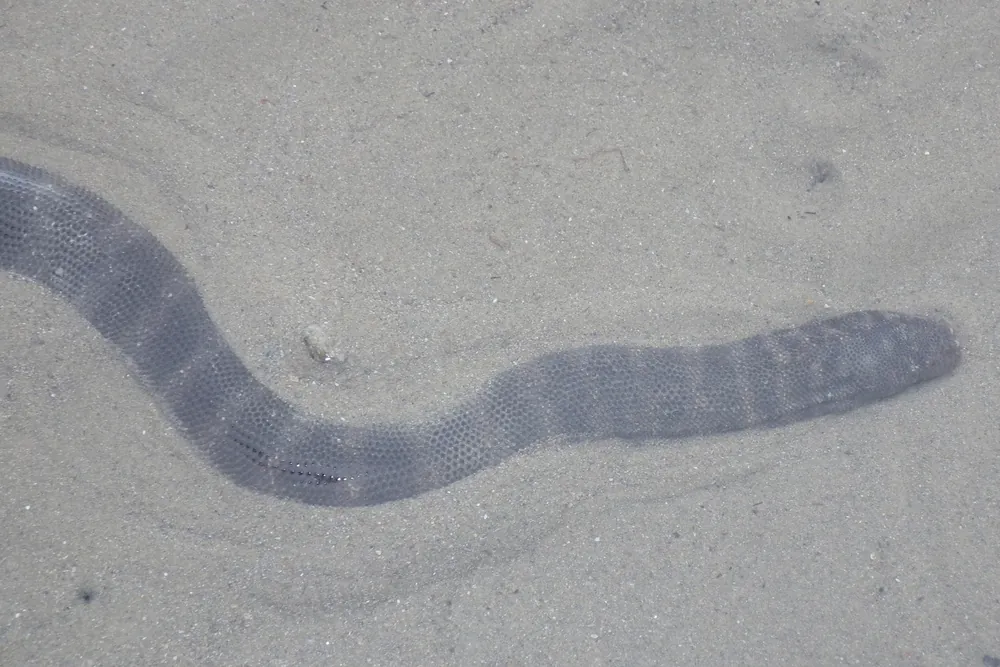
Photo: coenobita · CC BY 4.0 (Licence)
Acrochordidae
Acrochordus granulatus
A non-venomous coastal and waterway snake of northern Australia and south-east Asia.
Non-venomous
Open identification guide →

Photo: garywwilson · CC BY 4.0 (Licence)
Acrochordidae
Acrochordus arafurae
The Arafura File Snake is an aquatic northern Australian snake with loose skin and a dark, mesh-like pattern. It lives mainly in freshwater streams and billabongs but also enters estuaries and the sea.
Non-venomous in the consulted field-guide source.
Open identification guide →
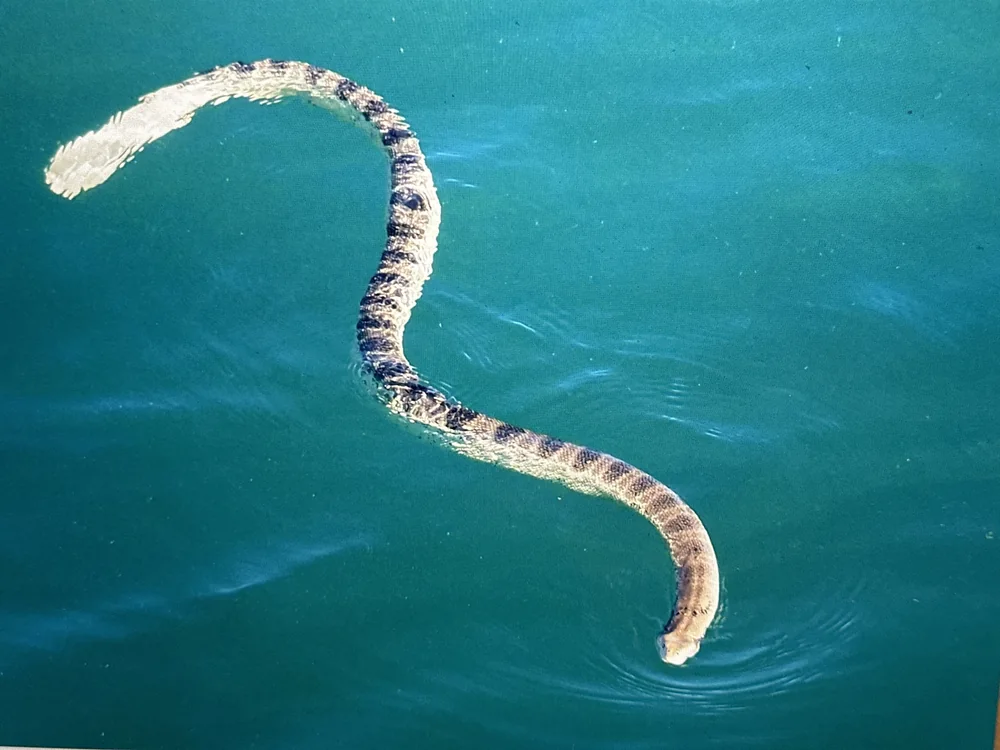
Photo: Rosario Douglas · CC BY 4.0 (Licence)
Elapidae
Hydrophis stokesii
A stout sea snake with variable brown to cream colouring; some individuals have dark bands and spots.
Venomous
Open identification guide →
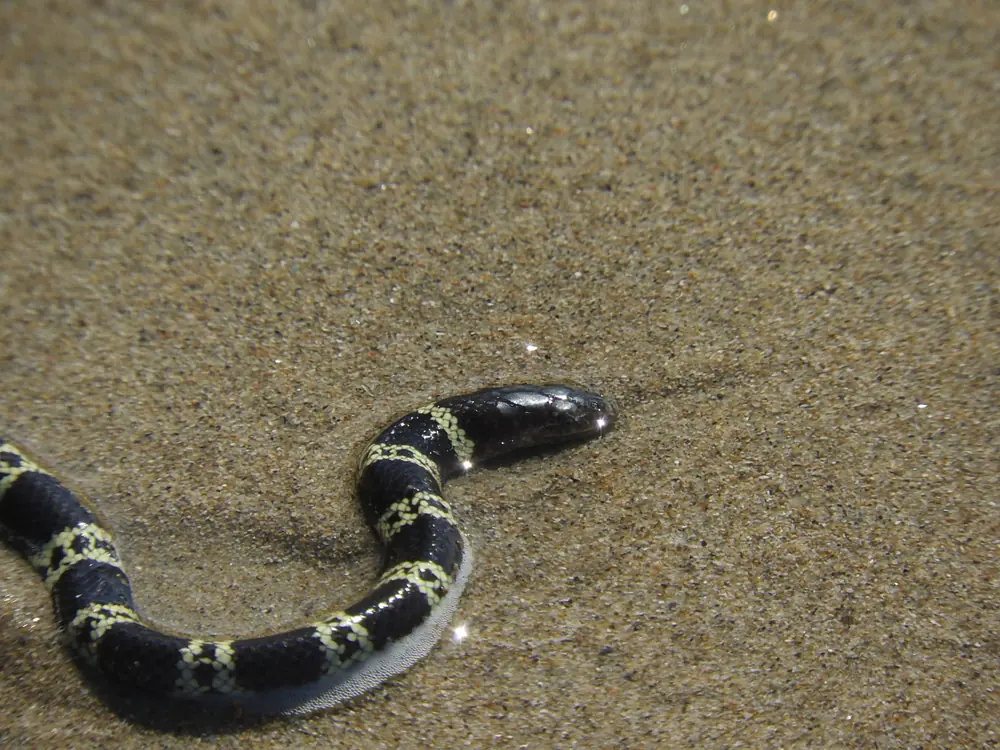
Photo: george_vaughan · CC0 1.0 (Licence)
Elapidae
Hydrophis elegans
A banded marine snake recorded around northern Australia, with qualified New South Wales records.
Dangerously venomous
Open identification guide →

Photo: Tim Robertson · CC0 1.0 (Licence)
Elapidae
Hydrophis platurus
Yellow-bellied Sea Snake is a pelagic marine snake recorded across tropical Australian waters and the wider Indian and Pacific oceans. It has a dark upper body, a yellow lower body and a patterned paddle tail.
Venomous
Open identification guide →
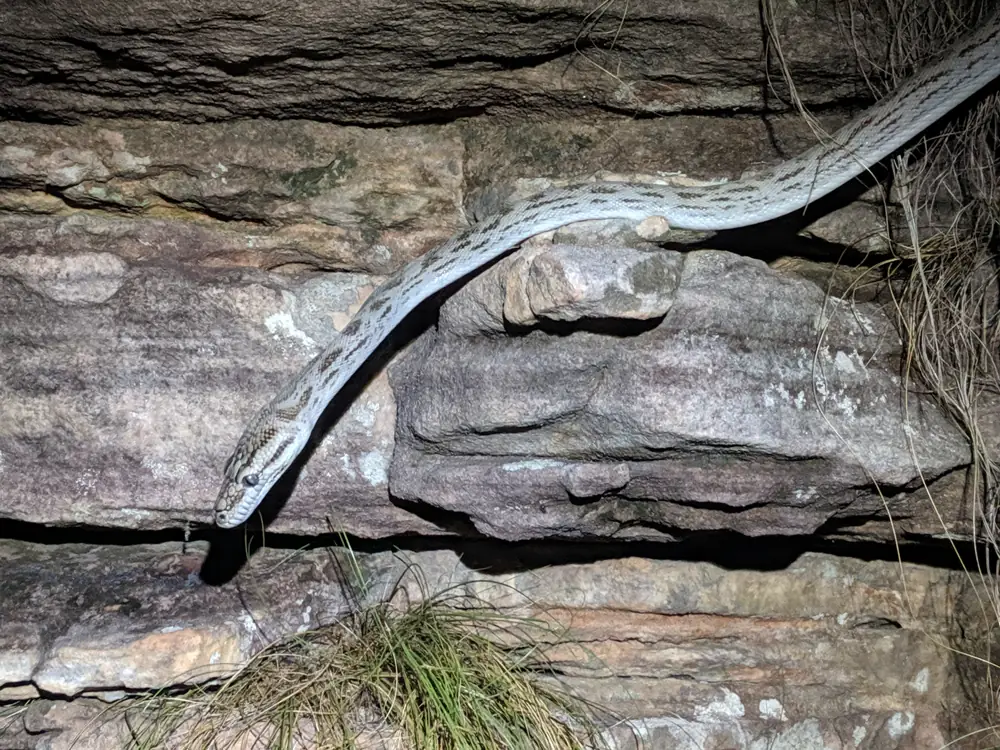
Head and forebody on a rock face; the rear of the snake extends beyond the photograph.
Photo: Caitlin Henderson · CC BY 4.0 (Licence)
Pythonidae
Nyctophilopython oenpelliensis
A large non-venomous python restricted to western Arnhem Land and the sandstone country around Oenpelli.
Non-venomous
Open identification guide →

Photo: Christopher Watson · CC BY-SA 3.0 (Licence)
Pythonidae
Morelia bredli
A large non-venomous python of central Australia's rocky ranges and woodlands.
Non-venomous
Open identification guide →

Photo: Andrew Mercer (www.baldwhiteguy.co.nz) · CC BY-SA 4.0 (Licence)
Pythonidae
Morelia spilota
A patterned python that can live in woodland, gardens and buildings as well as less disturbed habitats. Brown and cream blotches are common, but some forms have much darker bodies with pale spots. The diamond python is included within this variable species.
Non-venomous
Open identification guide →

Photo: Hugo Innes · CC BY 4.0 (Licence)
Pythonidae
Antaresia childreni
A non-venomous python whose accepted species concept includes northern and inland Australian forms.
Non-venomous
Open identification guide →

Photo: Max Tibby · CC0 1.0 (Licence)
Pythonidae
Aspidites melanocephalus
A large northern python marked by its sharply contrasting black head.
Non-venomous
Open identification guide →
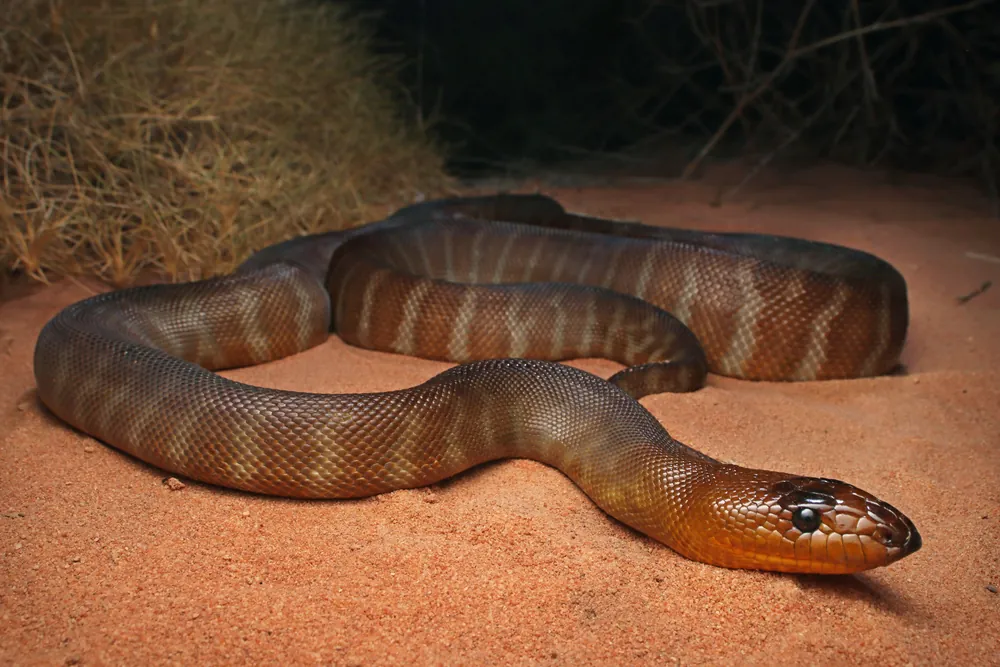
Photo: Connor Margetts · CC0 1.0 (Licence)
Pythonidae
Aspidites ramsayi
A large python with a pale yellow- to reddish-brown background and numerous dark bands. Juveniles may show a dark eye patch that often fades with age; the species occupies arid and semi-arid inland Australia.
Non-venomous
Open identification guide →
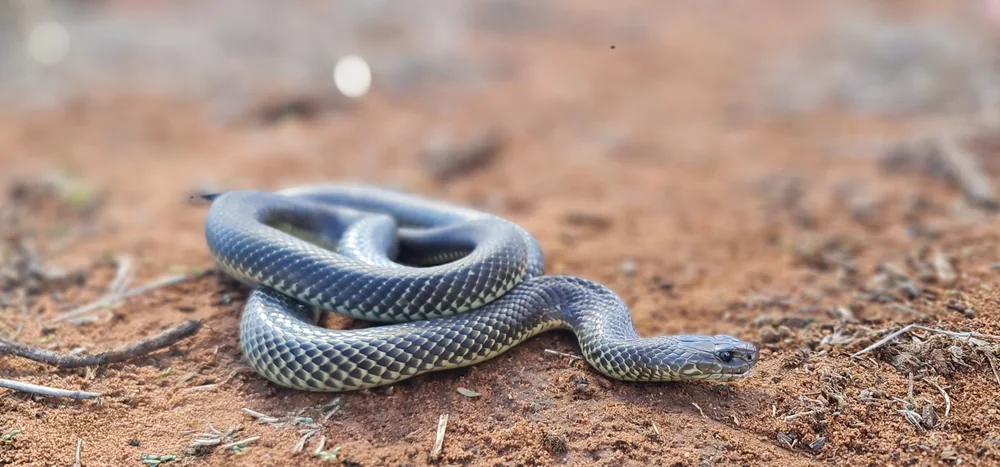
Photo: Max Tibby · CC0 1.0 (Licence)
Elapidae
Pseudechis australis
A large, variable snake widespread across most of Australia.
Dangerously venomous
Open identification guide →
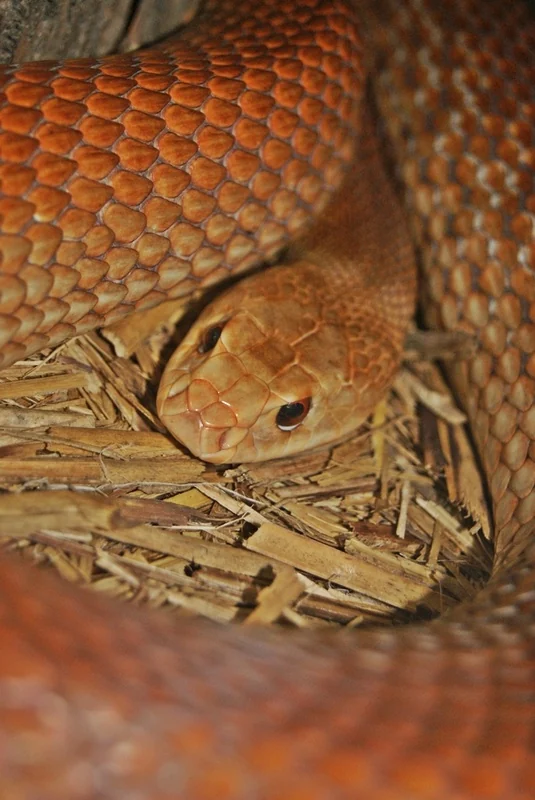
Photo: Danny S. · CC BY-SA 4.0 (Licence)
Elapidae
Oxyuranus scutellatus
A large snake of northern and north-eastern Australia, often with a pale face and a noticeably narrower neck. Its body may be reddish-brown, dark brown or almost black. Colour alone can easily lead to confusion with brown snakes or mulga snakes.
Highly venomous
Open identification guide →

Photo: Donald Hobern from Copenhagen, Denmark · CC BY 2.0 (Licence)
Elapidae
Pseudonaja textilis
An Eastern Brown Snake is not always brown. Adults can be tan, orange-brown or nearly black, while young snakes may have striking dark bands. A relatively small head and slender body are more useful clues than the name alone.
Highly venomous
Open identification guide →
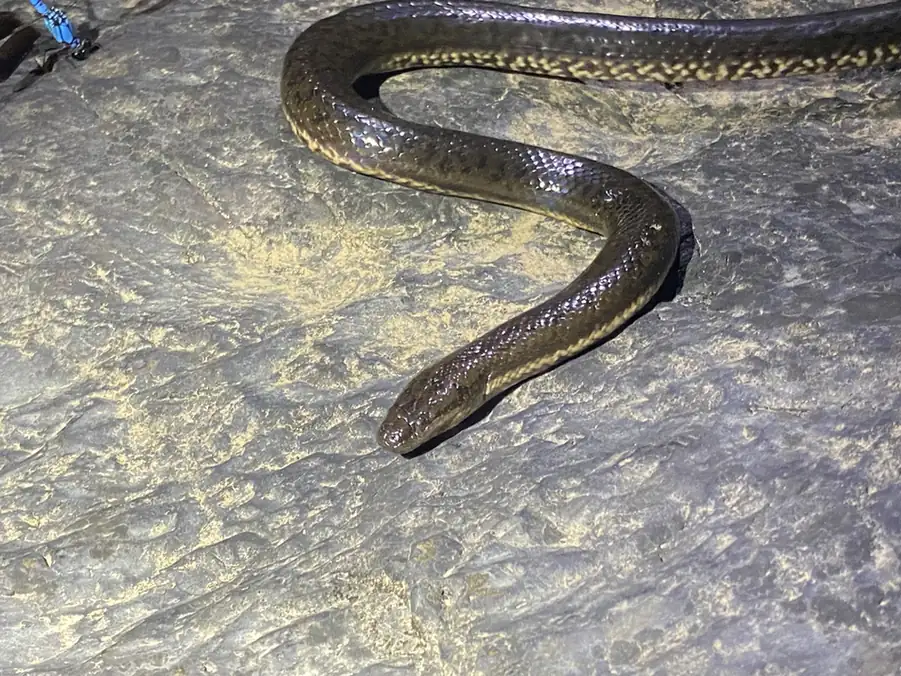
Photo: Edward Bell · CC BY 4.0 (Licence)
Homalopsidae
Pseudoferania polylepis
A weakly venomous northern Australian water snake that feeds on fish, frogs and crustaceans.
Weakly venomous; large specimens should be treated with caution
Open identification guide →

Horned Sea Snake (Hydrophis peronii) recorded by a remotely operated vehicle at Ashmore Reef in 2021. The inset shows a closer view of the head. Underwater lighting affects the apparent colour.
Photo: Speed et al. (2022), Frontiers in Marine Science 9:921542, Figure 3H · CC BY 4.0 (Licence)
Elapidae
Hydrophis peronii
An Indo-Pacific sea snake with Australian records in the Northern Territory, Queensland and Western Australia. It has blunt projections on certain head shields and may be cream to pale brown with bands that fade in older adults.
Venomous
Open identification guide →

Photo: rcrofts · CC BY 4.0 (Licence)
Elapidae
Aipysurus duboisii
Dubois’ Sea Snake, also called the Reef Shallows Sea Snake, is a venomous marine snake recorded from northern Australian waters and nearby Indo-Pacific seas.
Dangerously venomous
Open identification guide →

Photo: Lawrence Hylton · CC BY 4.0 (Licence)
Elapidae
Suta monachus
A slender hooded snake of inland Western Australia, South Australia and the south-western Northern Territory.
Venomous
Open identification guide →
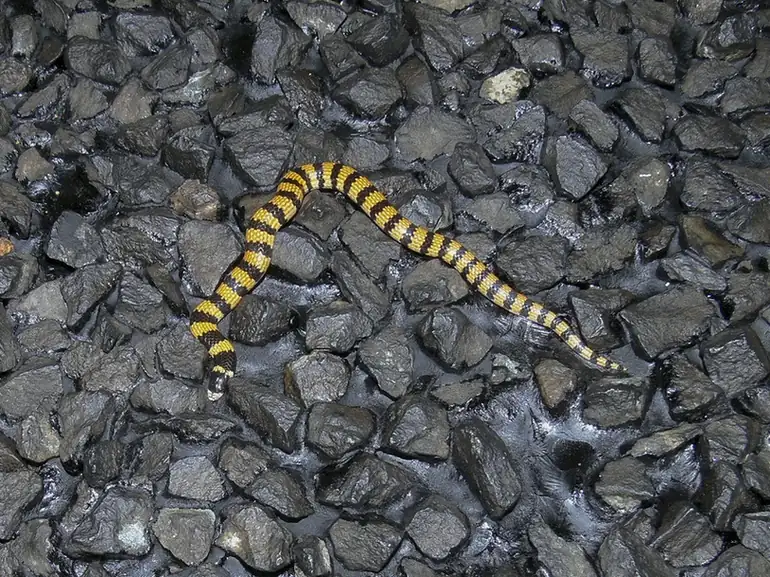
Photo: dhfischer · CC BY 4.0 (Licence)
Elapidae
Simoselaps anomalus
A small burrowing banded snake of the Northern Territory, South Australia and Western Australia.
Venomous
Open identification guide →

Photo: Rosario Douglas · CC BY 4.0 (Licence)
Elapidae
Hydrophis atriceps
A dangerously venomous marine snake confirmed in Australian waters around Darwin.
Dangerously venomous.
Open identification guide →
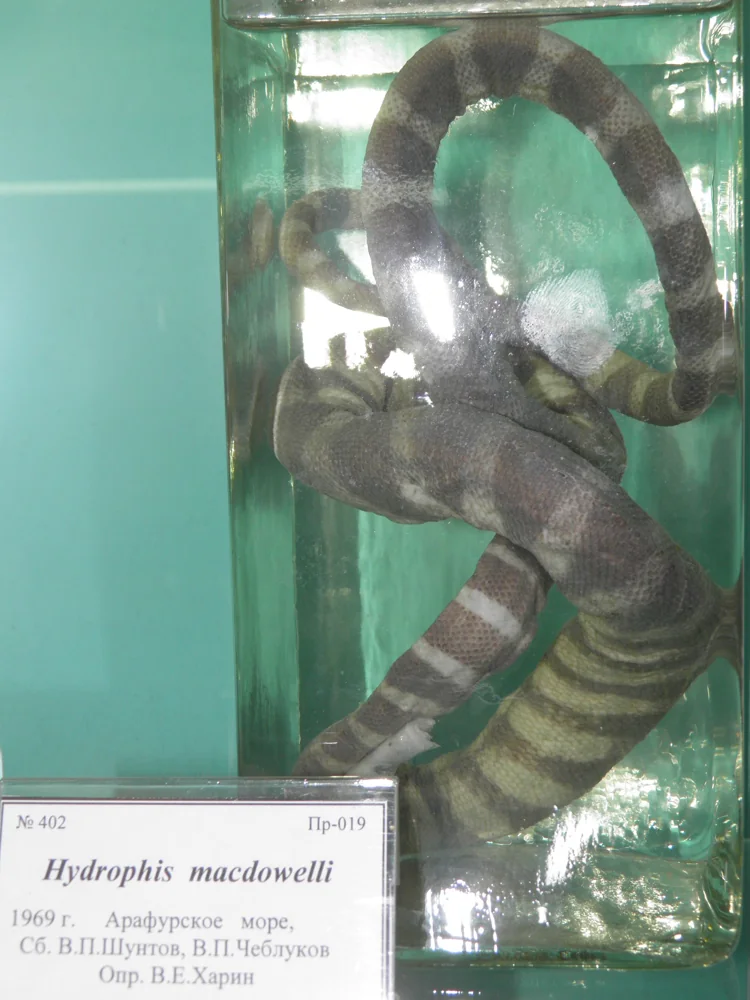
McDowell’s Sea Snake (Hydrophis macdowelli) preserved museum specimen in a labelled jar.
Photo: A. C. Tatarinov · CC0 1.0 (Licence)
Elapidae
Hydrophis macdowelli
An Australian sea snake with a small head, compressed rear body and a banded pattern accompanied by rows of spots, recorded in the Northern Territory, Queensland and Western Australia.
Highly venomous
Open identification guide →
No photograph available
Elapidae
Demansia olivacea
A very slender whipsnake of the Top End and northern Kimberley, with reported facial markings.
Venomous
Open identification guide →

Photographed in the Mount Isa area, Queensland.
Photo: Chris Hay · CC BY 4.0 (Licence)
Elapidae
Demansia quaesitor
The Sombre Whip Snake is a small venomous snake of northern Australia with brown to black colouring, a paler head and a dark nape collar. It occurs in tropical and semi-arid woodland.
Venomous
Open identification guide →

Photo: Max Tibby · CC0 1.0 (Licence)
Elapidae
Demansia cyanochasma
Desert Whip Snake is a venomous central Australian species ranging from southeastern inland Western Australia through South Australia and central/southern Northern Territory to south-western Queensland. It is bluish-grey to brown, with a cream-edged dark line across the snout.
Venomous
Open identification guide →
No photograph available
Elapidae
Brachyurophis morrisi
The Arnhem Shovel-nosed Snake is a small Northern Territory snake from northern Arnhem Land. It has an orange-brown body, a dark nape band and little or no dark cross-banding on the body and tail.
Venomous
Open identification guide →

Collected at Wickham Point, Northern Territory. Black-and-white journal photograph; whether the specimen was live or preserved when photographed is not stated. This image cannot show its living colour.
Photo: T. Parkin · CC BY 4.0 (Licence)
Elapidae
Parahydrophis mertoni
A little-known venomous sea snake recorded in northern Australian coastal waters, including mangrove estuaries around Darwin.
Venomous
Open identification guide →
No photograph available
Elapidae
Hydrophis zweifeli
A venomous sea snake recorded from the Gulf of Carpentaria and adjacent northern Australian waters.
Venomous
Open identification guide →
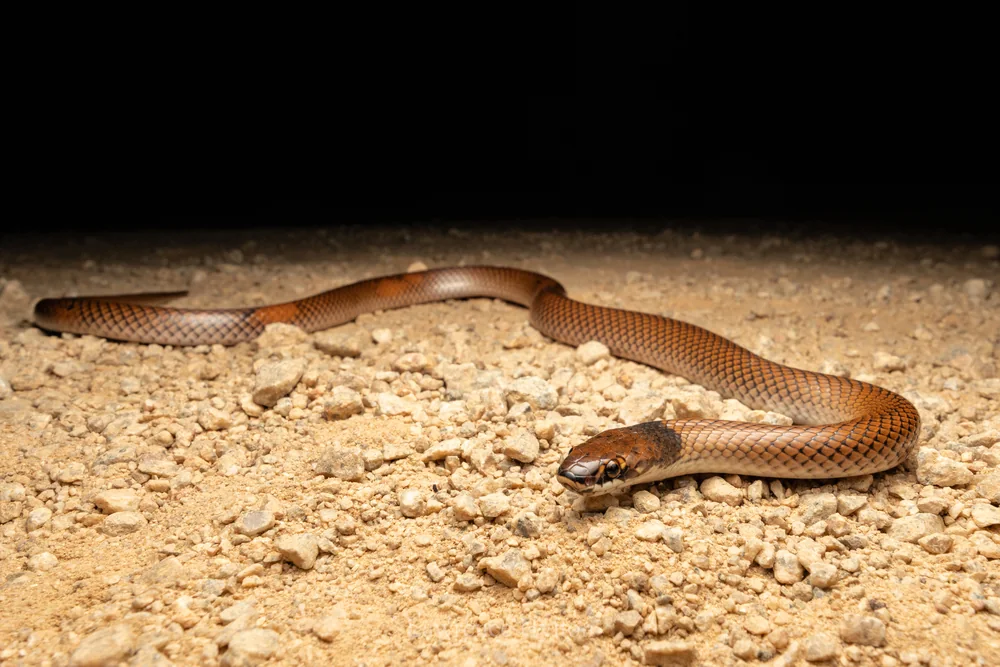
Photo: Lawrence Hylton · CC BY 4.0 (Licence)
Elapidae
Suta suta
A live-bearing Australian snake with brown to reddish-brown colouring, variable dark-edged scales and a darker head and nape.
Venomous
Open identification guide →
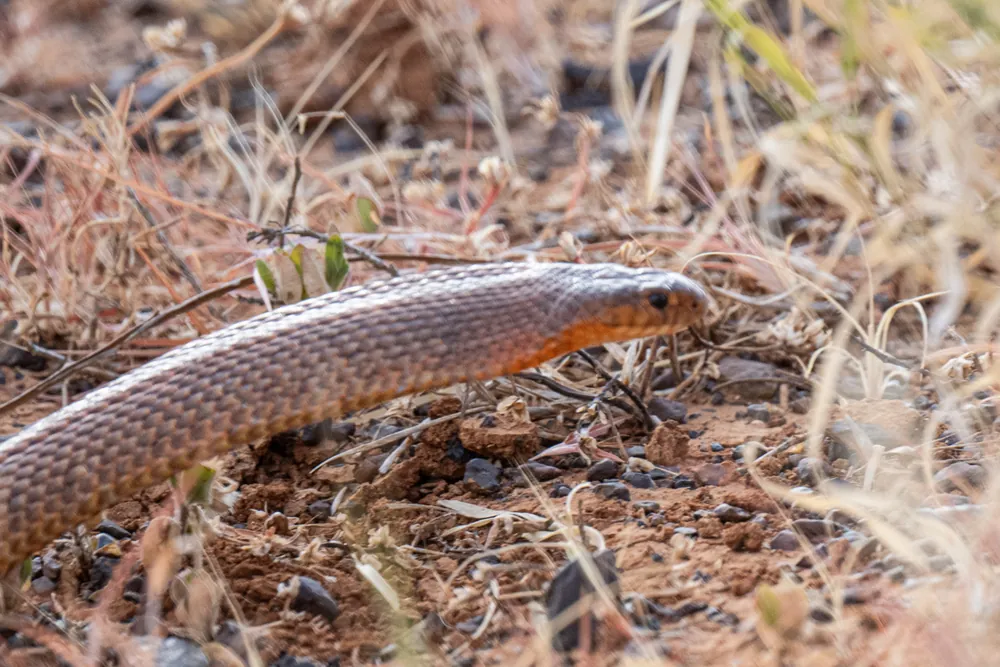
Photo: Alan Bell · CC BY 4.0 (Licence)
Elapidae
Pseudonaja ingrami
A large dangerously venomous brown-snake relative of western Queensland and the Barkly.
Dangerously venomous
Open identification guide →
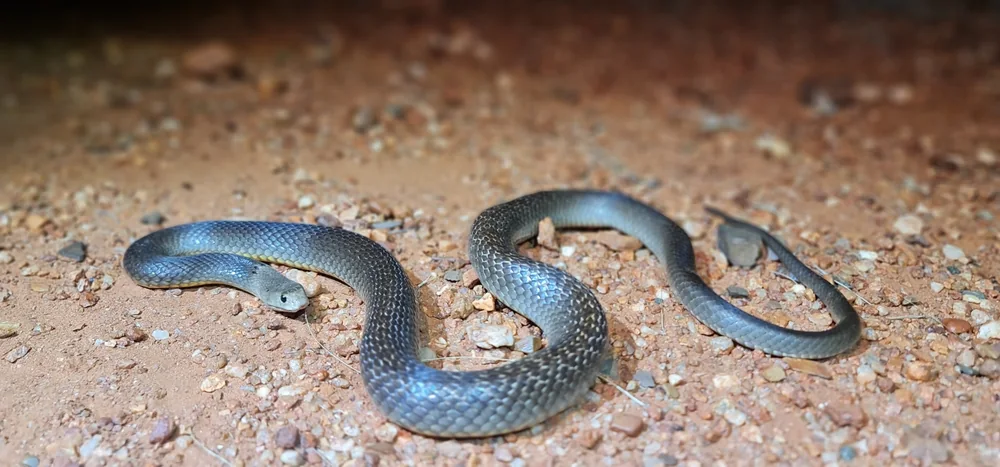
Photo: Max Tibby · CC0 1.0 (Licence)
Elapidae
Pseudonaja nuchalis
A dangerously venomous brown snake of tropical northern Australia.
Dangerously venomous
Open identification guide →
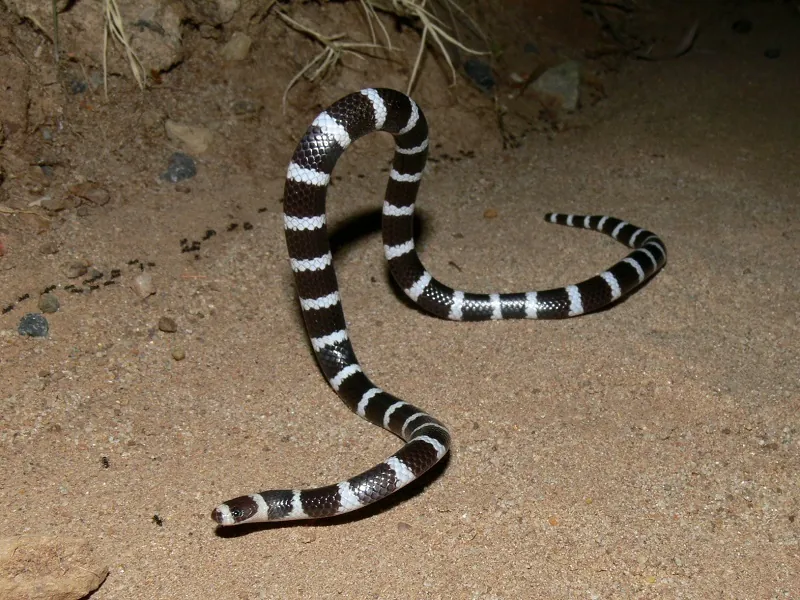
Photo: dhfischer · CC BY 4.0 (Licence)
Elapidae
Vermicella annulata
A snake with bold black-and-white rings around its body, found across much of eastern and central Australia.
Venomous
Open identification guide →

Photo: Lachlan Copeland · CC BY-SA 4.0 (Licence)
Homalopsidae
Fordonia leucobalia
A coastal northern Australian water snake with glossy dark upperparts, pale underside and irregular spots.
Probably weakly venomous (rear-fanged)
Open identification guide →
No photograph available
Elapidae
Vermicella intermedia
A black-and-white banded burrowing snake recorded in the Kimberley and northern Northern Territory.
Venomous
Open identification guide →
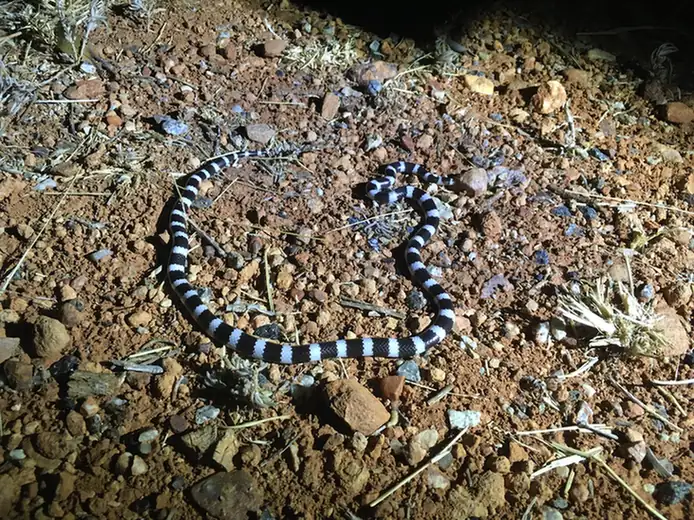
Photo: Donna Belder · CC BY 4.0 (Licence)
Elapidae
Vermicella vermiformis
Centralian Bandy Bandy is a black-and-white banded burrowing snake recorded in the Northern Territory, including the MacDonnell Ranges west of Alice Springs.
Venomous
Open identification guide →
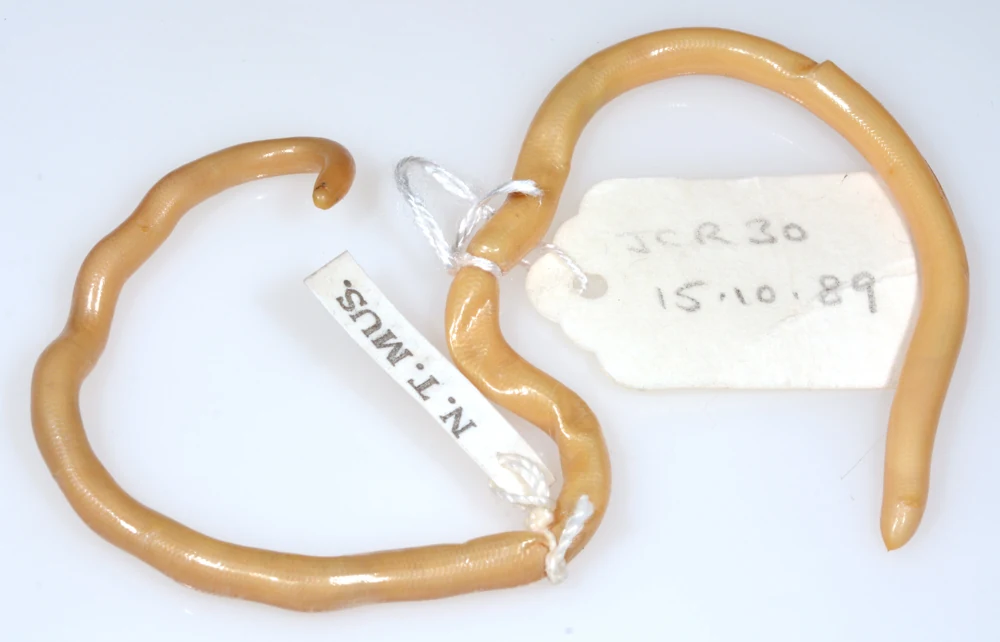
Preserved holotype of Anilios fossor, NTM R14324 (field tag JCR30). Preserved colours do not reliably represent a living snake.
Photo: Glenn M. Shea (2015), Figure 1, Zootaxa 4033(1):103–116; CC BY 3.0. · CC BY 3.0 (Licence)
Typhlopidae
Anilios fossor
A rarely documented blind snake known from a single Ruby Gap Nature Park specimen. Its rounded snout and terminal tail spine are technical characters for specialists, not cues to inspect a live snake.
Non-venomous
Open identification guide →
No photograph available
Typhlopidae
Anilios yirrikalae
A blind snake documented from Yirrkala in north-eastern Arnhem Land. Published information is limited and does not establish its full range.
Non-venomous
Open identification guide →

Photo: dhfischer · CC BY 4.0 (Licence)
Elapidae
Brachyurophis fasciolatus
A small burrowing snake with narrow dark bands across a pale body. Red and black flecks occur between the bands.
Venomous
Open identification guide →
No photograph available
Elapidae
Aipysurus mosaicus
Mosaic Sea Snake is a northern Australian marine snake with irregular staggered cross-bands, recorded from offshore waters, estuaries and tidal rivers.
Venomous
Open identification guide →
No photograph available
Elapidae
Hydrophis pacificus
A venomous marine snake recorded from northern Australian waters, with uncertainty surrounding some historical identifications.
Venomous
Open identification guide →
No photograph available
Elapidae
Vermicella multifasciata
A slender banded snake of the Northern Territory and Western Australia with more than 75 black bands on the body and tail.
Venomous
Open identification guide →
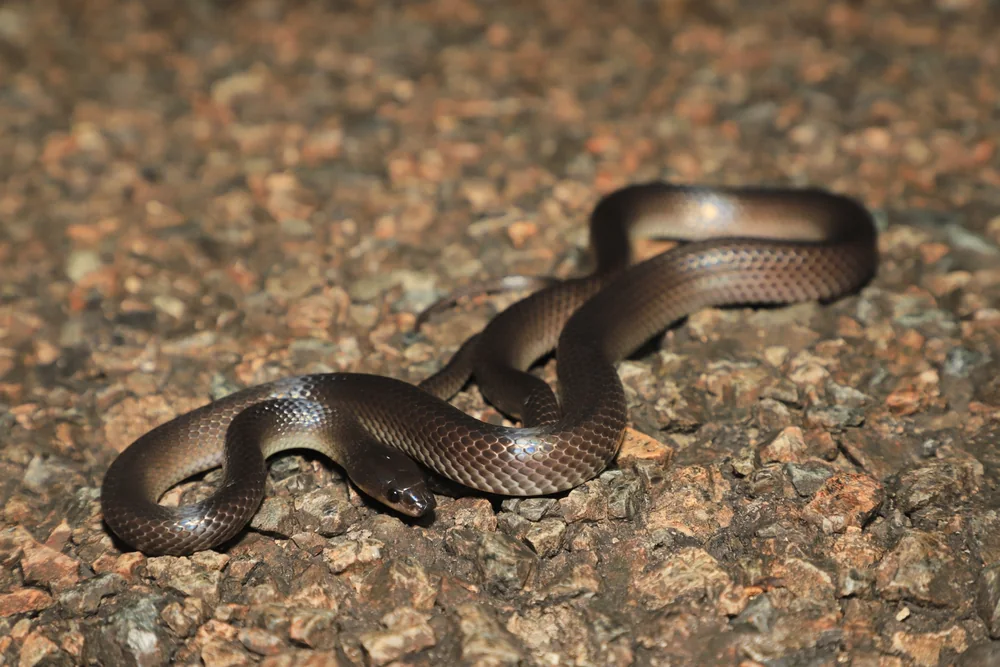
Photo: jakeschneider00 · CC BY-SA 4.0 (Licence)
Colubridae
Stegonotus australis
A muscular, nocturnal snake recorded from the Northern Territory and Queensland.
Non-venomous
Open identification guide →
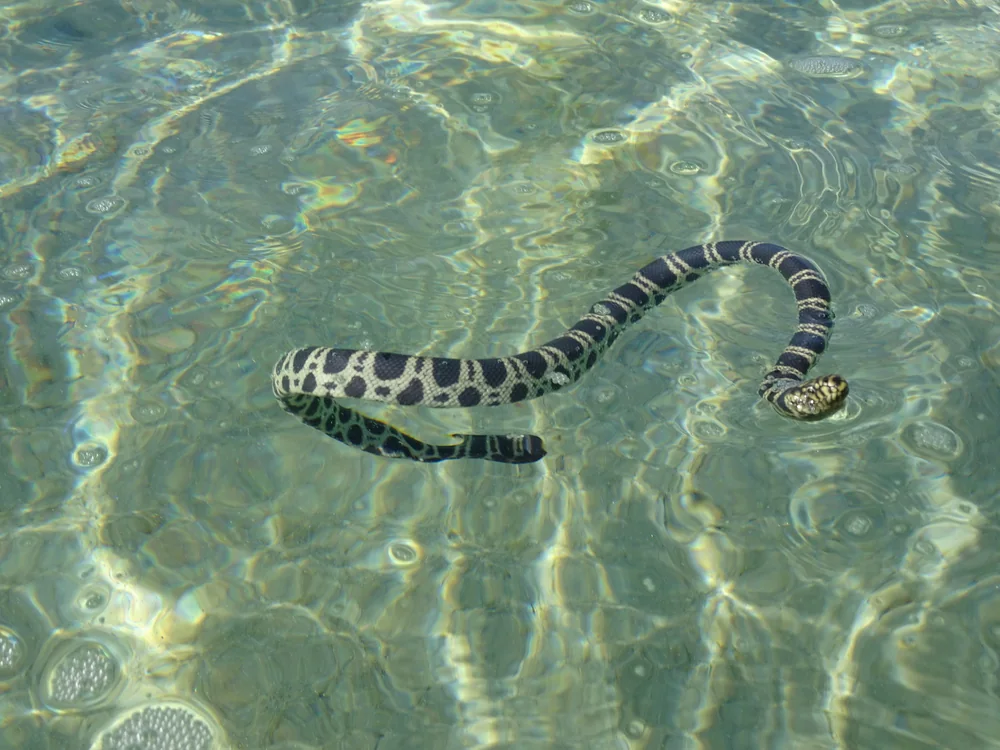
Photo: Jiro Iguchi · CC BY 4.0 (Licence)
Elapidae
Hydrophis major
A large, relatively heavy-bodied sea snake of northern Australian waters.
Venomous
Open identification guide →
No photograph available
Homalopsidae
Myron richardsonii
A small grey-brown mangrove snake with pale flecking, found in coastal and tidal waters of northern Australia and New Guinea. Its Australian range remains unresolved between the checked sources.
Weakly venomous
Open identification guide →
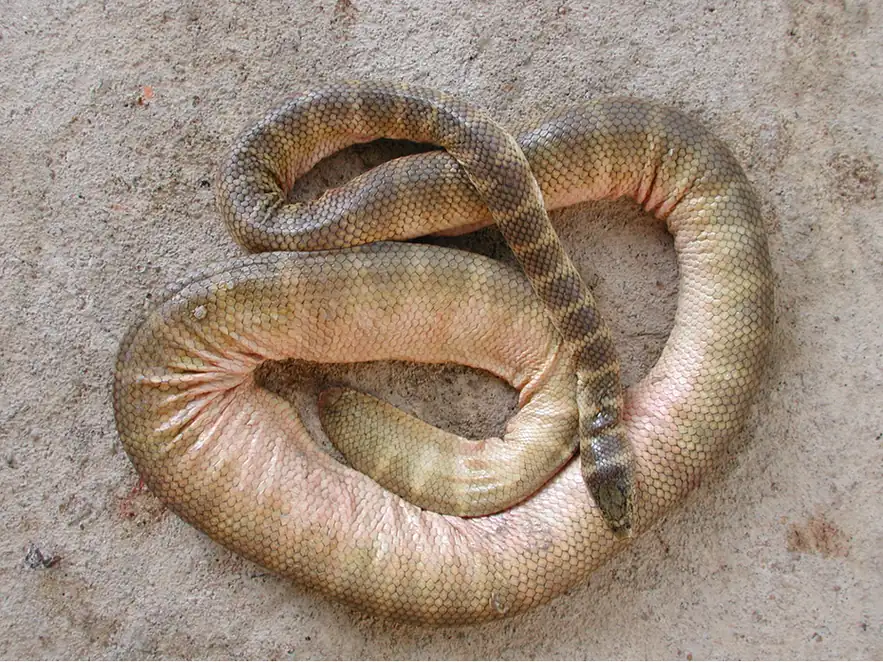
Belcher’s Sea Snake (Hydrophis belcheri) photographed reference specimen from Marine Reptiles (2011); specimen condition not documented.
Photo: Rasmussen AR, Murphy JC, Ompi M, Gibbons JW, Uetz P (2011) · CC BY 2.5 (Licence)
Elapidae
Hydrophis belcheri
A marine snake reported from the Arafura Sea in a 2014 account of Australian sea snakes.
Venomous
Open identification guide →
No photograph available
Elapidae
Demansia simplex
A relatively robust Kimberley whipsnake that is often lightly patterned.
Venomous
Open identification guide →
No photograph available
Elapidae
Demansia shinei
A venomous whipsnake of northern central Australia.
Venomous.
Open identification guide →
No photograph available
Elapidae
Demansia angusticeps
A small tropical whipsnake of the southern Kimberley and Victoria River region.
Venomous
Open identification guide →
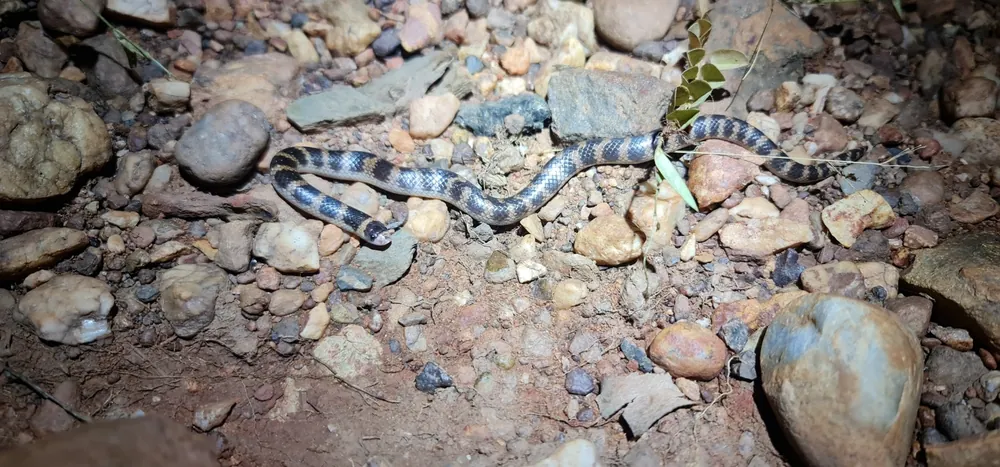
Photo: Max Tibby · CC0 1.0 (Licence)
Elapidae
Brachyurophis roperi
A small banded snake recorded across the Kimberley and Top End, with a qualified north-west Queensland record.
Venomous
Open identification guide →

Photo: Max Tibby · CC0 1.0 (Licence)
Elapidae
Demansia rimicola
A brown-grey whipsnake with fine pale and dark lines along its sides. It inhabits cracking-clay country across parts of northern and inland eastern Australia.
Venomous
Open identification guide →

Photo: Max Tibby · CC0 1.0 (Licence)
Elapidae
Demansia papuensis
A large, slender whipsnake that is dark grey, brown or black above and often becomes redder toward the rear. Its tropical northern range runs from the Kimberley to Cape York and inland Queensland.
Venomous
Open identification guide →
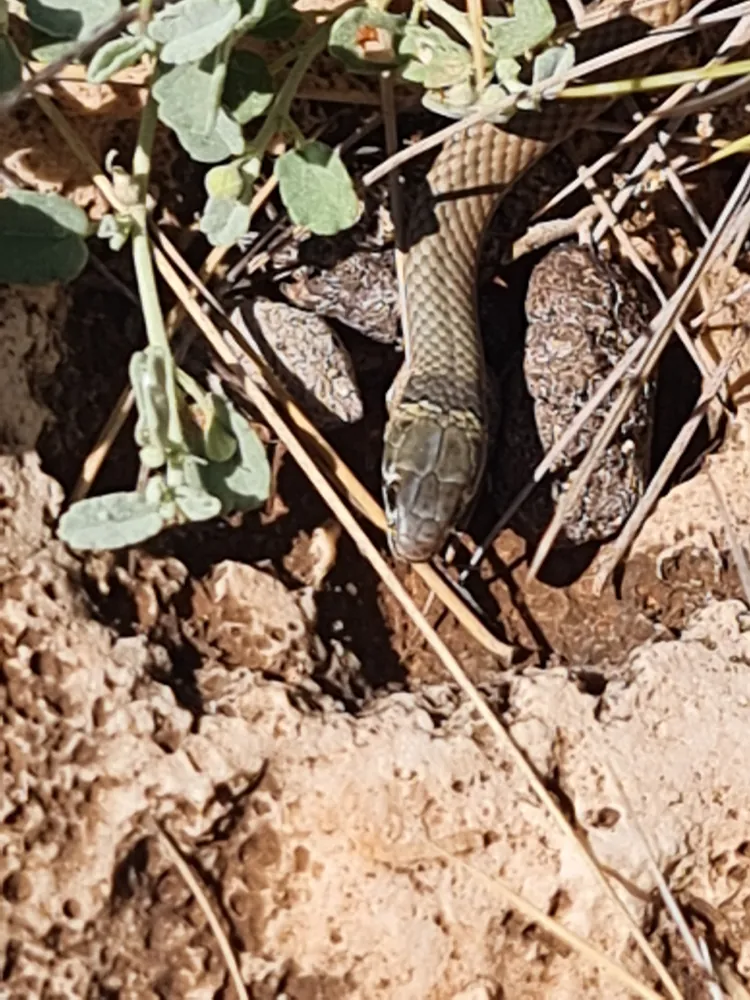
Photo: Belinda Forbes · CC BY 4.0 (Licence)
Elapidae
Demansia calodera
A small olive-brown to brown whipsnake with a pale-edged dark collar and obscure spots. The current diagnosis supports Western Australia; AROD also lists NT without a precise locality, so the range remains partial.
Venomous
Open identification guide →
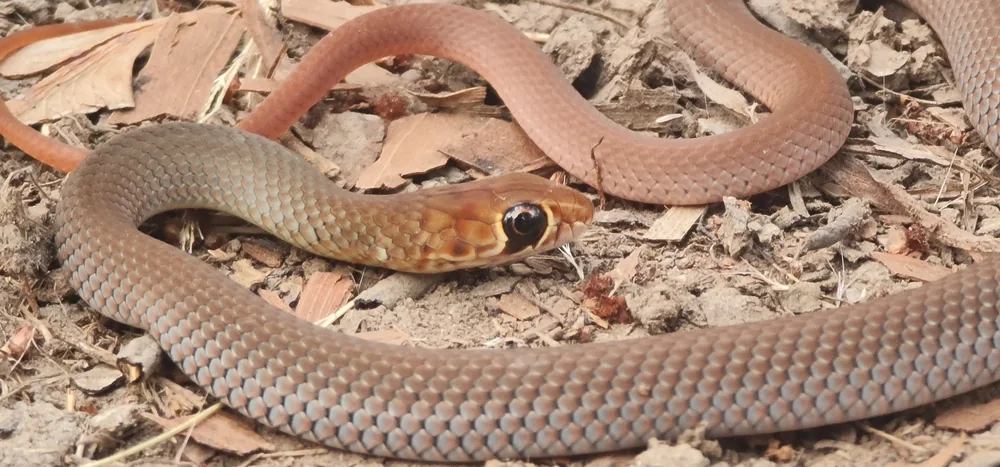
Photo: Max Tibby · CC0 1.0 (Licence)
Elapidae
Demansia vestigiata
Lesser Black Whip Snake is recorded from eastern Queensland to the eastern Kimberley in Western Australia, with Northern Territory records. It is dark grey to brown or black above and may become redder toward the rear; the head is often tan.
Venomous
Open identification guide →

Photo: Max Tibby · CC0 1.0 (Licence)
Homalopsidae
Cerberus australis
Bockadam is a northern Australian water snake recorded from coastal Queensland, the Northern Territory and Western Australia. Revised accounts describe variable grey to red colouration, with plain or partly patterned forms and a possible stripe behind the eye.
Weakly venomous (rear-fanged)
Open identification guide →
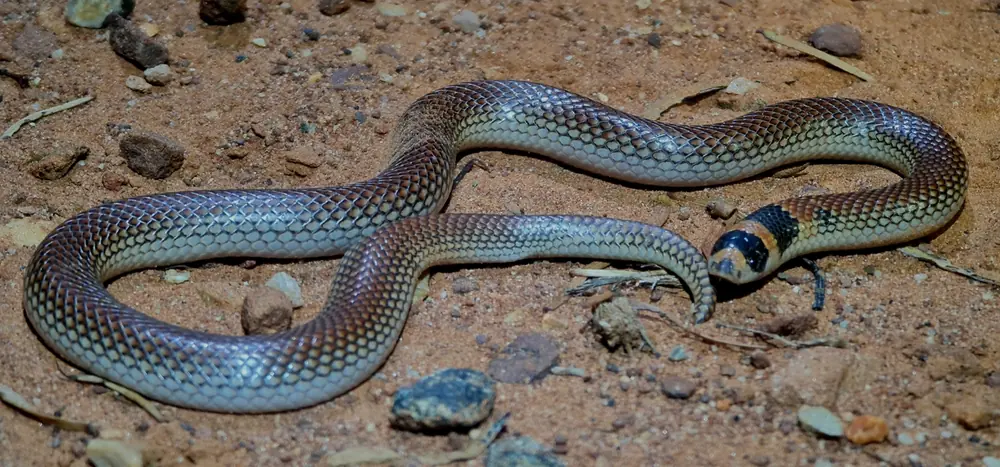
Photo: Max Tibby · CC0 1.0 (Licence)
Elapidae
Brachyurophis incinctus
Unbanded Shovel-nosed Snake is recorded from central Australia north to the Gulf of Carpentaria and across western Queensland. It is orange, pink or brown above, with dark-edged scales and local head and nape bands.
Venomous
Open identification guide →
No photograph available
Typhlopidae
Anilios nema
A slender blind snake known from the Darwin area, with a rounded snout and limited field pattern.
Non-venomous
Open identification guide →
No photograph available
Typhlopidae
Anilios kimberleyensis
A slender blind snake of the Kimberley and adjacent Northern Territory, with a flat head and rounded snout.
Non-venomous
Open identification guide →
No photograph available
Typhlopidae
Anilios guentheri
A slender blind snake with a dark tail, recorded in the Northern Territory and Western Australia.
Non-venomous
Open identification guide →
No photograph available
Typhlopidae
Anilios unguirostris
The Claw-snouted Blind Snake is a moderately slender blind snake recorded across northern and central parts of Australia. Its specialist diagnosis refers to a cutting edge at the tip of the snout.
Non-venomous
Open identification guide →
No photograph available
Typhlopidae
Anilios minimus
The Groote Eylandt Dwarf Blind Snake is a small, poorly known blind snake recorded from Groote Eylandt and nearby Arnhem Land in the Northern Territory.
Non-venomous
Open identification guide →
No photograph available
Typhlopidae
Anilios diversus
The Northern Blind Snake is a small, pale blind snake recorded from northern Australia, including the Northern Territory, Queensland and Western Australia.
Non-venomous
Open identification guide →
