Selected from an explicit venomous status in the researched catalogue. Unknown and non-venomous statuses are excluded. This is not a ranking of venom potency or encounter risk.

Collected at Wickham Point, Northern Territory. Black-and-white journal photograph; whether the specimen was live or preserved when photographed is not stated. This image cannot show its living colour.
Photo: T. Parkin · CC BY 4.0 (Licence)
Elapidae
Parahydrophis mertoni
A little-known venomous sea snake recorded in northern Australian coastal waters, including mangrove estuaries around Darwin.
Venomous
Open identification guide →
No photograph available
Elapidae
Brachyurophis morrisi
The Arnhem Shovel-nosed Snake is a small Northern Territory snake from northern Arnhem Land. It has an orange-brown body, a dark nape band and little or no dark cross-banding on the body and tail.
Venomous
Open identification guide →
No photograph available
Elapidae
Hydrophis zweifeli
A venomous sea snake recorded from the Gulf of Carpentaria and adjacent northern Australian waters.
Venomous
Open identification guide →
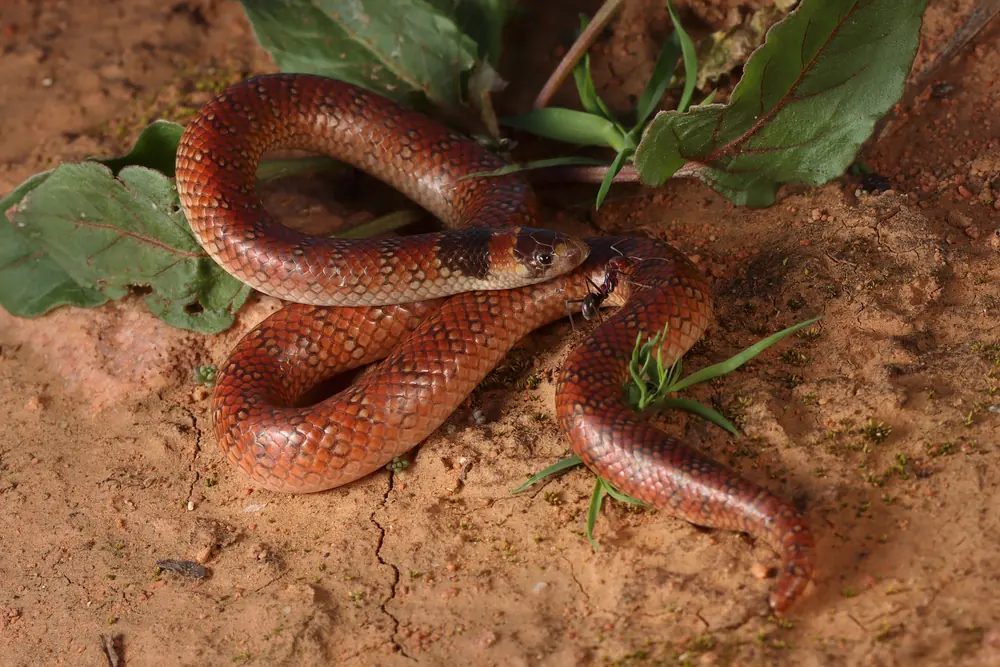
Photo: Connor Margetts · CC BY 4.0 (Licence)
Elapidae
Brachyurophis australis
The Australian Coral Snake is a small shovel-nosed snake with reddish colouring, a dark head and nape and narrow pale bands. It occurs across parts of eastern and southern mainland Australia.
Venomous
Open identification guide →
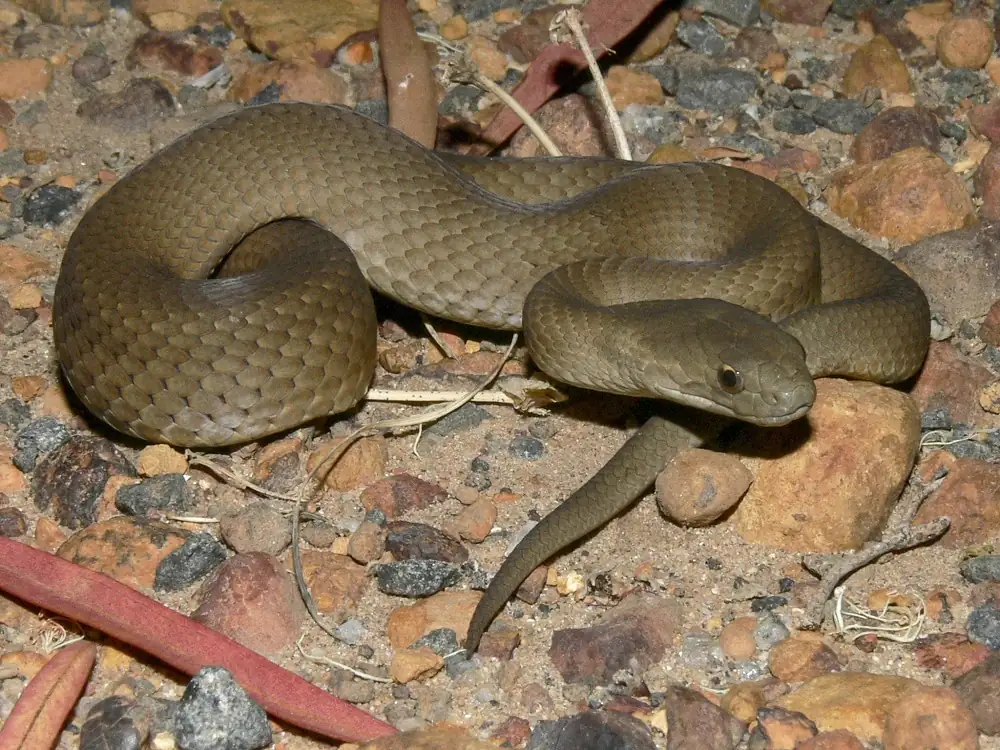
Photo: dhfischer · CC BY 4.0 (Licence)
Elapidae
Echiopsis curta
A short, stout snake with a broad head and generally plain olive-brown, brown or reddish-brown upperparts. Its separated populations include south-western NSW, Victoria, South Australia and Western Australia.
Venomous
Open identification guide →

Deceased Barkly death adder photographed on a road at Marrakai, Northern Territory. Body posture is not representative of a living snake.
Photo: Max Tibby · CC0 1.0 (Licence)
Elapidae
Acanthophis hawkei
Barkly Death Adder is a stout-bodied death adder associated with the black-soil plains of the Barkly Tableland and fragmented populations in western Queensland and the Northern Territory.
Highly venomous
Open identification guide →
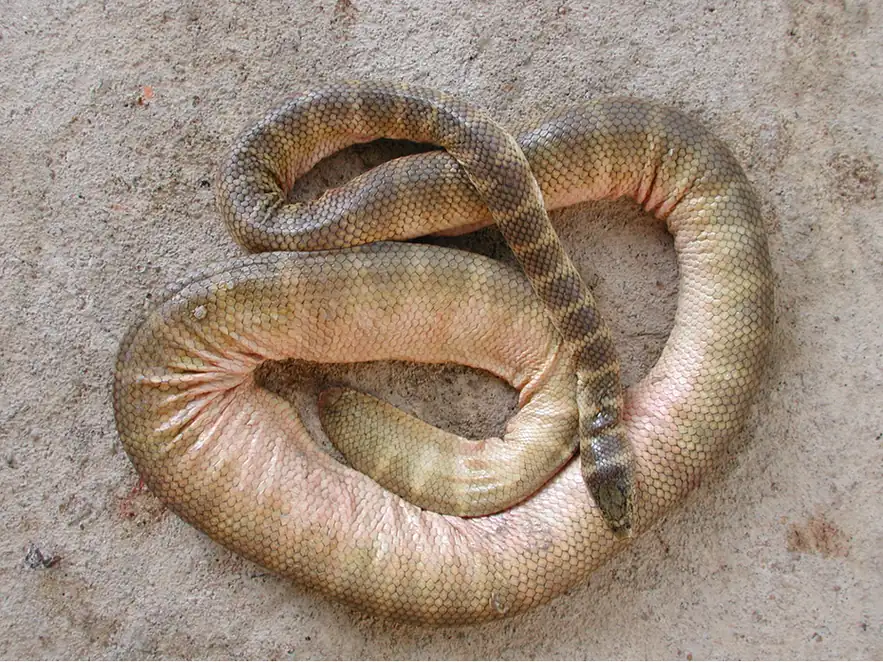
Belcher’s Sea Snake (Hydrophis belcheri) photographed reference specimen from Marine Reptiles (2011); specimen condition not documented.
Photo: Rasmussen AR, Murphy JC, Ompi M, Gibbons JW, Uetz P (2011) · CC BY 2.5 (Licence)
Elapidae
Hydrophis belcheri
A marine snake reported from the Arafura Sea in a 2014 account of Australian sea snakes.
Venomous
Open identification guide →

Photo: Rosario Douglas · CC BY 4.0 (Licence)
Elapidae
Hydrophis atriceps
A dangerously venomous marine snake confirmed in Australian waters around Darwin.
Dangerously venomous.
Open identification guide →
No photograph available
Elapidae
Narophis bimaculatus
A very slender burrowing snake of Western Australia and South Australia.
Venomous
Open identification guide →
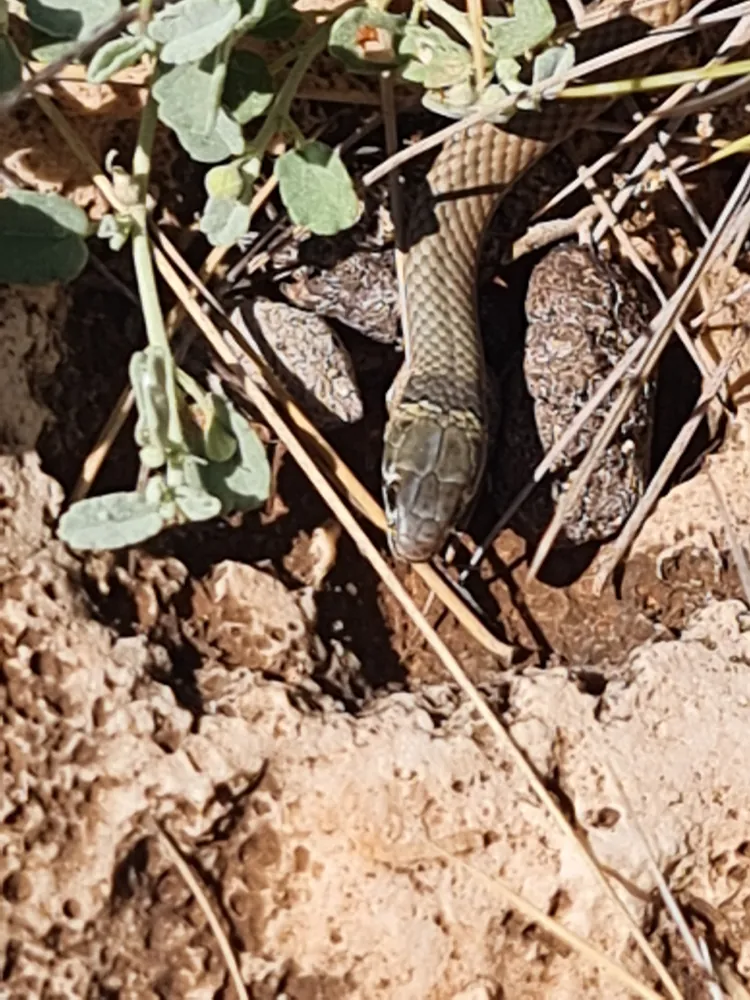
Photo: Belinda Forbes · CC BY 4.0 (Licence)
Elapidae
Demansia calodera
A small olive-brown to brown whipsnake with a pale-edged dark collar and obscure spots. The current diagnosis supports Western Australia; AROD also lists NT without a precise locality, so the range remains partial.
Venomous
Open identification guide →
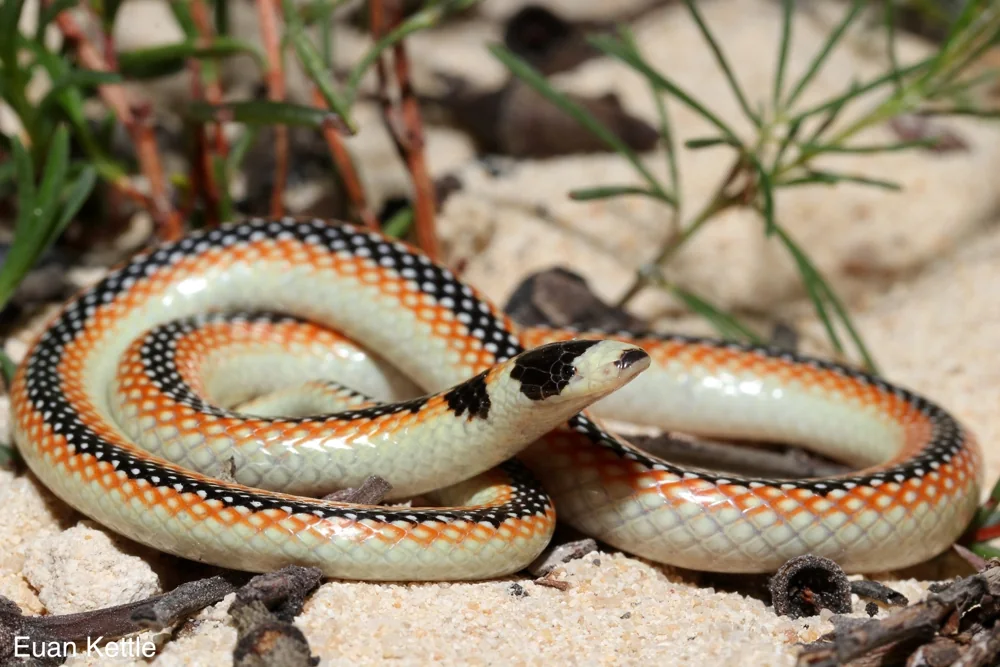
Photo: Euan Kettle · CC BY-SA 4.0 (Licence)
Elapidae
Neelaps calonotos
A very small burrowing snake of south-western Western Australia, usually with a dark stripe along its pinkish to orange-red body.
Venomous
Open identification guide →
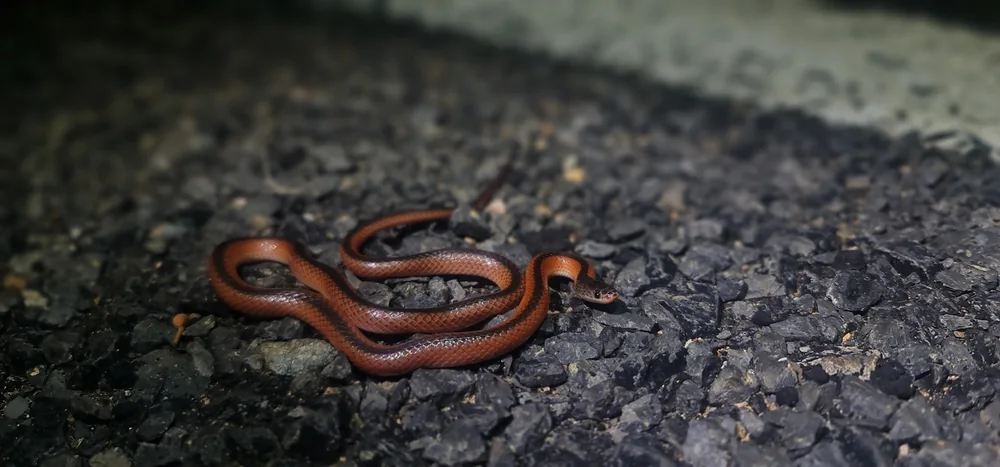
Photo: Max Tibby · CC0 1.0 (Licence)
Elapidae
Cryptophis nigrostriatus
Black-striped Snake is recorded in north-eastern Queensland from Rockhampton to the Torres Strait; southern New Guinea is a separate foreign occurrence. It is slender, reddish-brown to pink above with a dark stripe along the body.
Venomous
Open identification guide →

Photo: Max Tibby · CC0 1.0 (Licence)
Elapidae
Demansia rimicola
A brown-grey whipsnake with fine pale and dark lines along its sides. It inhabits cracking-clay country across parts of northern and inland eastern Australia.
Venomous
Open identification guide →
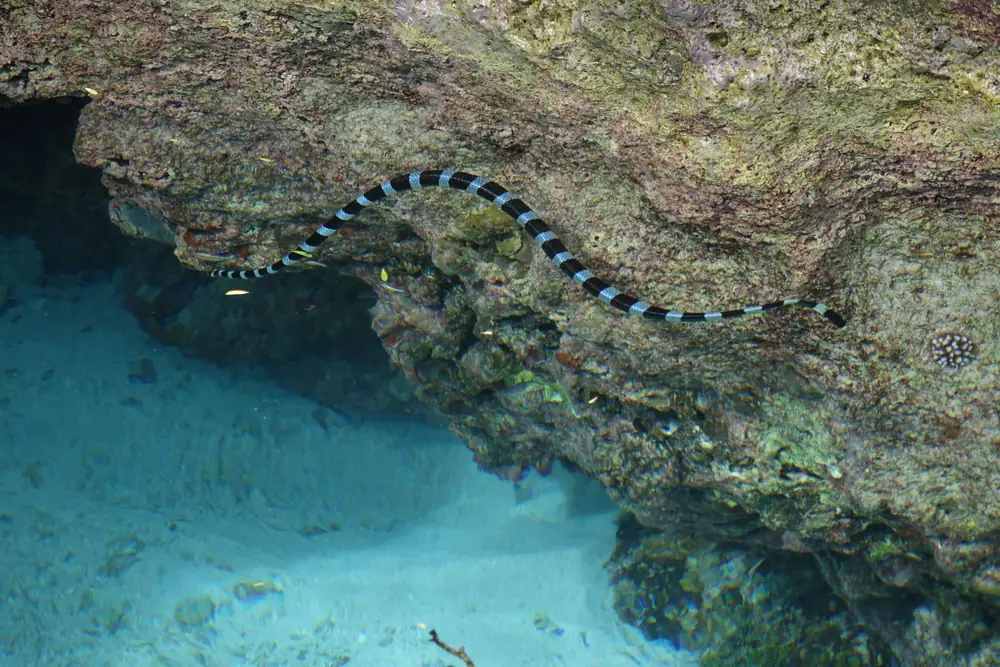
Photo: John Barkla · CC BY 4.0 (Licence)
Elapidae
Laticauda laticaudata
A blue-grey and black-banded sea krait known from occasional Australian records, with no verified Australian breeding population.
Venomous
Open identification guide →

Photo: Max Tibby · CC0 1.0 (Licence)
Homalopsidae
Cerberus australis
Bockadam is a northern Australian water snake recorded from coastal Queensland, the Northern Territory and Western Australia. Revised accounts describe variable grey to red colouration, with plain or partly patterned forms and a possible stripe behind the eye.
Weakly venomous (rear-fanged)
Open identification guide →
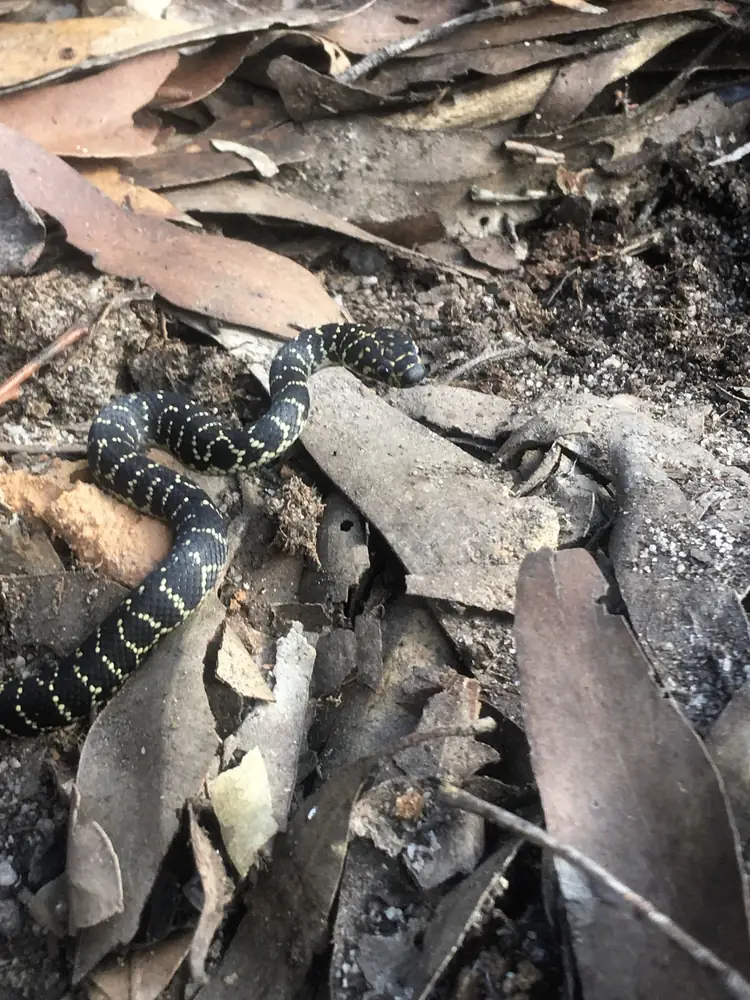
Photo: prossington · CC BY 4.0 (Licence)
Elapidae
Hoplocephalus bungaroides
A venomous, threatened sandstone snake of the Sydney Basin and surrounding New South Wales.
Venomous
Open identification guide →
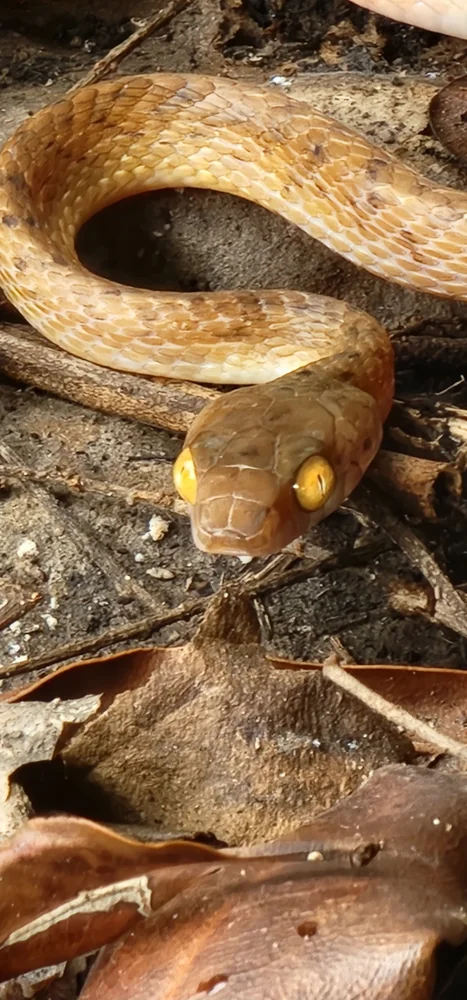
Photo: Bethlea Bell · CC0 1.0 (Licence)
Colubridae
Boiga irregularis
A slender tree snake with a large head, bulbous eyes and vertical pupils. Colour and banding vary across its northern and eastern Australian range, so appearance alone is not a safe approach cue.
Weakly venomous
Open identification guide →
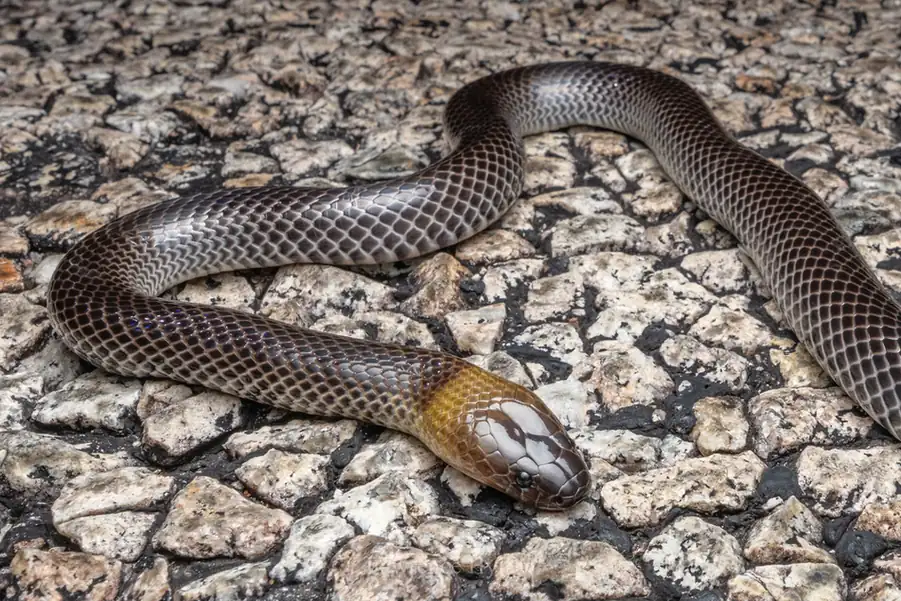
Photo: Lawrence Hylton · CC BY 4.0 (Licence)
Elapidae
Furina tristis
A dark northern Queensland snake with a paler collar and light scale edges along its sides.
Venomous
Open identification guide →
No photograph available
Elapidae
Aipysurus tenuis
A slender sea snake described with a light-brown body, darker lengthwise markings and bars along the sides. Records place it in waters off north-western Australia.
Dangerously venomous
Open identification guide →
No photograph available
Elapidae
Vermicella parscauda
A venomous bandy-bandy known from the Weipa region of Cape York.
Venomous
Open identification guide →

Photographed in leaf litter near Mission River, Queensland.
Photo: Lauren Dibben · CC BY 4.0 (Licence)
Elapidae
Brachyurophis campbelli
A small Queensland snake with dark bands across a reddish to orange-brown body.
Venomous
Open identification guide →

Photo: Noah Kirkland · CC BY 4.0 (Licence)
Elapidae
Cryptophis boschmai
The Carpentaria Snake is a small Queensland snake that can be tan, brown or dark brown, sometimes with a faint dark line down the back. It occurs in dry forest and woodland.
Venomous
Open identification guide →
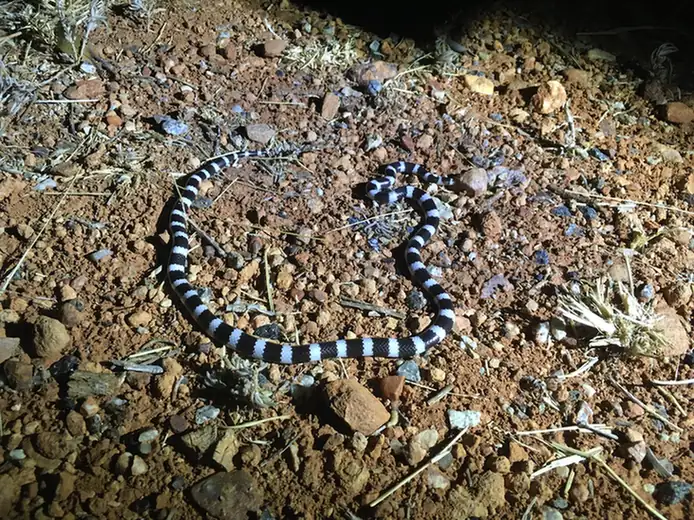
Photo: Donna Belder · CC BY 4.0 (Licence)
Elapidae
Vermicella vermiformis
Centralian Bandy Bandy is a black-and-white banded burrowing snake recorded in the Northern Territory, including the MacDonnell Ranges west of Alice Springs.
Venomous
Open identification guide →
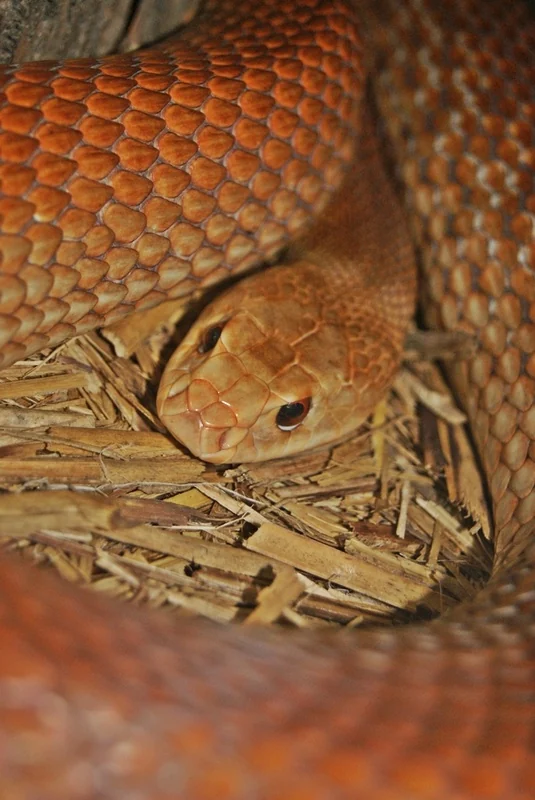
Photo: Danny S. · CC BY-SA 4.0 (Licence)
Elapidae
Oxyuranus scutellatus
A large snake of northern and north-eastern Australia, often with a pale face and a noticeably narrower neck. Its body may be reddish-brown, dark brown or almost black. Colour alone can easily lead to confusion with brown snakes or mulga snakes.
Highly venomous
Open identification guide →

Cogger’s Sea Snake (Hydrophis coggeri) preserved museum specimen in a jar, labelled Leioselasma coggeri.
Photo: A. C. Tatarinov · CC0 1.0 (Licence)
Elapidae
Hydrophis coggeri
Cogger's Sea Snake is a banded marine snake recorded from northern Australian waters and the wider western Pacific.
Dangerously venomous
Open identification guide →
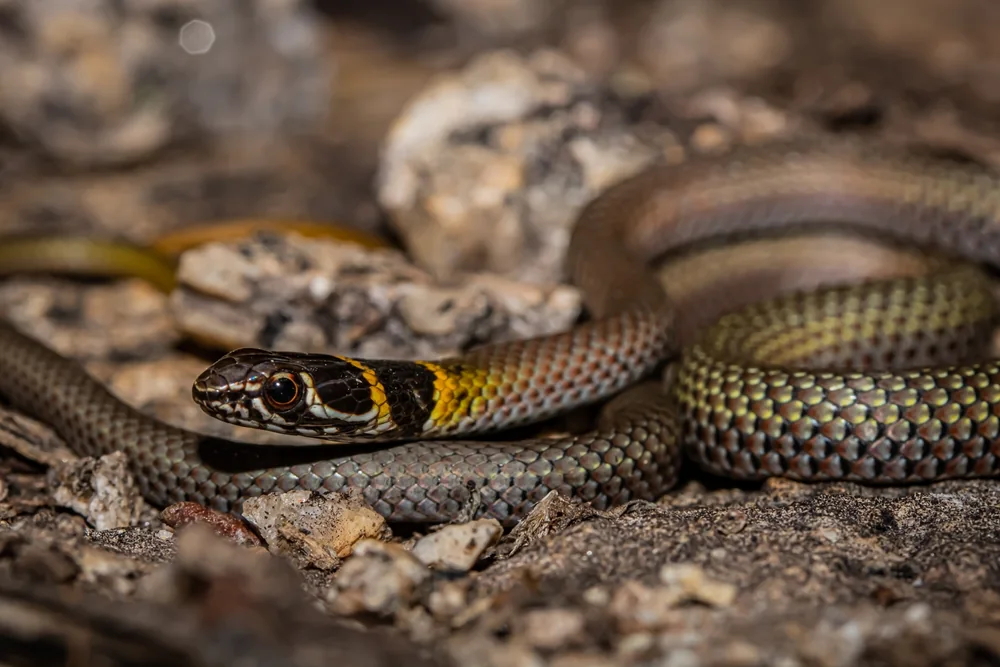
Photo: Noah Kirkland · CC BY 4.0 (Licence)
Elapidae
Demansia torquata
A grey-brown whipsnake with a darker head and a pale-edged band across the neck. The checked range follows eastern Queensland from Cape York to the central coast.
Venomous
Open identification guide →
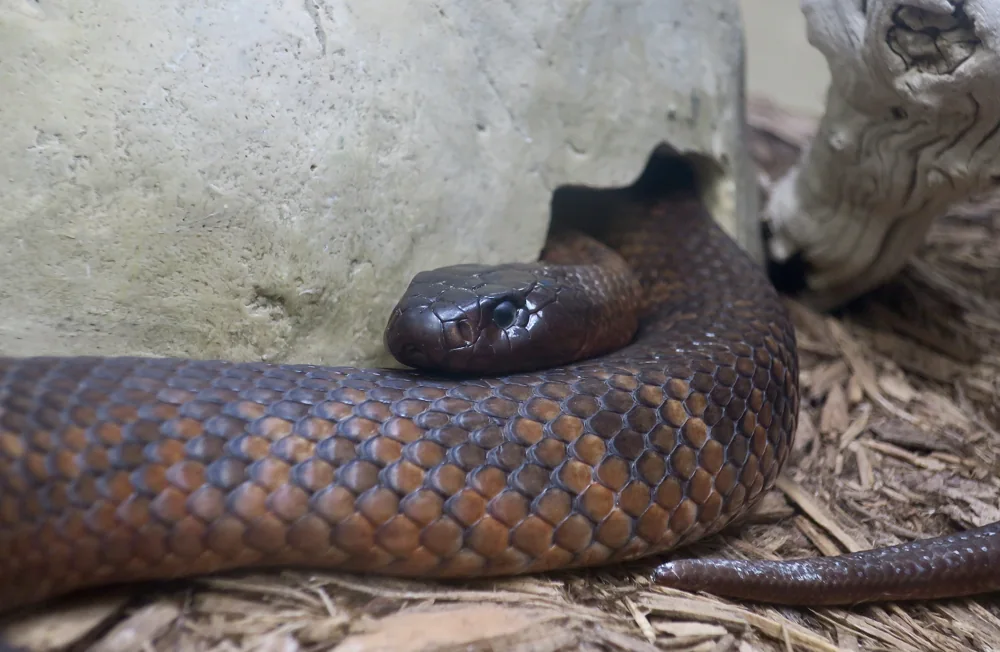
Collett’s Snake (Pseudechis colletti) at Phoenix Herpetological Sanctuary (captive).
Photo: RatioTile · CC BY-SA 4.0 (Licence)
Elapidae
Pseudechis colletti
A robust, boldly patterned snake of central Queensland’s black-soil plains.
Dangerously venomous
Open identification guide →
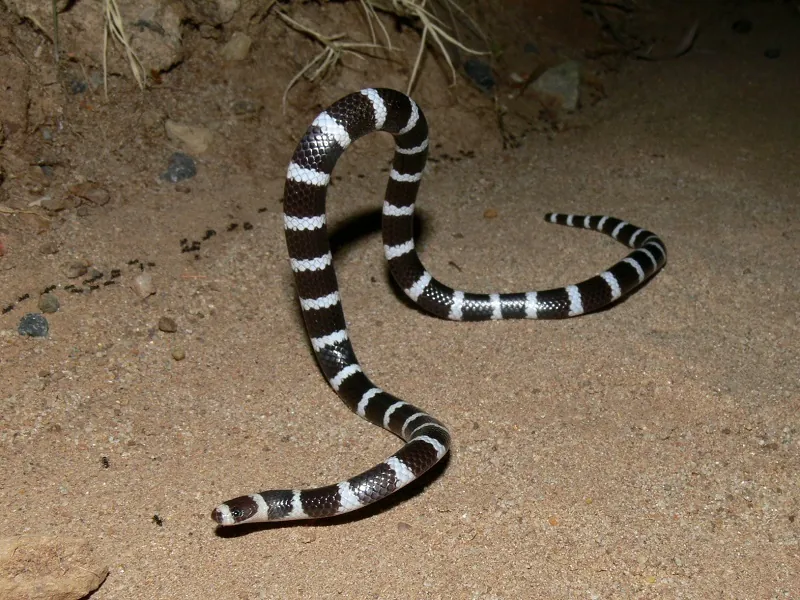
Photo: dhfischer · CC BY 4.0 (Licence)
Elapidae
Vermicella annulata
A snake with bold black-and-white rings around its body, found across much of eastern and central Australia.
Venomous
Open identification guide →
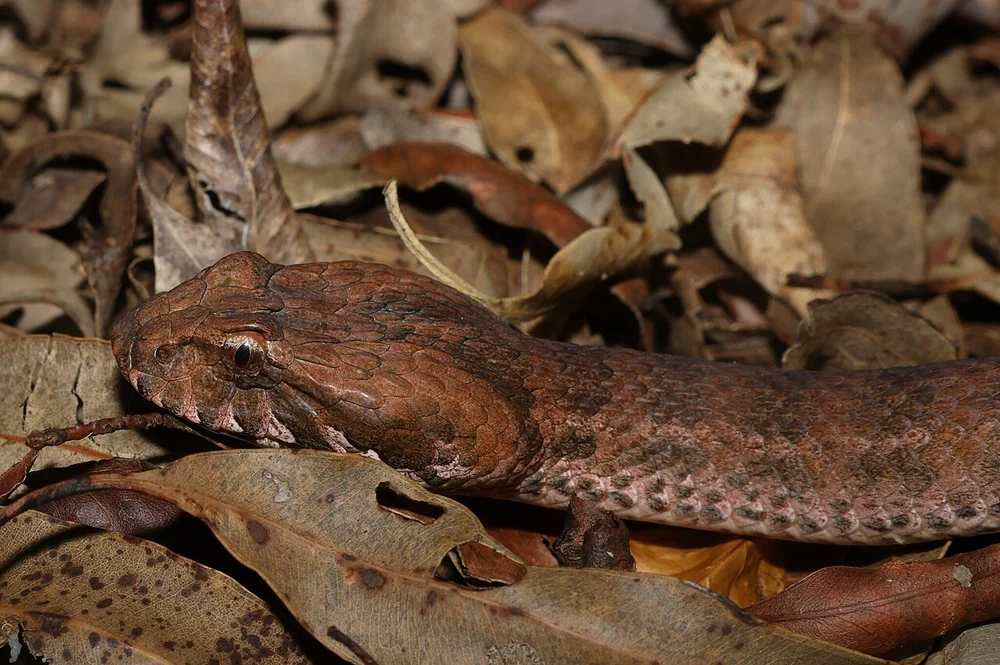
Photo: Greg Tasney · CC BY-SA 4.0 (Licence)
Elapidae
Acanthophis antarcticus
A short, heavy-bodied snake with a broad head and a fine tail. Death adders often remain concealed in leaf litter instead of moving away early. Their camouflage and habit of waiting for prey make the shape of the whole animal particularly useful to notice.
Highly venomous
Open identification guide →
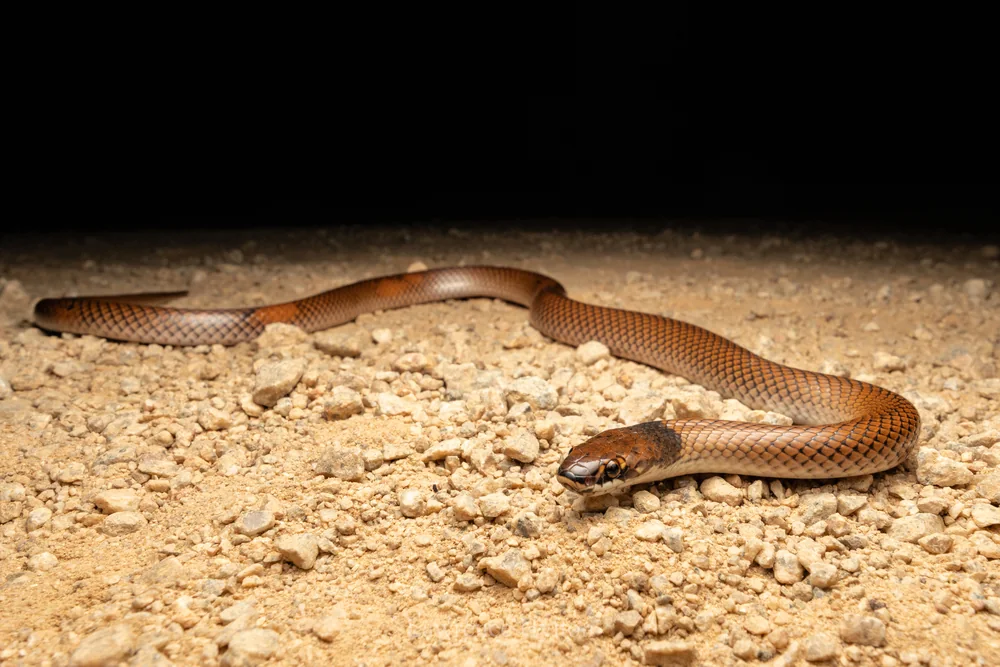
Photo: Lawrence Hylton · CC BY 4.0 (Licence)
Elapidae
Suta suta
A live-bearing Australian snake with brown to reddish-brown colouring, variable dark-edged scales and a darker head and nape.
Venomous
Open identification guide →
No photograph available
Elapidae
Simoselaps minimus
A Western Australian burrowing snake with a pale-brown back, separate dark head and neck patches, and a cream underside.
Venomous
Open identification guide →
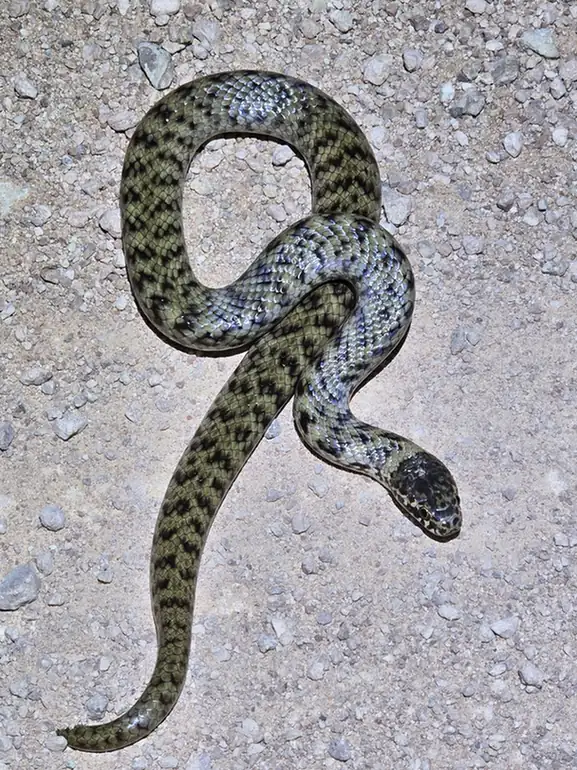
Photo: Max Tibby · CC0 1.0 (Licence)
Elapidae
Denisonia devisi
A heavily built, banded inland snake with a patchy eastern Australian range.
Venomous
Open identification guide →
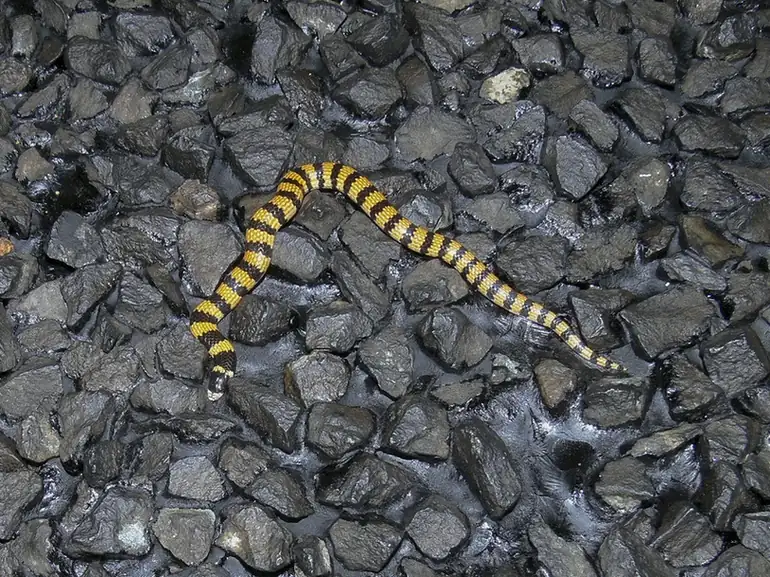
Photo: dhfischer · CC BY 4.0 (Licence)
Elapidae
Simoselaps anomalus
A small burrowing banded snake of the Northern Territory, South Australia and Western Australia.
Venomous
Open identification guide →

Photo: Max Tibby · CC0 1.0 (Licence)
Elapidae
Acanthophis pyrrhus
A banded death adder of sandy and stony deserts across inland Australia. Its red or orange colouring blends with many desert soils.
Dangerously venomous
Open identification guide →

Photo: Max Tibby · CC0 1.0 (Licence)
Elapidae
Demansia cyanochasma
Desert Whip Snake is a venomous central Australian species ranging from southeastern inland Western Australia through South Australia and central/southern Northern Territory to south-western Queensland. It is bluish-grey to brown, with a cream-edged dark line across the snout.
Venomous
Open identification guide →
No photograph available
Elapidae
Hydrophis donaldi
A yellowish-brown sea snake from near Weipa, with numerous brownish bands that narrow toward the sides. The account suggests it may be more widespread than the currently known Queensland locality.
Venomous
Open identification guide →

Photo: rcrofts · CC BY 4.0 (Licence)
Elapidae
Aipysurus duboisii
Dubois’ Sea Snake, also called the Reef Shallows Sea Snake, is a venomous marine snake recorded from northern Australian waters and nearby Indo-Pacific seas.
Dangerously venomous
Open identification guide →
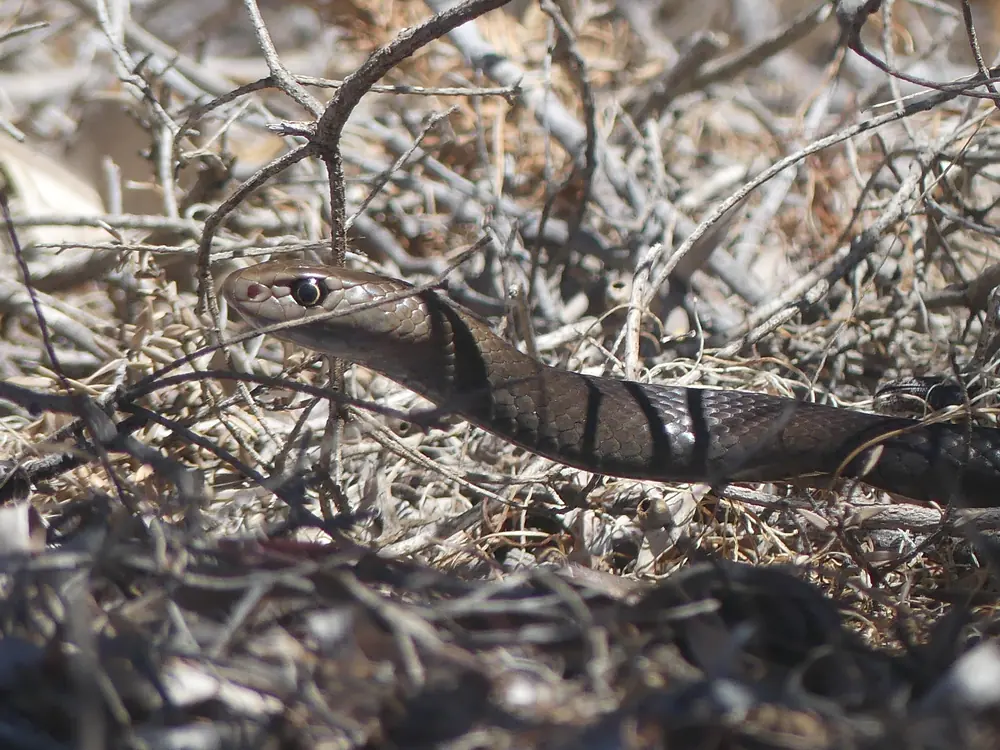
Photo: Valentin Moser · CC BY 4.0 (Licence)
Elapidae
Pseudonaja affinis
A dangerously venomous brown-snake relative of Western and South Australia.
Dangerously venomous
Open identification guide →
No photograph available
Elapidae
Furina dunmalli
A dark grey-brown snake of Brigalow and other woodlands in south-eastern Queensland.
Venomous
Open identification guide →
No photograph available
Elapidae
Aipysurus fuscus
A dark sea snake associated with a small group of reefs and shoals off north-western Australia. Some previously occupied reefs have had no recent detections in the cited assessment.
Dangerously venomous
Open identification guide →
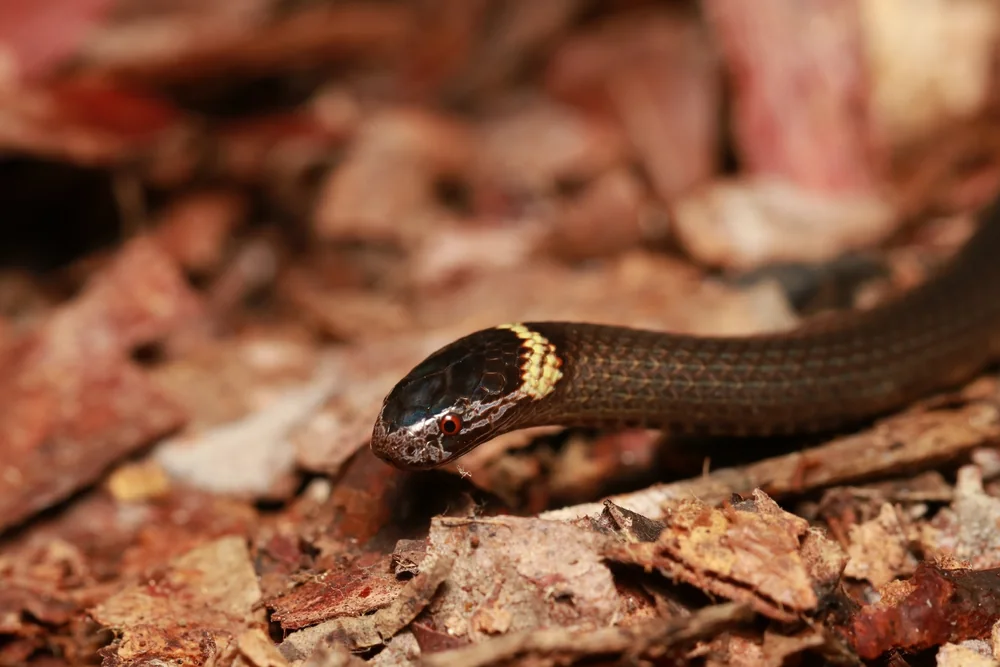
Photo: Max Tibby · CC0 1.0 (Licence)
Elapidae
Cacophis krefftii
A tiny crowned snake of eastern Australia with a narrow yellowish collar.
Weakly venomous
Open identification guide →
No photograph available
Elapidae
Hydrophis caerulescens
A small sea snake confirmed in the Gulf of Carpentaria, with bluish-grey upperparts, a pale underside and broad bands that can fade in older adults.
Highly venomous
Open identification guide →
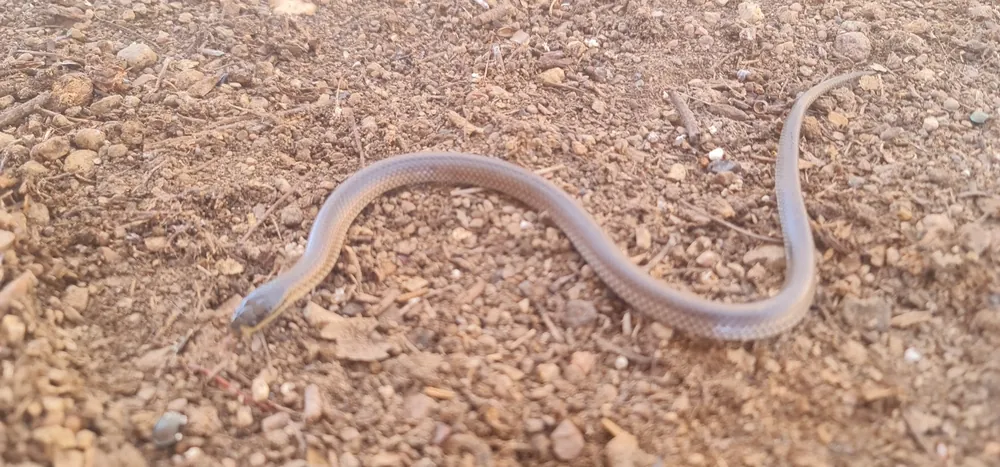
Photo: Max Tibby · CC0 1.0 (Licence)
Elapidae
Suta dwyeri
A small snake associated with rocky shelter in parts of eastern Australia.
Venomous
Open identification guide →

Photo: Donald Hobern from Copenhagen, Denmark · CC BY 2.0 (Licence)
Elapidae
Pseudonaja textilis
An Eastern Brown Snake is not always brown. Adults can be tan, orange-brown or nearly black, while young snakes may have striking dark bands. A relatively small head and slender body are more useful clues than the name alone.
Highly venomous
Open identification guide →
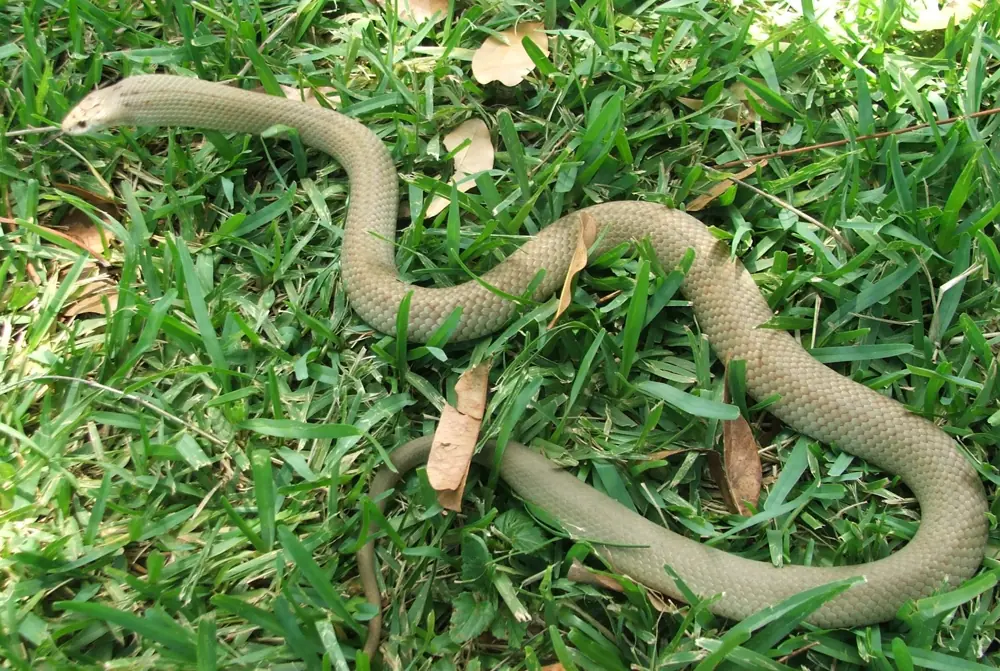
Photographed in the Mount Isa area, Queensland.
Photo: J.D. Scanlon · CC BY 4.0 (Licence)
Elapidae
Pseudechis pailsei
A dangerously venomous pygmy mulga snake from north-western Queensland, with a head-and-neck pattern and a largely plain body.
Dangerously venomous
Open identification guide →
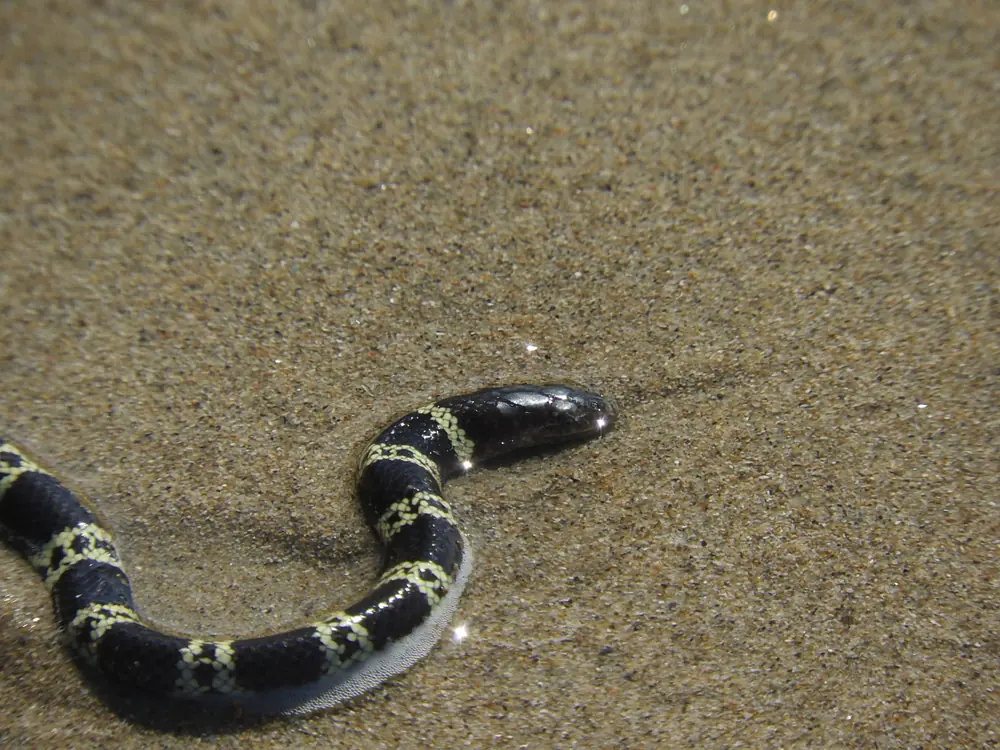
Photo: george_vaughan · CC0 1.0 (Licence)
Elapidae
Hydrophis elegans
A banded marine snake recorded around northern Australia, with qualified New South Wales records.
Dangerously venomous
Open identification guide →
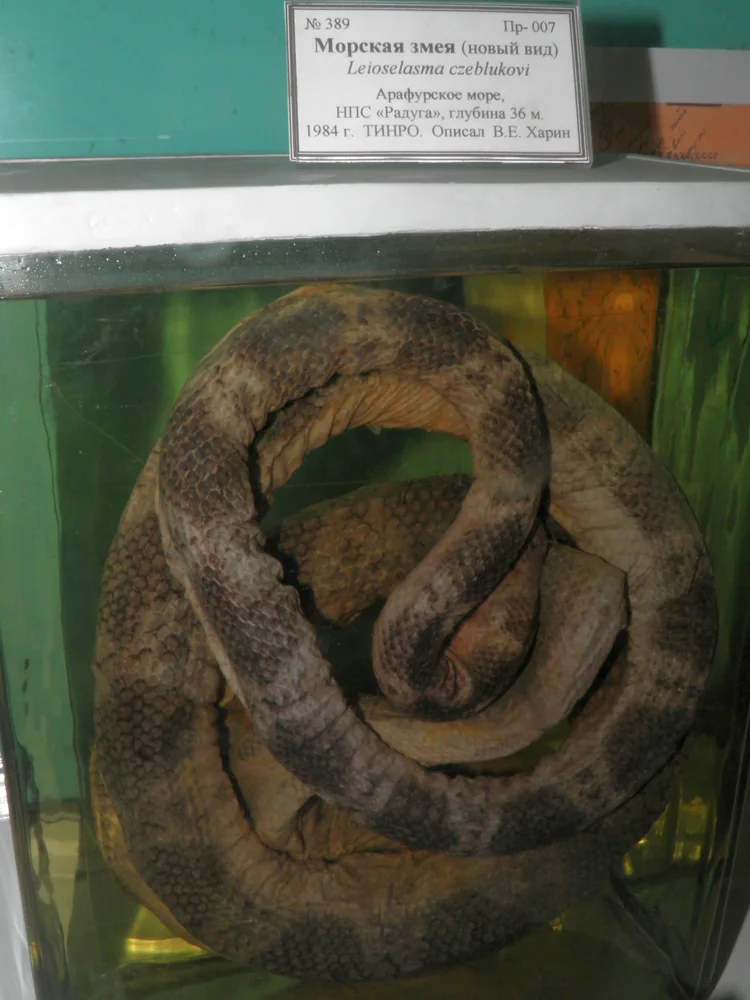
Fine-spined Sea Snake (Hydrophis czeblukovi) preserved museum specimen in a jar, labelled Leioselasma czeblukovi.
Photo: A. C. Tatarinov · CC0 1.0 (Licence)
Elapidae
Hydrophis czeblukovi
A sea snake recorded offshore from Dampier, with a narrow neck and distinctive geometric flank markings.
Dangerously venomous
Open identification guide →
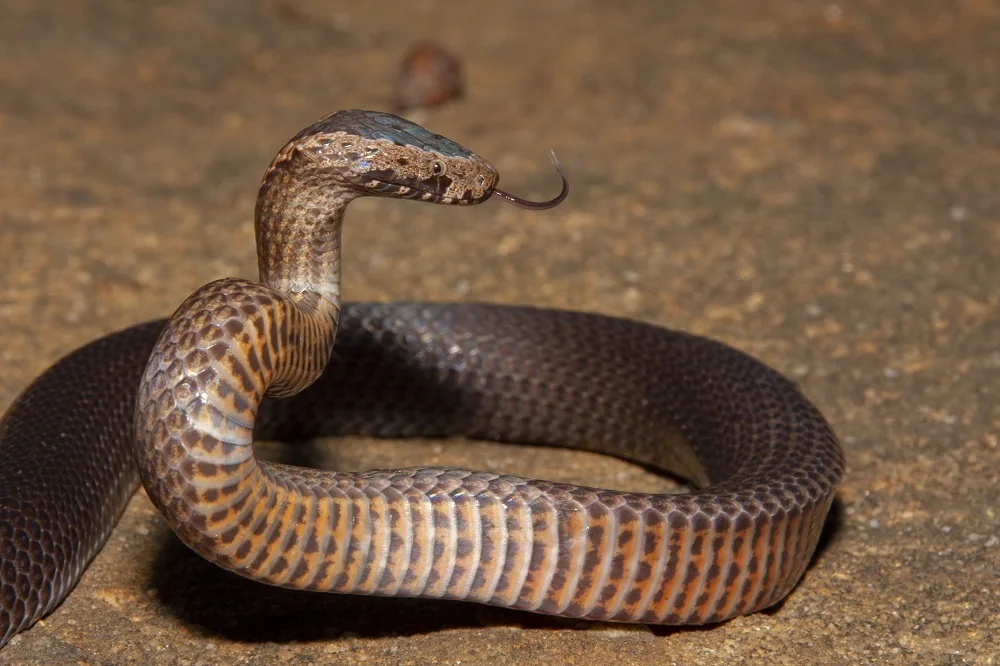
Photo: dhfischer · CC BY 4.0 (Licence)
Elapidae
Cacophis squamulosus
A dark snake with a yellowish streak along each side of the neck and onto the head. The checked range runs from the Goulburn region of New South Wales north to Proserpine in Queensland.
Weakly venomous
Open identification guide →
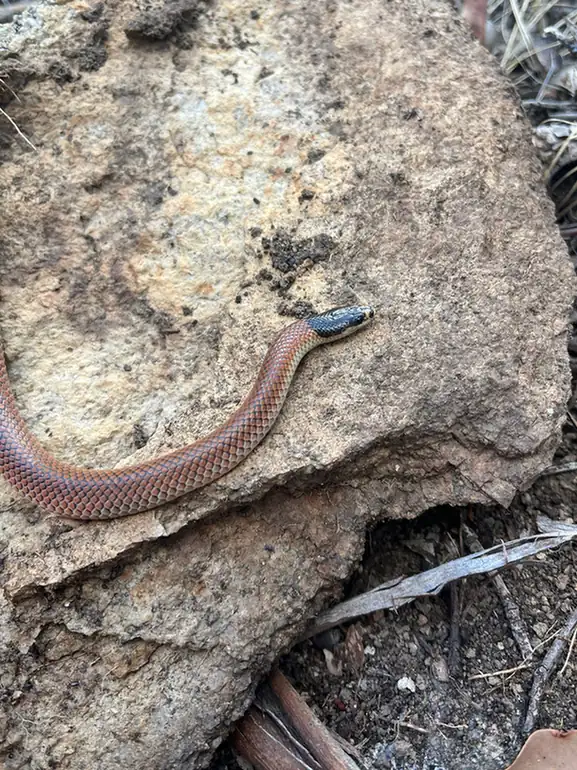
Photo: evaladyman · CC0 1.0 (Licence)
Elapidae
Suta gouldii
A slender hooded snake found in Western Australia and across the Nullarbor into South Australia.
Venomous
Open identification guide →

Photo: Max Tibby · CC0 1.0 (Licence)
Elapidae
Demansia papuensis
A large, slender whipsnake that is dark grey, brown or black above and often becomes redder toward the rear. Its tropical northern range runs from the Kimberley to Cape York and inland Queensland.
Venomous
Open identification guide →

Photo: Max Tibby · CC0 1.0 (Licence)
Elapidae
Hemiaspis damelii
A plain grey to olive-grey snake associated with floodplains and temporary wetlands in NSW and Queensland. Young snakes have a dark head marking that reduces with age.
Venomous
Open identification guide →
No photograph available
Elapidae
Demansia simplex
A relatively robust Kimberley whipsnake that is often lightly patterned.
Venomous
Open identification guide →
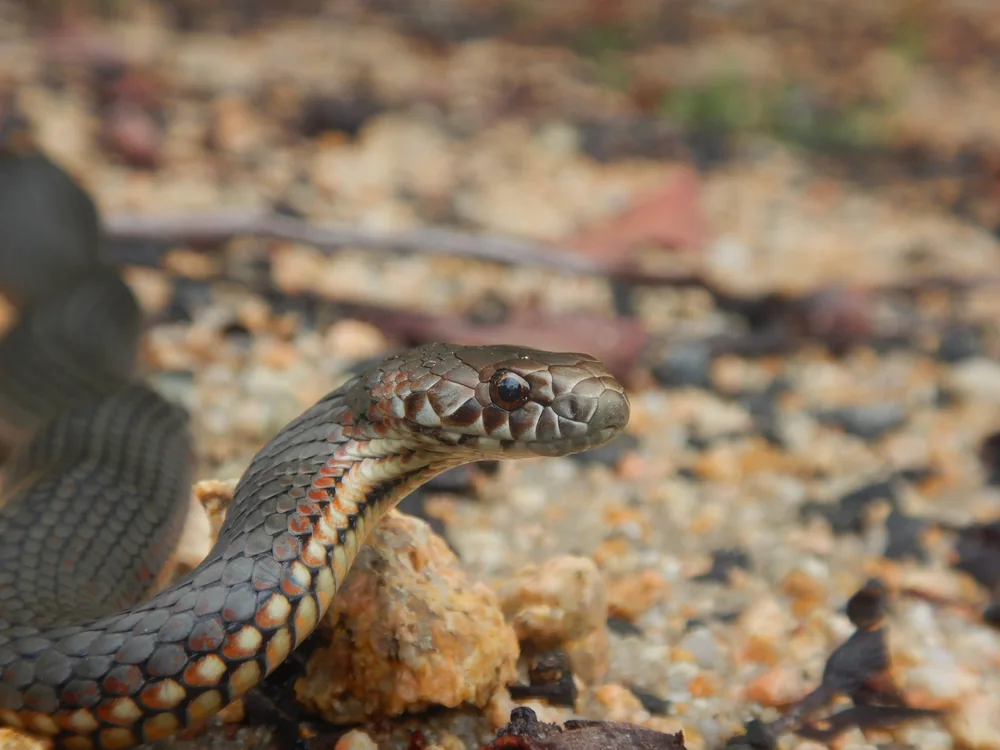
Photo: Bryce Watts-Parker · CC BY 4.0 (Licence)
Elapidae
Austrelaps ramsayi
A venomous snake of moist upland areas in south-eastern Australia. Its back ranges from dark grey to reddish brown, and the lips have contrasting bars.
Dangerously venomous
Open identification guide →

Horned Sea Snake (Hydrophis peronii) recorded by a remotely operated vehicle at Ashmore Reef in 2021. The inset shows a closer view of the head. Underwater lighting affects the apparent colour.
Photo: Speed et al. (2022), Frontiers in Marine Science 9:921542, Figure 3H · CC BY 4.0 (Licence)
Elapidae
Hydrophis peronii
An Indo-Pacific sea snake with Australian records in the Northern Territory, Queensland and Western Australia. It has blunt projections on certain head shields and may be cream to pale brown with bands that fade in older adults.
Venomous
Open identification guide →
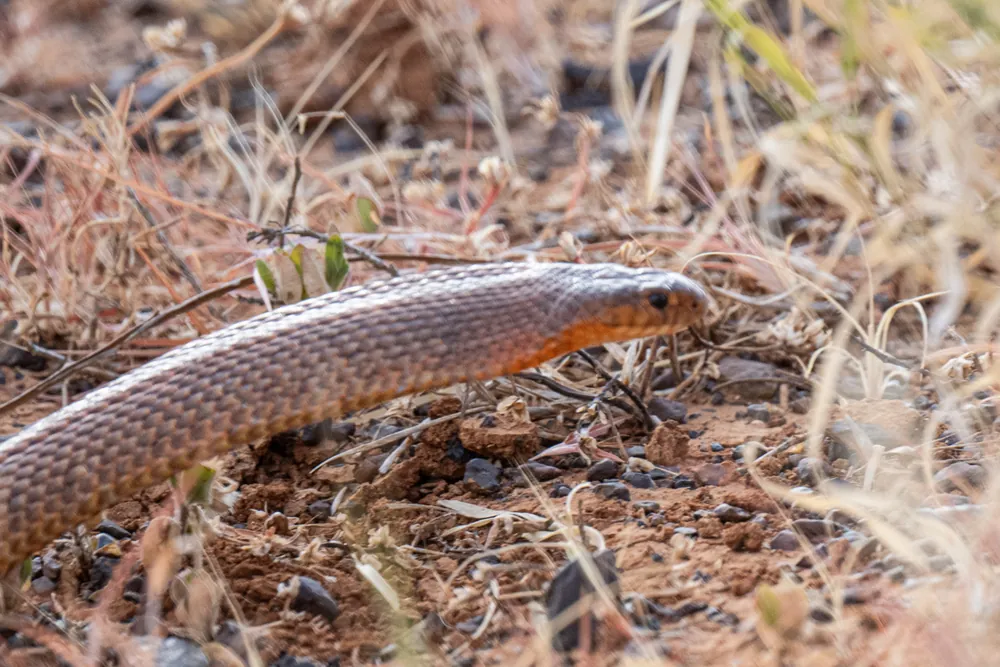
Photo: Alan Bell · CC BY 4.0 (Licence)
Elapidae
Pseudonaja ingrami
A large dangerously venomous brown-snake relative of western Queensland and the Barkly.
Dangerously venomous
Open identification guide →
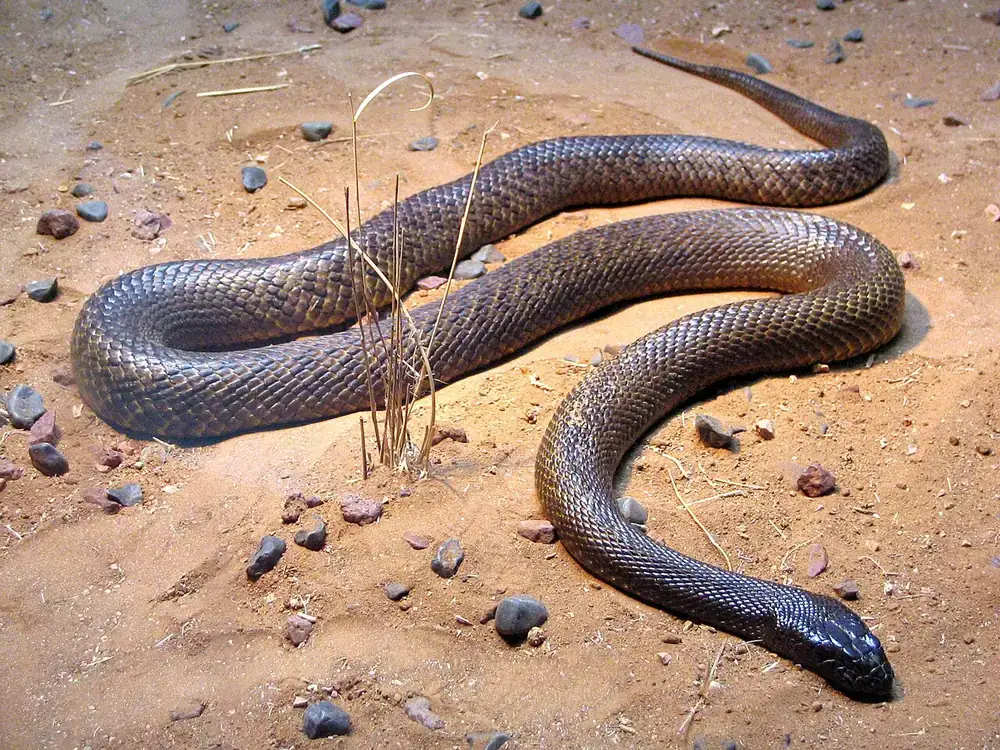
Photo: Photo by XLerate · CC BY-SA 3.0 (Licence)
Elapidae
Oxyuranus microlepidotus
A large brown snake of the remote Channel Country, strongly associated with cracking clay soils. The head is generally darker than the body, which can change noticeably with the season. It is unlikely to be the snake seen in an ordinary coastal backyard.
Highly venomous
Open identification guide →
No photograph available
Elapidae
Vermicella intermedia
A black-and-white banded burrowing snake recorded in the Kimberley and northern Northern Territory.
Venomous
Open identification guide →
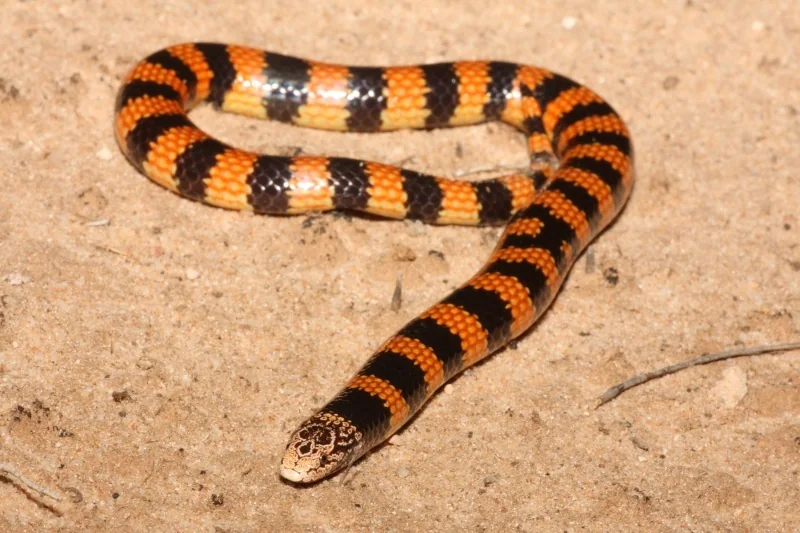
Photo: dhfischer · CC BY 4.0 (Licence)
Elapidae
Simoselaps bertholdi
A small venomous burrowing snake with records in Western Australia, South Australia and the Northern Territory.
Venomous
Open identification guide →

Kimberley Death Adder (Acanthophis cryptamydros), holotype WAM R174083 photographed in life by R. J. Ellis.
Photo: R. J. Ellis, in Maddock et al. (2015), Zootaxa 4007(3):301–326, Figure 5 · CC BY 3.0 (Licence)
Elapidae
Acanthophis cryptamydros
A stout Kimberley death adder of north-western Australia, usually orange-brown, tan-brown or grey with darker cross-bands. Its dangerous venom means a distant comparison is the only safe use of this page.
Highly venomous
Open identification guide →

Photo: Connor Margetts · CC0 1.0 (Licence)
Elapidae
Paroplocephalus atriceps
A venomous Western Australian snake known from the Lake Cronin and nearby south-western localities.
Venomous; AROD rates it potentially dangerous
Open identification guide →

Preserved leaf-scaled sea snake specimen WAM R150365 from Barrow Island. Preserved colours do not represent a living snake reliably.
Photo: Kate L. Sanders, Tina Schroeder, Michael L. Guinea, and Arne R. Rasmussen · CC BY 4.0 (Licence)
Elapidae
Aipysurus foliosquama
The Leaf-scaled Sea Snake is a rare marine snake recorded from offshore reefs in the Timor Sea and from Shark Bay on the Western Australian coast. A 2025 study describes it as Data Deficient on the IUCN Red List and Critically Endangered under Australia's EPBC Act.
Venomous; AROD describes it as dangerously venomous.
Open identification guide →
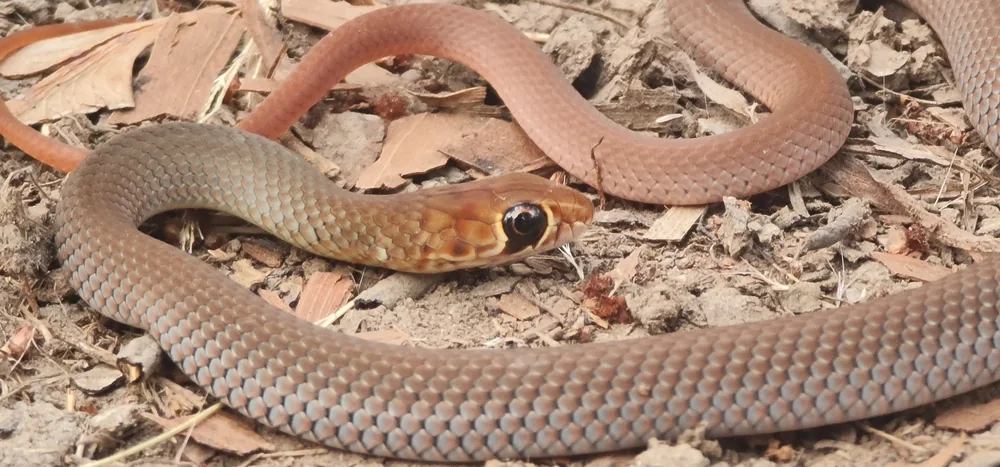
Photo: Max Tibby · CC0 1.0 (Licence)
Elapidae
Demansia vestigiata
Lesser Black Whip Snake is recorded from eastern Queensland to the eastern Kimberley in Western Australia, with Northern Territory records. It is dark grey to brown or black above and may become redder toward the rear; the head is often tan.
Venomous
Open identification guide →
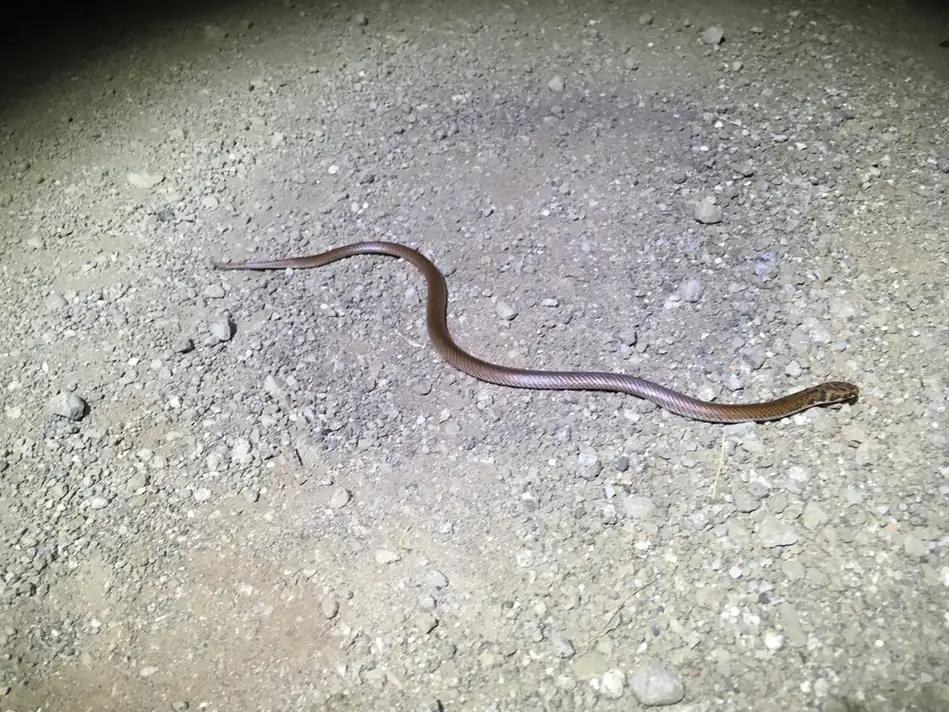
Photo: Donna Belder · CC BY 4.0 (Licence)
Elapidae
Suta punctata
A pale snake with darker scale markings, recorded in Western Australia, the Northern Territory and Queensland.
Venomous
Open identification guide →
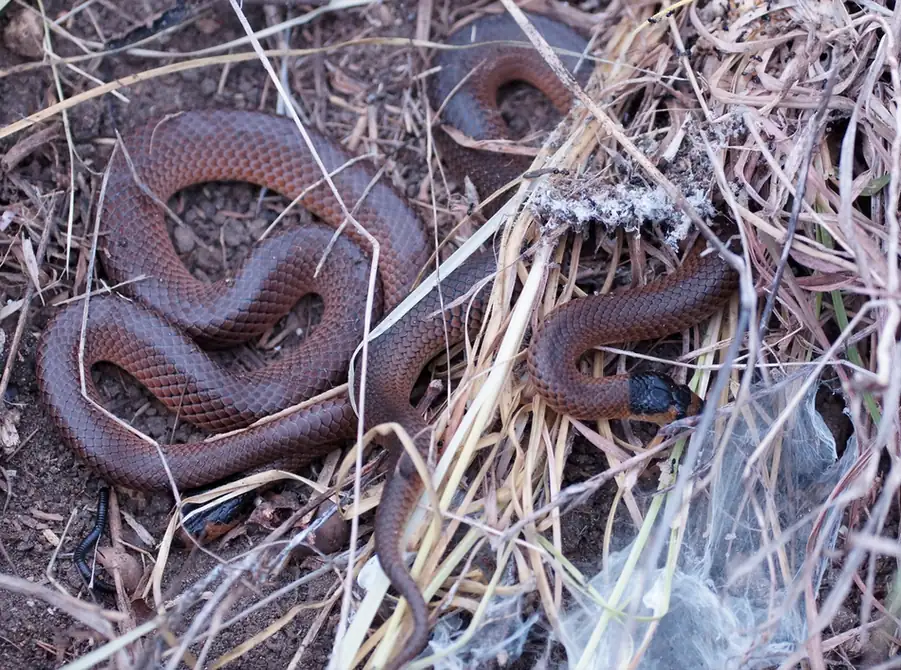
Photo: Rod Lowther · CC BY 4.0 (Licence)
Elapidae
Suta flagellum
A small venomous southern Australian snake also known as the Whip Hooded Snake.
Venomous
Open identification guide →
No photograph available
Elapidae
Demansia flagellatio
The Long-tailed Whip Snake is a very slender venomous snake of north-western Queensland. Its bold black-and-yellow head pattern and long tail are described in current specialist accounts.
Venomous
Open identification guide →

Photo: Max Tibby · CC0 1.0 (Licence)
Elapidae
Austrelaps superbus
A variable venomous copperhead of lowland south-eastern Australia.
Dangerously venomous
Open identification guide →
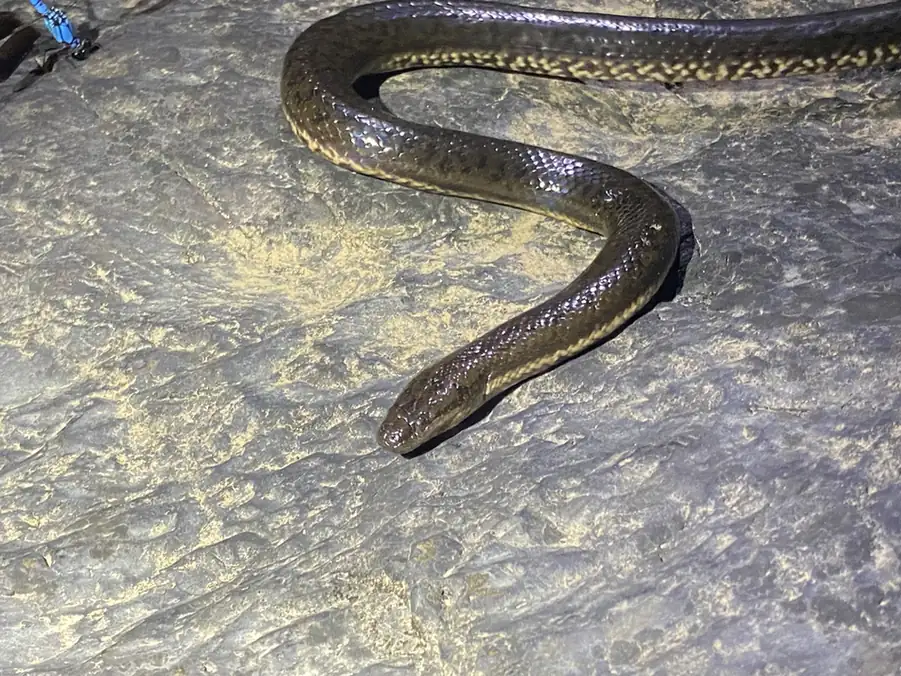
Photo: Edward Bell · CC BY 4.0 (Licence)
Homalopsidae
Pseudoferania polylepis
A weakly venomous northern Australian water snake that feeds on fish, frogs and crustaceans.
Weakly venomous; large specimens should be treated with caution
Open identification guide →
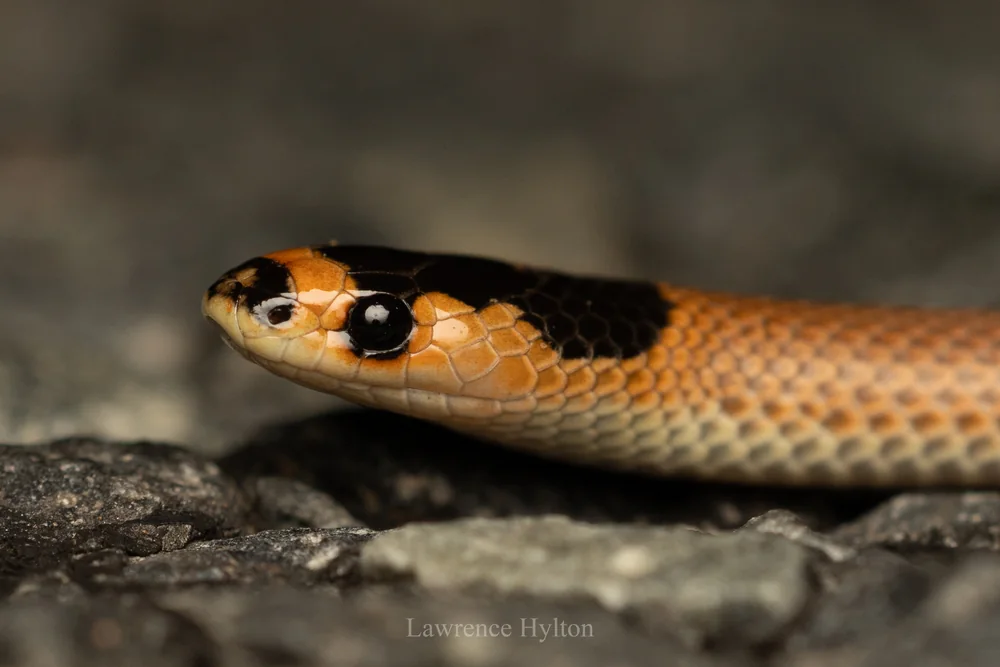
Photo: Lawrence Hylton · CC BY 4.0 (Licence)
Elapidae
Suta spectabilis
A brown to beige hooded snake of South Australia and adjoining western parts of Victoria and New South Wales.
Venomous
Open identification guide →
No photograph available
Elapidae
Ephalophis greyae
A small, banded sea snake recorded in mangrove creeks along the Western Australian coast.
Probably dangerously venomous
Open identification guide →

Photo: Max Tibby · CC0 1.0 (Licence)
Elapidae
Hemiaspis signata
Marsh Snake is a small east-coast snake with an olive to grey back, dark belly and paired pale facial lines.
Venomous
Open identification guide →
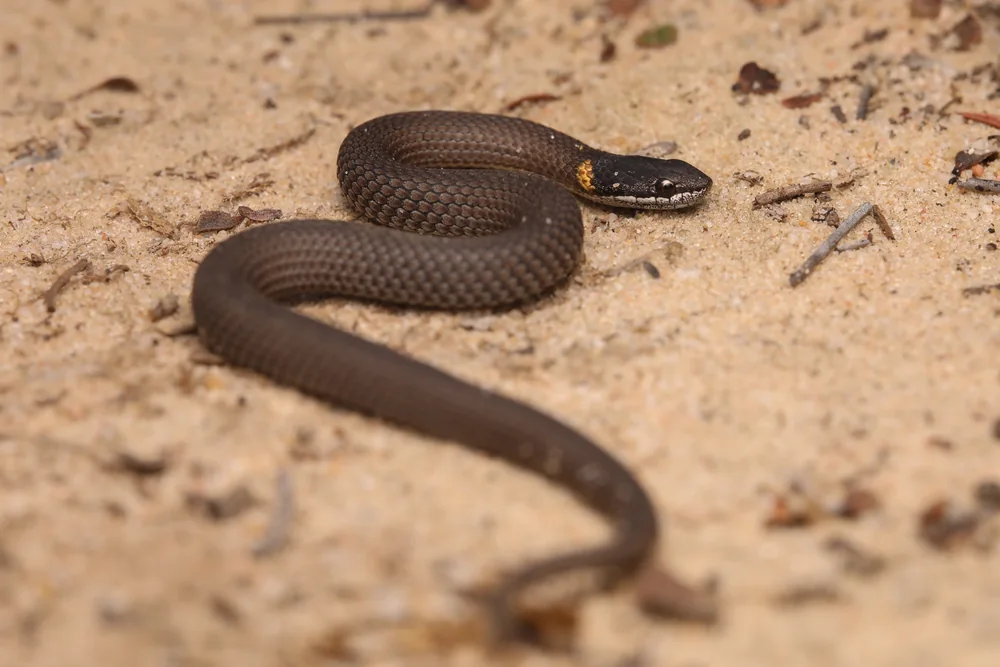
Photo: Joshua S. Martin · CC0 1.0 (Licence)
Elapidae
Drysdalia mastersii
A small venomous snake recorded from South Australia, Victoria and Western Australia.
Venomous
Open identification guide →
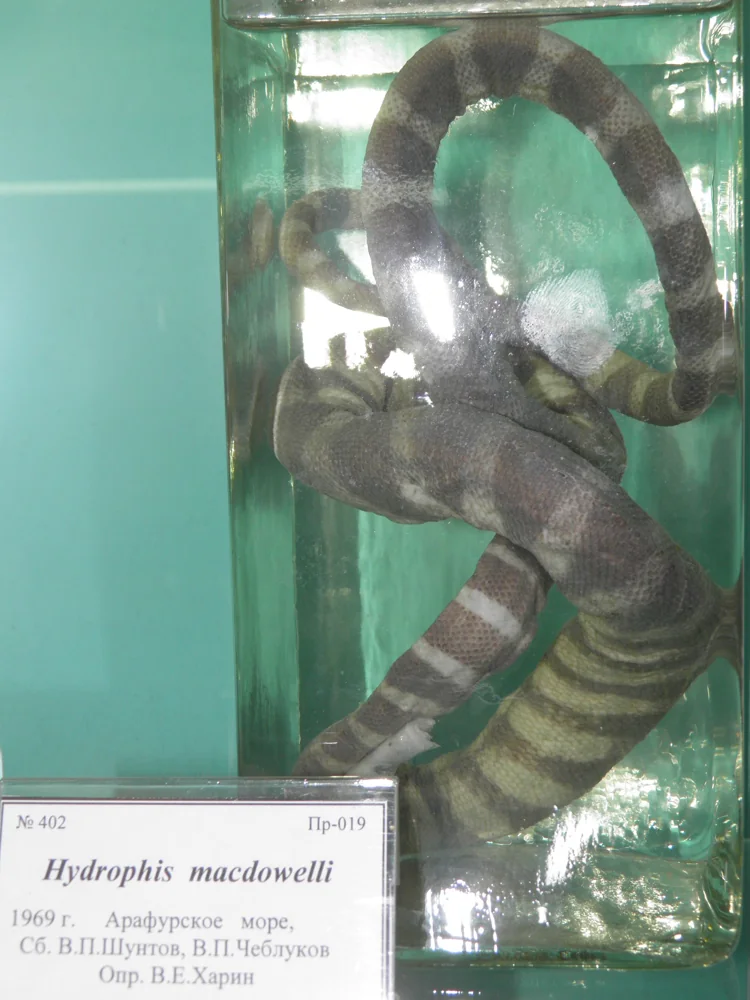
McDowell’s Sea Snake (Hydrophis macdowelli) preserved museum specimen in a labelled jar.
Photo: A. C. Tatarinov · CC0 1.0 (Licence)
Elapidae
Hydrophis macdowelli
An Australian sea snake with a small head, compressed rear body and a banded pattern accompanied by rows of spots, recorded in the Northern Territory, Queensland and Western Australia.
Highly venomous
Open identification guide →
No photograph available
Elapidae
Suta nigriceps
A stout southern Australian snake with a dark head and a variable dark stripe along the back.
Venomous
Open identification guide →

Photo: Lawrence Hylton · CC BY 4.0 (Licence)
Elapidae
Suta monachus
A slender hooded snake of inland Western Australia, South Australia and the south-western Northern Territory.
Venomous
Open identification guide →
No photograph available
Elapidae
Aipysurus mosaicus
Mosaic Sea Snake is a northern Australian marine snake with irregular staggered cross-bands, recorded from offshore waters, estuaries and tidal rivers.
Venomous
Open identification guide →
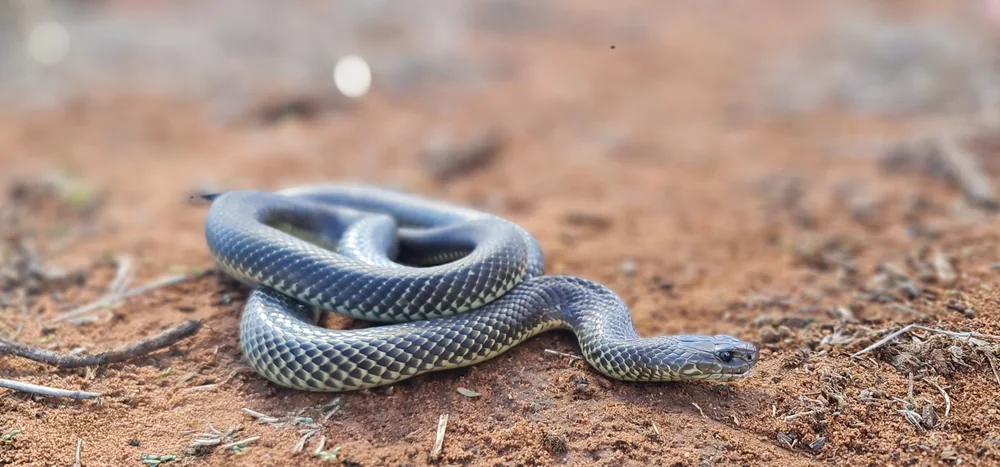
Photo: Max Tibby · CC0 1.0 (Licence)
Elapidae
Pseudechis australis
A large, variable snake widespread across most of Australia.
Dangerously venomous
Open identification guide →
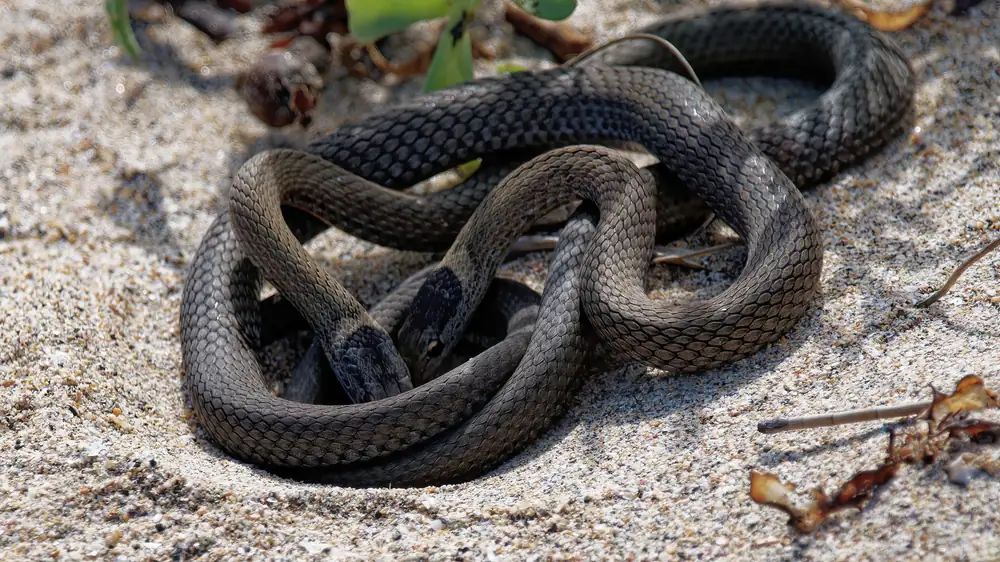
Photo: Roman Soroka · CC BY 4.0 (Licence)
Elapidae
Drysdalia rhodogaster
A small south-eastern snake with a dark head and yellow-orange nape band.
Venomous
Open identification guide →

Photo: dhfischer · CC BY 4.0 (Licence)
Elapidae
Brachyurophis fasciolatus
A small burrowing snake with narrow dark bands across a pale body. Red and black flecks occur between the bands.
Venomous
Open identification guide →
No photograph available
Elapidae
Demansia angusticeps
A small tropical whipsnake of the southern Kimberley and Victoria River region.
Venomous
Open identification guide →
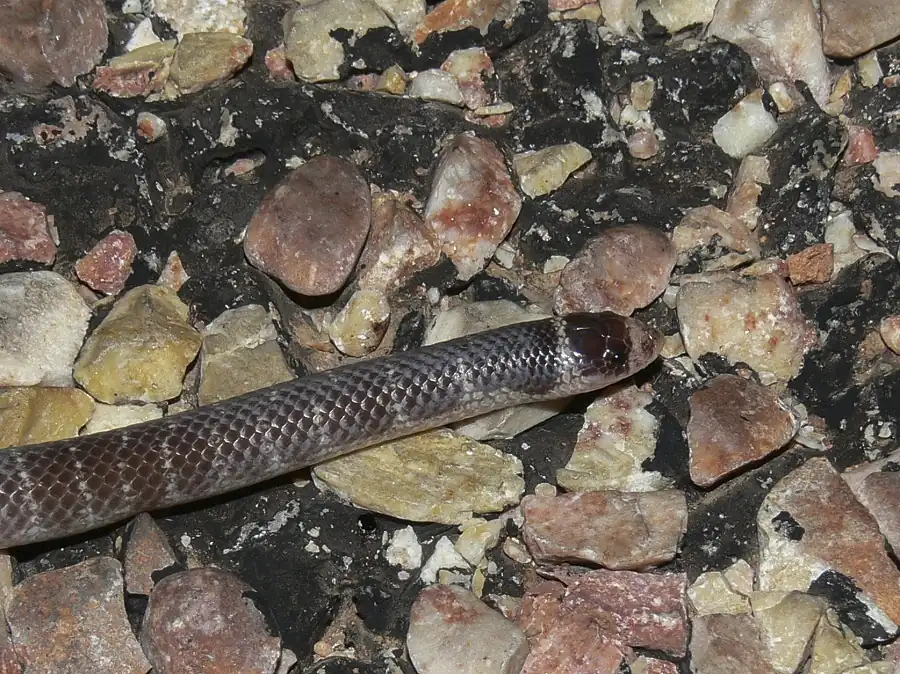
Photo: dhfischer · CC BY 4.0 (Licence)
Elapidae
Brachyurophis approximans
North-western Shovel-nosed Snake is recorded in north-western Western Australia, from Port Hedland through the Pilbara and Gascoyne to south of Shark Bay. It has a reddish-brown body with broad dark bands.
Venomous
Open identification guide →
No photograph available
Elapidae
Vermicella multifasciata
A slender banded snake of the Northern Territory and Western Australia with more than 75 black bands on the body and tail.
Venomous
Open identification guide →
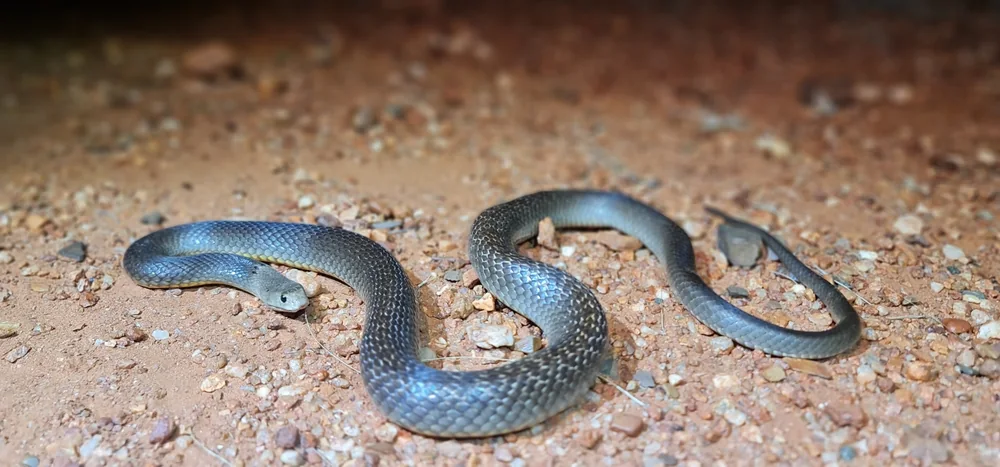
Photo: Max Tibby · CC0 1.0 (Licence)
Elapidae
Pseudonaja nuchalis
A dangerously venomous brown snake of tropical northern Australia.
Dangerously venomous
Open identification guide →

Photo: dhfischer · CC BY 4.0 (Licence)
Elapidae
Acanthophis praelongus
The Northern Death Adder is a short, banded death adder recorded from Cape York Peninsula in Queensland. AROD describes grey, brown or reddish colouring with lighter bands across the body.
Highly venomous; AROD describes long fangs and very toxic venom.
Open identification guide →

Photo: dhfischer · CC BY 4.0 (Licence)
Elapidae
Cacophis churchilli
Northern Dwarf Crowned Snake is a Queensland snake of rainforest and adjacent dry forest from Mt Elliot and Magnetic Island to just south of Cooktown. It is dark grey to brown above with a narrow yellow nape band.
Weakly venomous
Open identification guide →
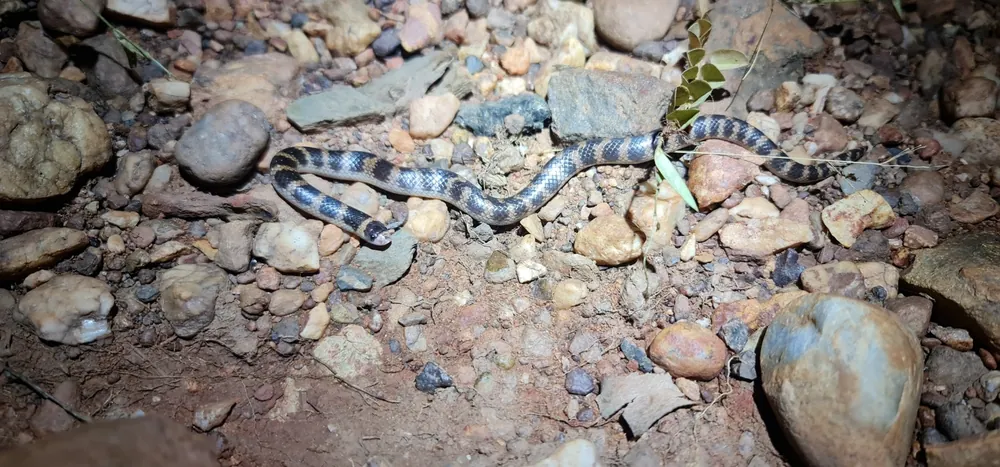
Photo: Max Tibby · CC0 1.0 (Licence)
Elapidae
Brachyurophis roperi
A small banded snake recorded across the Kimberley and Top End, with a qualified north-west Queensland record.
Venomous
Open identification guide →
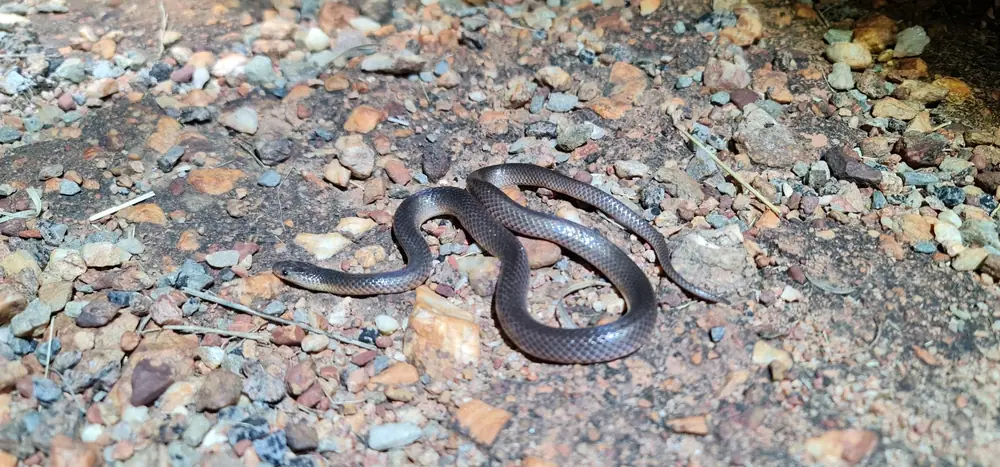
Photo: Max Tibby · CC0 1.0 (Licence)
Elapidae
Cryptophis pallidiceps
The Northern Small-eyed Snake is a secretive venomous snake of northern Australia. It can be brown, grey or black above, with paler yellow-orange flanks and a white belly.
Venomous
Open identification guide →
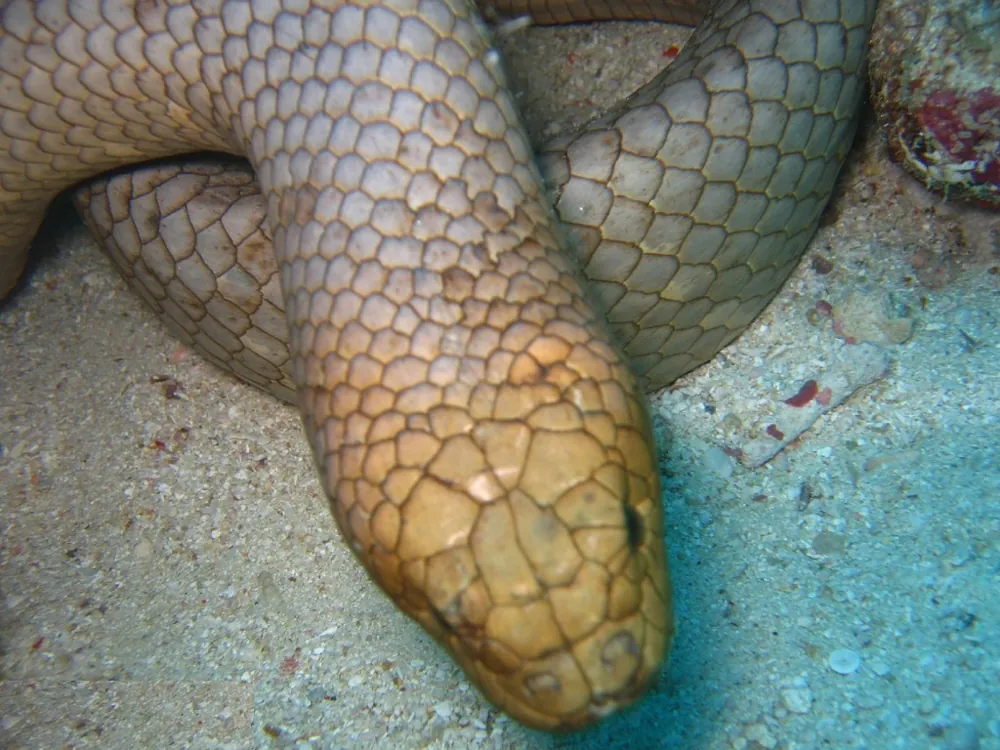
Photo: Richard Ling · CC BY-SA 2.0 (Licence)
Elapidae
Aipysurus laevis
A robust marine snake whose colour changes with age. Adults may be creamy-yellow or golden-brown; younger animals can have pale bands on a dark body.
Highly venomous
Open identification guide →
No photograph available
Elapidae
Demansia olivacea
A very slender whipsnake of the Top End and northern Kimberley, with reported facial markings.
Venomous
Open identification guide →
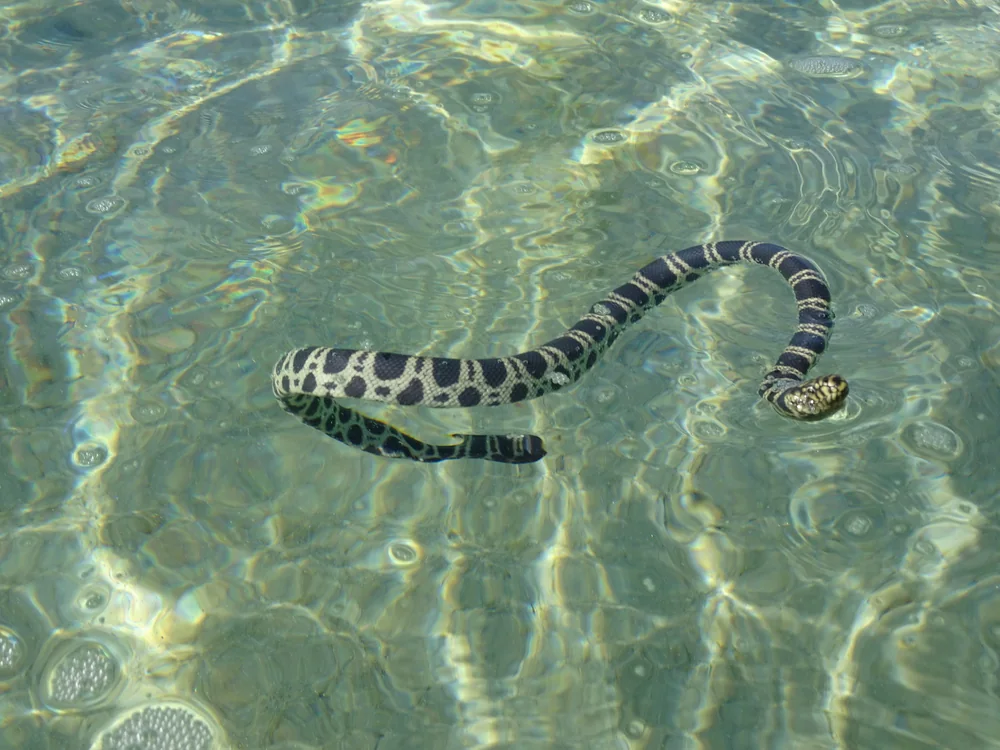
Photo: Jiro Iguchi · CC BY 4.0 (Licence)
Elapidae
Hydrophis major
A large, relatively heavy-bodied sea snake of northern Australian waters.
Venomous
Open identification guide →
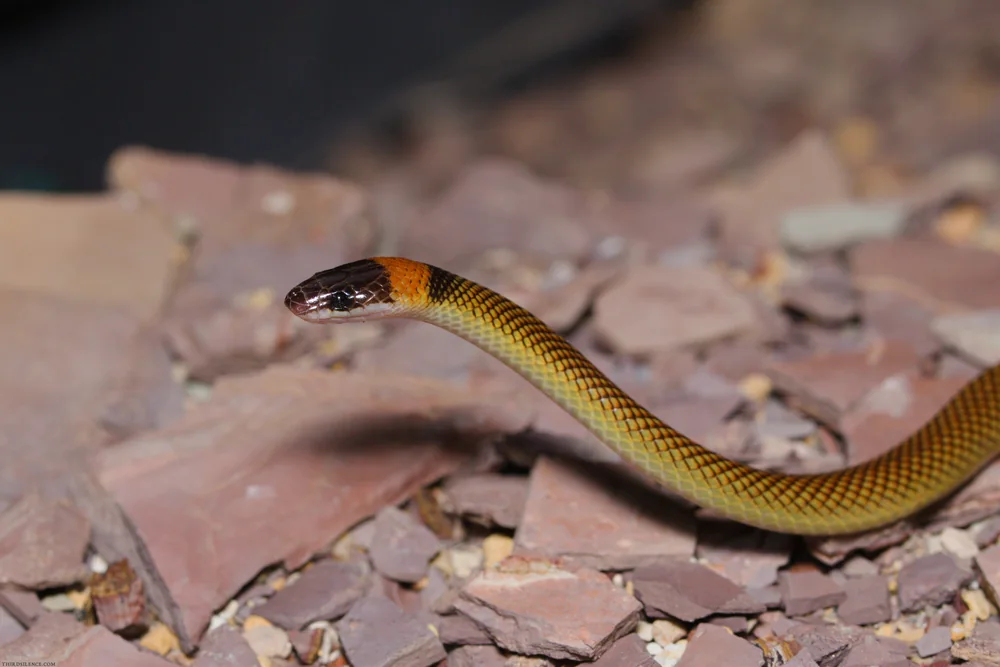
Photo: Third Silence · CC BY-SA 4.0 (Licence)
Elapidae
Furina ornata
A small northern Australian snake recognised by a red nape blotch not completely enclosed by black.
Venomous
Open identification guide →
No photograph available
Elapidae
Suta ordensis
A venomous snake recorded from northeastern Western Australia and the adjacent Northern Territory.
Venomous
Open identification guide →
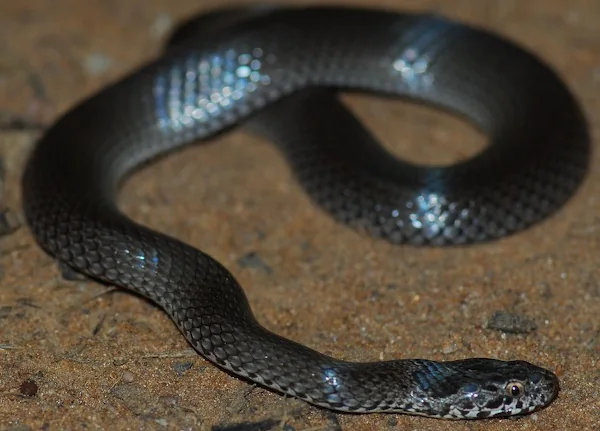
Photo: Stewart Macdonald · CC BY 2.5 (Licence)
Elapidae
Denisonia maculata
A stout brown-to-black snake of central-eastern Queensland. The flanks are lighter and may have dark streaks; it is associated with wet areas and feeds mainly on frogs.
Venomous
Open identification guide →
No photograph available
Elapidae
Hydrophis pacificus
A venomous marine snake recorded from northern Australian waters, with uncertainty surrounding some historical identifications.
Venomous
Open identification guide →
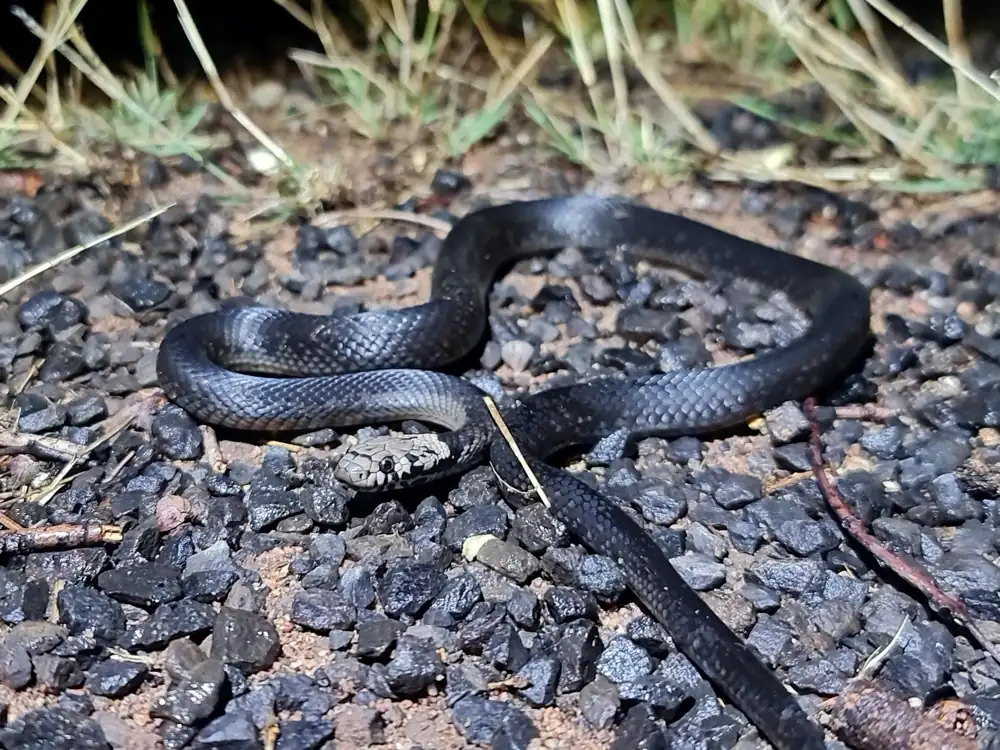
Photo: Max Tibby · CC0 1.0 (Licence)
Elapidae
Hoplocephalus bitorquatus
A slender, potentially dangerous, partly arboreal snake recorded from New South Wales and Queensland.
Venomous — potentially dangerous
Open identification guide →
No photograph available
Elapidae
Pseudechis papuanus
A stout, dark snake with Australian records on Boigu and Saibai Islands in the Torres Strait.
Highly venomous
Open identification guide →
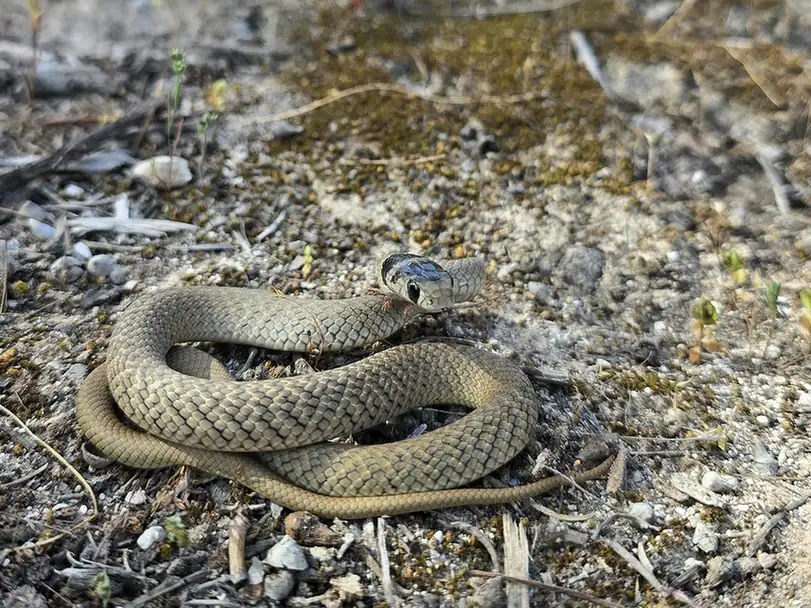
Photo: Max Tibby · CC0 1.0 (Licence)
Elapidae
Pseudonaja inframacula
A dangerously venomous snake recorded from South Australia’s Eyre and Yorke peninsulas, nearby islands and the Nullarbor coast.
Dangerously venomous
Open identification guide →
No photograph available
Elapidae
Vermicella snelli
A slender bandy-bandy from parts of northern Western Australia, including the Pilbara.
Venomous
Open identification guide →
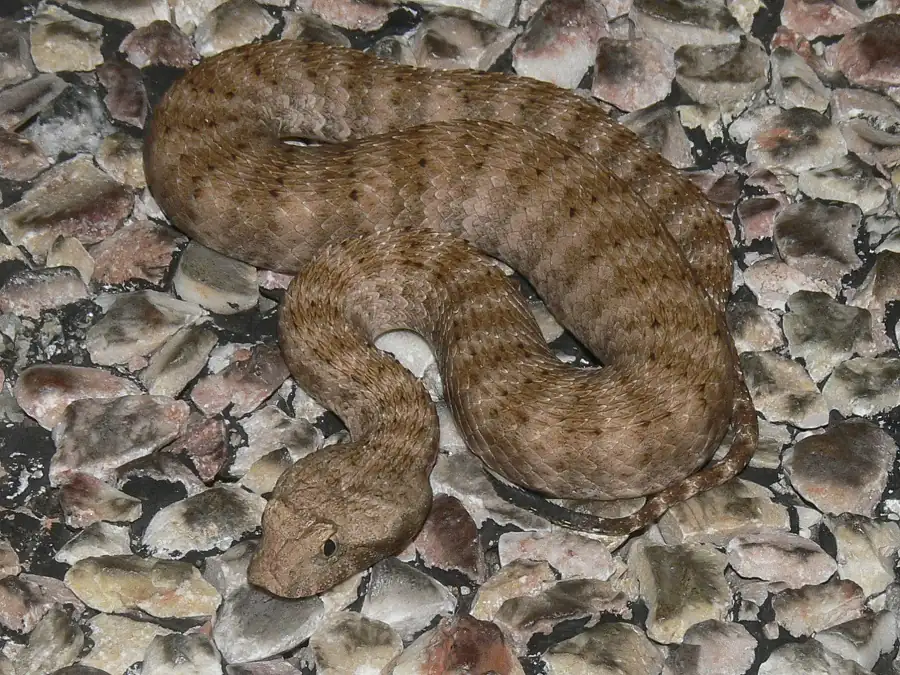
Photo: dhfischer · CC BY 4.0 (Licence)
Elapidae
Acanthophis wellsi
Pilbara Death Adder is a banded death adder recorded from stony soils in the Pilbara region of Western Australia.
Dangerously venomous
Open identification guide →
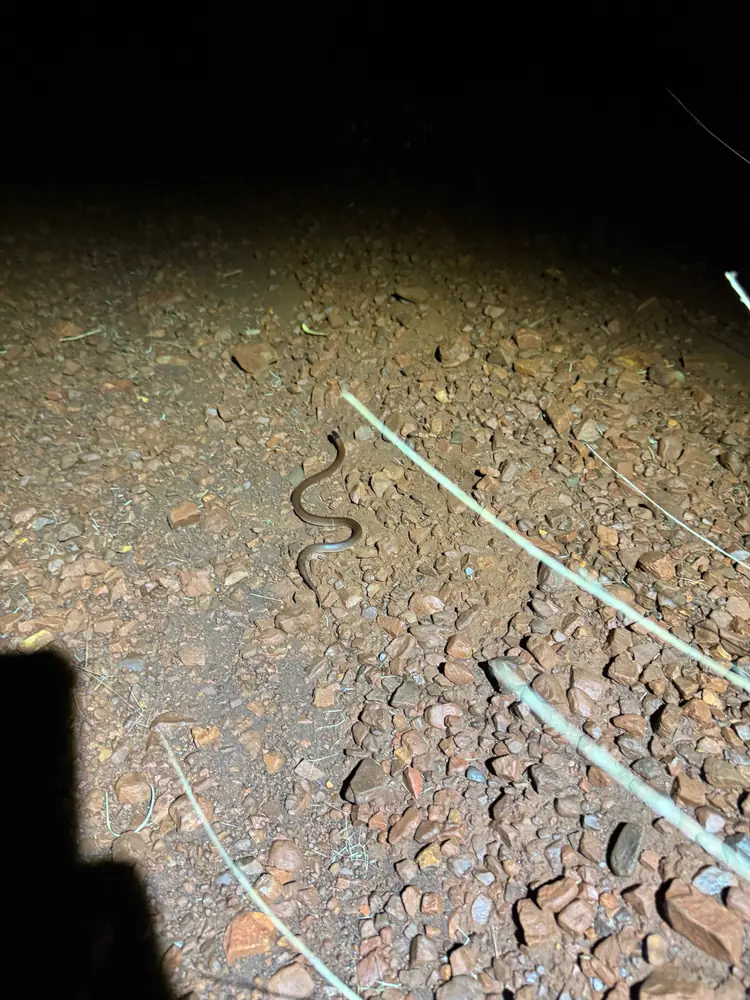
Photo: Tyler Anthony · CC BY 4.0 (Licence)
Elapidae
Suta gaikhorstorum
A moderately robust venomous snake of the Pilbara, with a reddish body and dark head hood.
Venomous
Open identification guide →
No photograph available
Elapidae
Cryptophis incredibilis
A small, slender pink snake currently known from Prince of Wales Island.
Venomous
Open identification guide →

Photo: Noah Kirkland · CC BY 4.0 (Licence)
Elapidae
Antaioserpens albiceps
Plain-nosed Burrowing Snake is recorded in north-eastern Queensland. It is orange to brown with a dark nape band, head flecks and a reticulated appearance from dark-edged scales.
Venomous
Open identification guide →
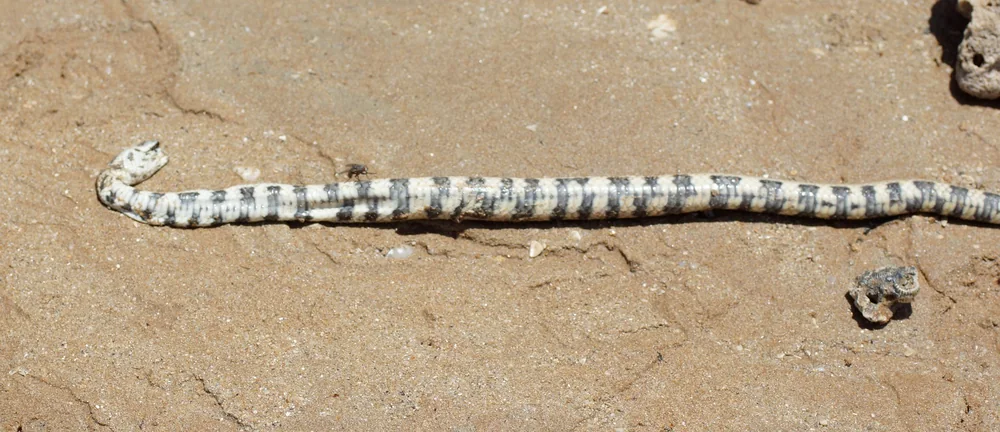
Port Darwin Sea Snake (Hydrelaps darwiniensis) deceased beach specimen.
Photo: Rod Lowther · CC BY 4.0 (Licence)
Elapidae
Hydrelaps darwiniensis
Port Darwin Sea Snake is a small mangrove and coastal sea snake with a light grey or yellowish body and many dark bands.
Venomous
Open identification guide →
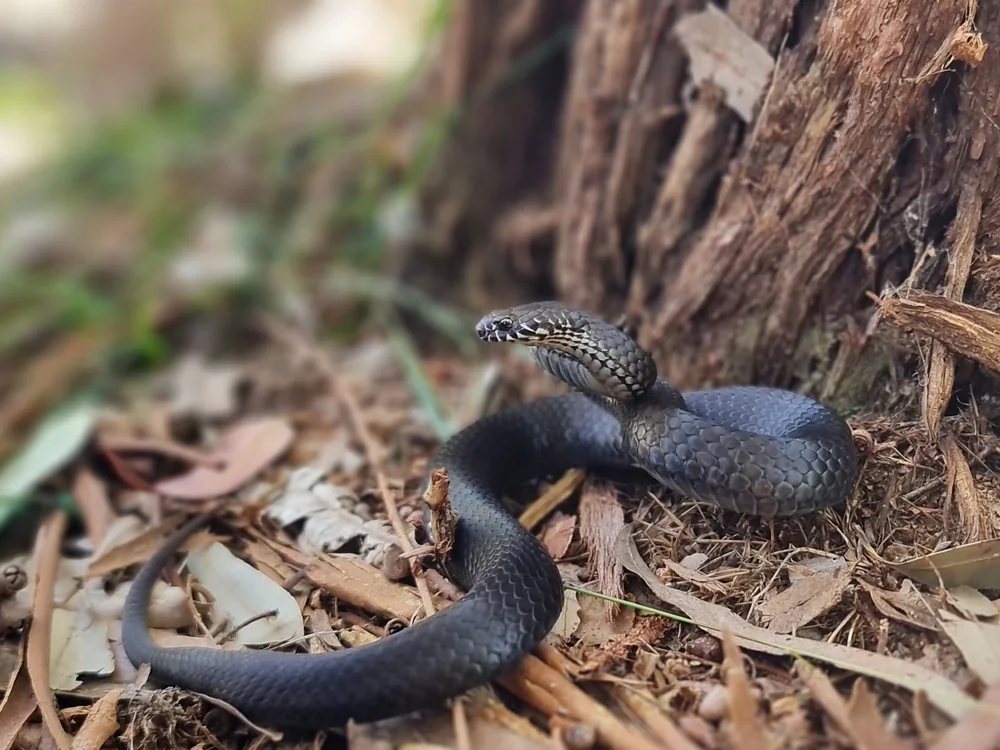
Photo: Max Tibby · CC0 1.0 (Licence)
Elapidae
Austrelaps labialis
Pygmy Copperhead is recorded from Kangaroo Island and adjacent mainland South Australia. It is usually brown to grey, sometimes with a dark dorsal stripe and nape bar, with heavily barred lips.
Dangerously venomous.
Open identification guide →
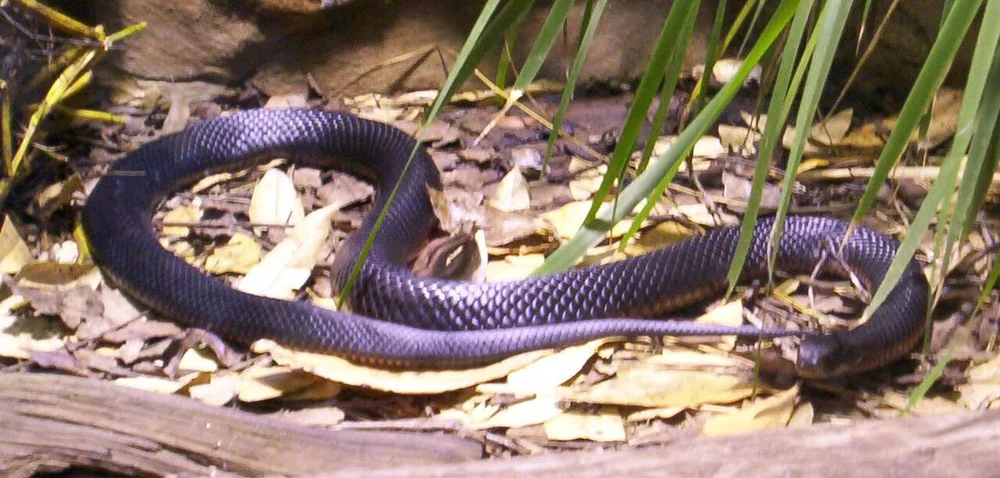
Photo: The original uploader was Figaro at English Wikipedia. · Public domain (Licence)
Elapidae
Pseudechis porphyriacus
A glossy black snake often seen around creeks, wetlands and farm dams in eastern Australia. Red or pink along the lower sides is a useful clue, but it can be hidden by the snake's position and is much paler in some northern animals.
Venomous
Open identification guide →

Photo: Max Tibby · CC0 1.0 (Licence)
Elapidae
Furina diadema
A slender red-brown snake with a black head and nape, pale belly and a red or orange nape patch enclosed by black. Its checked range spans NSW, Queensland, SA, Victoria and the ACT.
Venomous
Open identification guide →
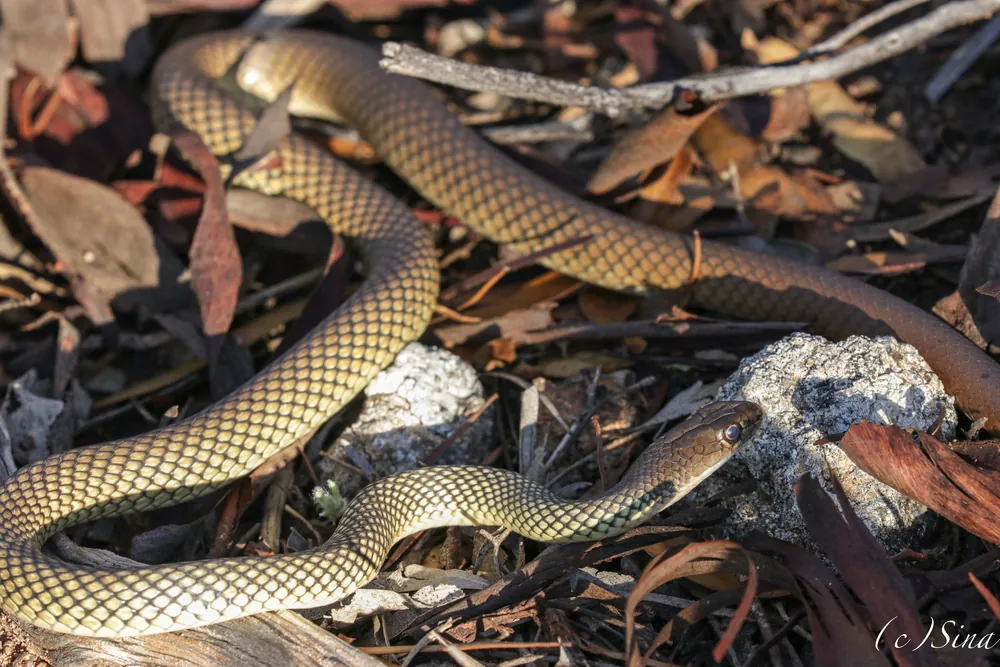
Photo: Ursina Gringer · CC BY 4.0 (Licence)
Elapidae
Demansia reticulata
A Western Australian whipsnake with dark scale edges that can produce a net-like appearance.
Venomous
Open identification guide →
No photograph available
Homalopsidae
Myron richardsonii
A small grey-brown mangrove snake with pale flecking, found in coastal and tidal waters of northern Australia and New Guinea. Its Australian range remains unresolved between the checked sources.
Weakly venomous
Open identification guide →
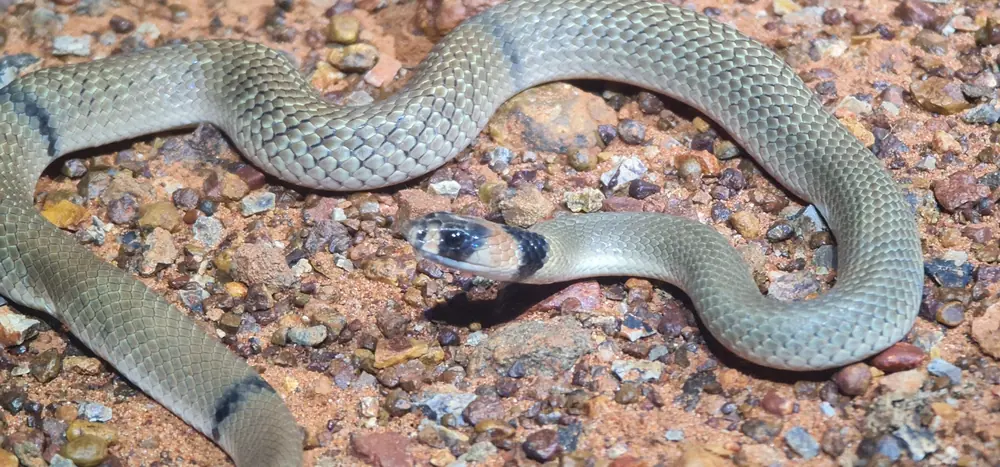
Photo: Max Tibby · CC0 1.0 (Licence)
Elapidae
Pseudonaja modesta
Ringed Brown Snake is a small inland brown snake with a black head and nape band and narrow body bands that may fade with age.
Venomous
Open identification guide →

Photo: dhfischer · CC BY 4.0 (Licence)
Elapidae
Suta fasciata
A thick-bodied Western Australian snake with reddish-brown markings across a pale buff back.
Venomous
Open identification guide →

Photo: Ged Tranter · CC BY 4.0 (Licence)
Elapidae
Tropidechis carinatus
A dangerously venomous, strongly keeled snake of wetter habitats in eastern Australia.
Dangerously venomous
Open identification guide →
No photograph available
Elapidae
Demansia rufescens
Rufous Whip Snake is a Western Australian species of the Pilbara and nearby islands. It is reddish to coppery brown above, with a grey head and neck and no dark nape band.
Venomous
Open identification guide →
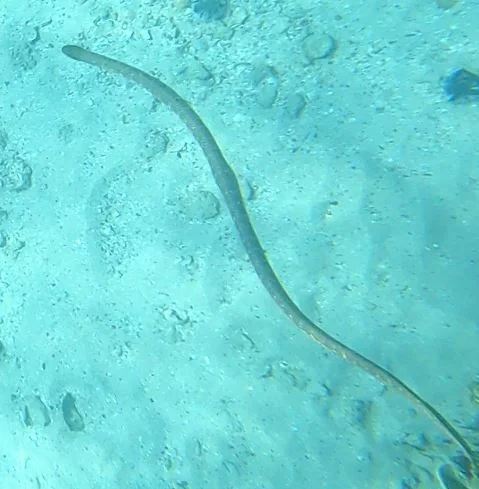
Photo: Em Lamond · CC BY 4.0 (Licence)
Elapidae
Aipysurus pooleorum
The Shark Bay Sea Snake is a marine species centred on Shark Bay and the mid-western Western Australian coast. AROD also records occasional strays as far south as Perth.
Venomous; AROD describes it as dangerously venomous.
Open identification guide →
No photograph available
Elapidae
Demansia shinei
A venomous whipsnake of northern central Australia.
Venomous.
Open identification guide →
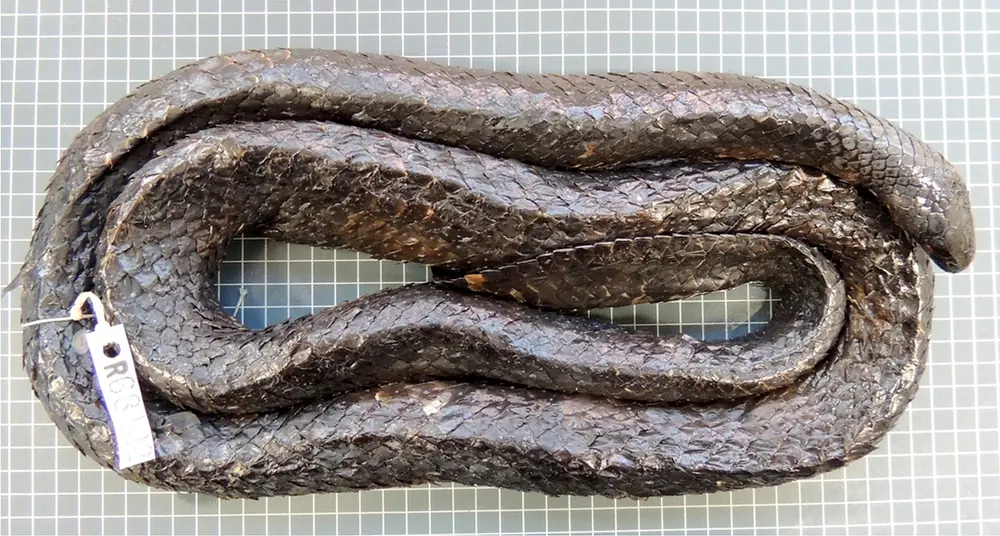
Preserved short-nosed sea snake specimen SAMA R68142 from Ashmore Reef. Preserved colours do not represent a living snake reliably.
Photo: Kate L. Sanders, Tina Schroeder, Michael L. Guinea, and Arne R. Rasmussen · CC BY 4.0 (Licence)
Elapidae
Aipysurus apraefrontalis
A rare sea snake recorded in north-western Australian waters. Coastal and offshore populations vary in size and colour; an older museum account describes a cream form with bluish-brown bars.
Highly venomous
Open identification guide →
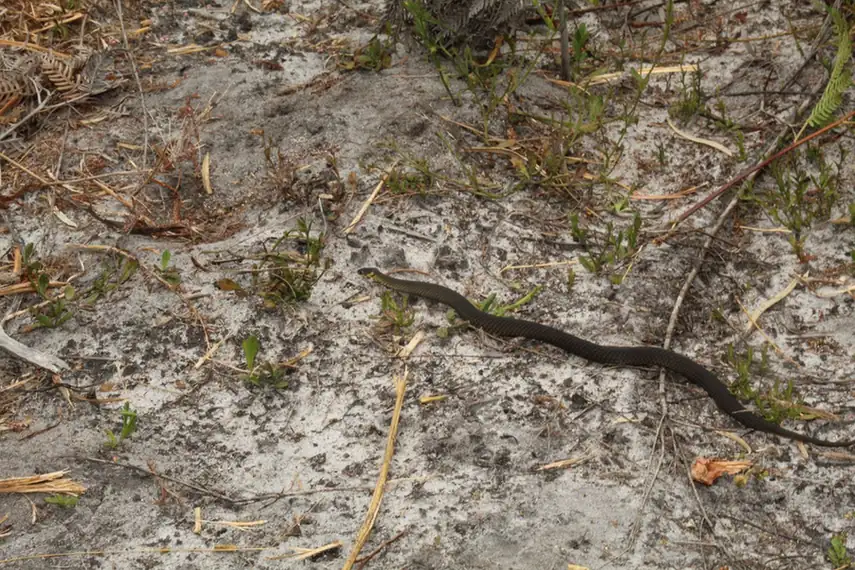
Photo: Em Lamond · CC BY 4.0 (Licence)
Elapidae
Elapognathus minor
A small Western Australian snake with a dark-grey, patternless body and pale neck bars.
Venomous
Open identification guide →
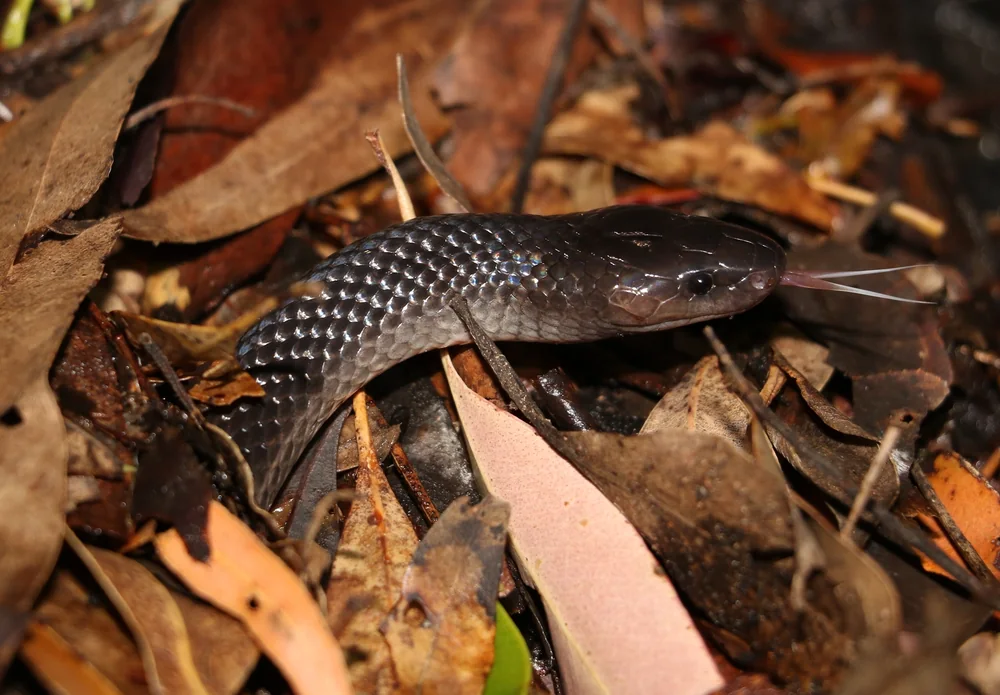
Photo: Greg Tasney · CC BY-SA 4.0 (Licence)
Elapidae
Cryptophis nigrescens
A glossy black snake of eastern Australia. Its pale to pinkish-red belly can resemble markings on other dark snakes, so colour alone is unreliable.
Highly venomous
Open identification guide →

Photographed in the Mount Isa area, Queensland.
Photo: Chris Hay · CC BY 4.0 (Licence)
Elapidae
Demansia quaesitor
The Sombre Whip Snake is a small venomous snake of northern Australia with brown to black colouring, a paler head and a dark nape collar. It occurs in tropical and semi-arid woodland.
Venomous
Open identification guide →

Photo: dhfischer · CC BY 4.0 (Licence)
Elapidae
Brachyurophis semifasciatus
A variable shovel-nosed snake with reddish-brown to orange colouration, a barred head and regular dark bands along the body. AROD mentions Queensland, but the current Reptile Database lists only southern Western Australia and South Australia, so the mapped range is partial.
Venomous
Open identification guide →
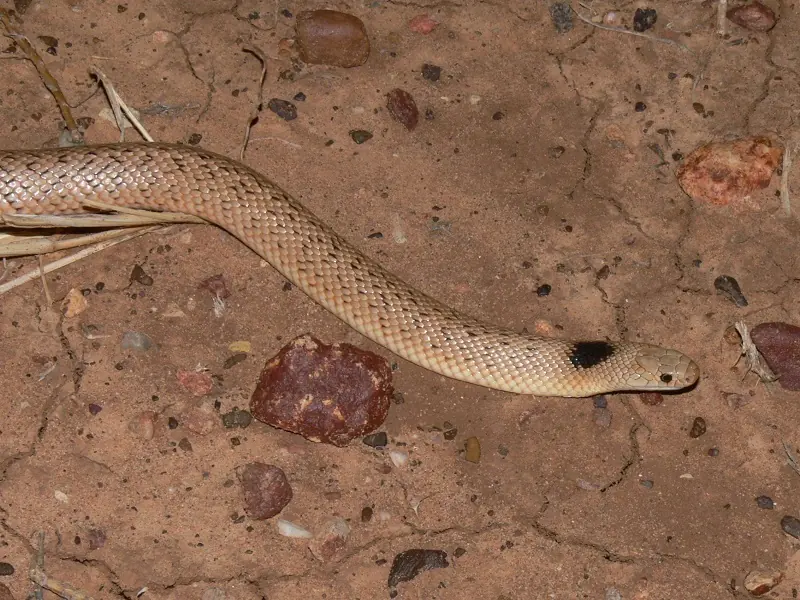
Photo: dhfischer · CC BY 4.0 (Licence)
Elapidae
Pseudonaja guttata
Speckled Brown Snake is a variable brown snake of arid grasslands and black-soil plains in the Northern Territory, Queensland and north-eastern South Australia.
Dangerously venomous
Open identification guide →

Spectacled Sea Snake (Hydrophis kingii) preserved museum specimen in a jar, labelled Disteira kingii.
Photo: A. C. Tatarinov · CC0 1.0 (Licence)
Elapidae
Hydrophis kingii
A marine snake with a dark head, pale rings around the eyes and grey bars across a yellowish body.
Venomous.
Open identification guide →
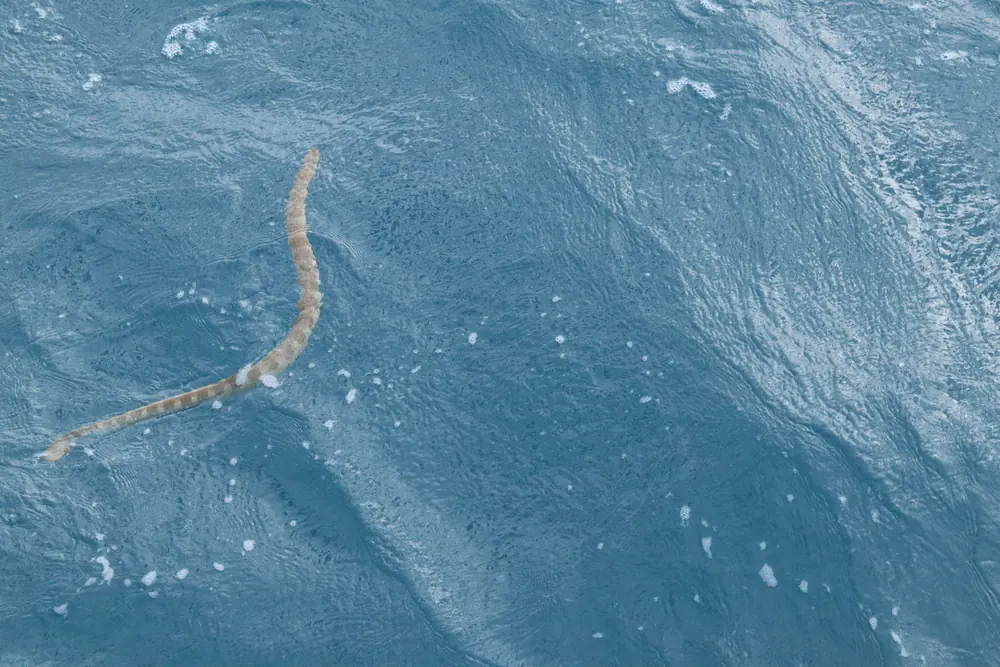
Photo: elawrey · CC BY 4.0 (Licence)
Elapidae
Hydrophis curtus
A marine snake with a greenish or yellowish back crossed by dark bands.
Venomous.
Open identification guide →
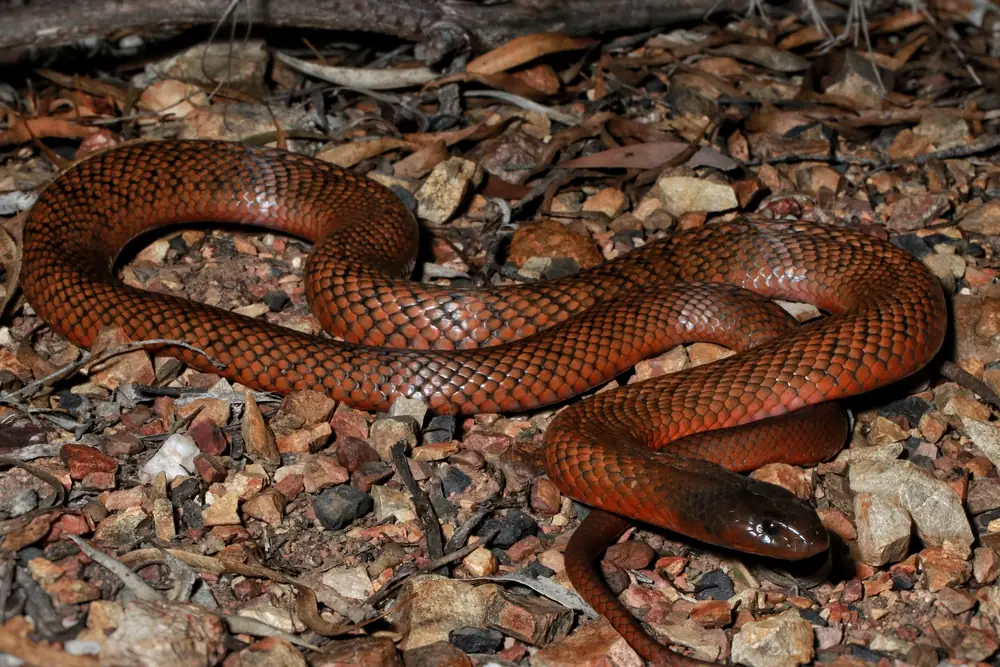
Photo: Max Tibby · CC0 1.0 (Licence)
Elapidae
Pseudechis guttatus
A large dangerous black snake with variable dark, pale and broken-crossbanded forms, recorded from New South Wales and Queensland.
Dangerous; the species is venomous
Open identification guide →
No photograph available
Elapidae
Pseudechis butleri
A dark-backed mulga snake from arid midwestern Western Australia, with pale-yellow scale centres and irregular darker patches.
Venomous
Open identification guide →

Spotted Sea Snake (Hydrophis ocellatus) stranded on a beach; condition not documented.
Photo: Vicki Kelly · CC BY 4.0 (Licence)
Elapidae
Hydrophis ocellatus
A venomous sea snake with spotted sides and oval or bar-like markings across its back, often fading with age.
Venomous
Open identification guide →

Photo: dhfischer · CC BY 4.0 (Licence)
Elapidae
Rhinoplocephalus bicolor
A small live-bearing snake from south-western Western Australia, often associated with shelter near swamps.
Venomous
Open identification guide →

Photo: Lachlan Copeland · CC BY-SA 4.0 (Licence)
Elapidae
Hoplocephalus stephensii
A nocturnal snake of forests and rocky country from southern Queensland to the NSW Central Coast.
Venomous
Open identification guide →
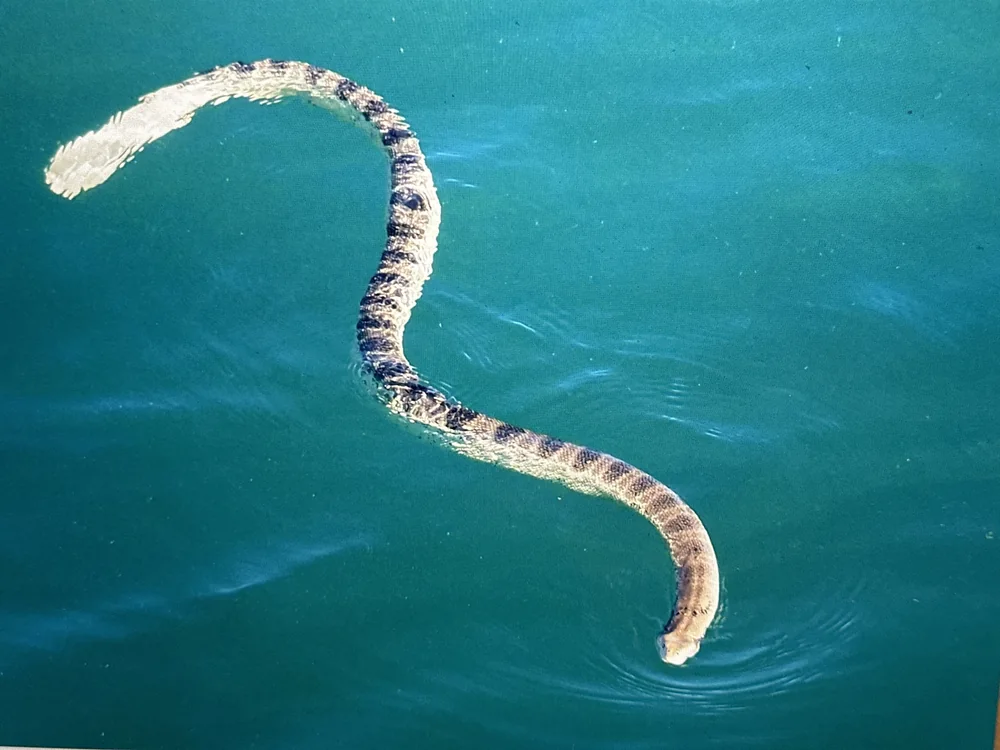
Photo: Rosario Douglas · CC BY 4.0 (Licence)
Elapidae
Hydrophis stokesii
A stout sea snake with variable brown to cream colouring; some individuals have dark bands and spots.
Venomous
Open identification guide →

Photo: Max Tibby · CC0 1.0 (Licence)
Elapidae
Pseudonaja aspidorhyncha
A slender brown snake of inland southern Australia, with variable body banding.
Venomous
Open identification guide →
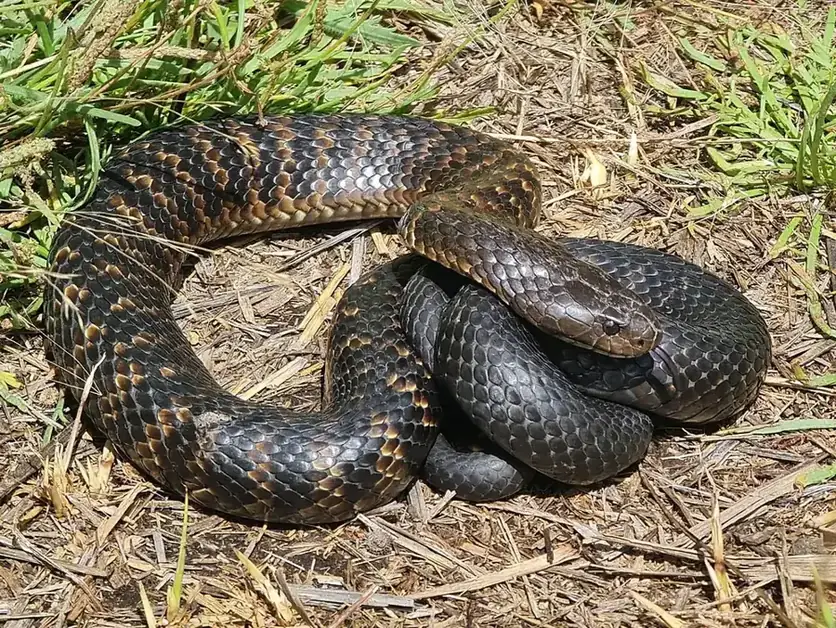
Photo: Max Tibby · CC0 (Licence)
Elapidae
Notechis scutatus
Tiger snakes may be banded, faintly marked or completely plain. They are robust snakes associated with many southern wetlands, but also occur in drier habitats. A black snake in Tasmania, or one without stripes, can still be a tiger snake.
Highly venomous
Open identification guide →
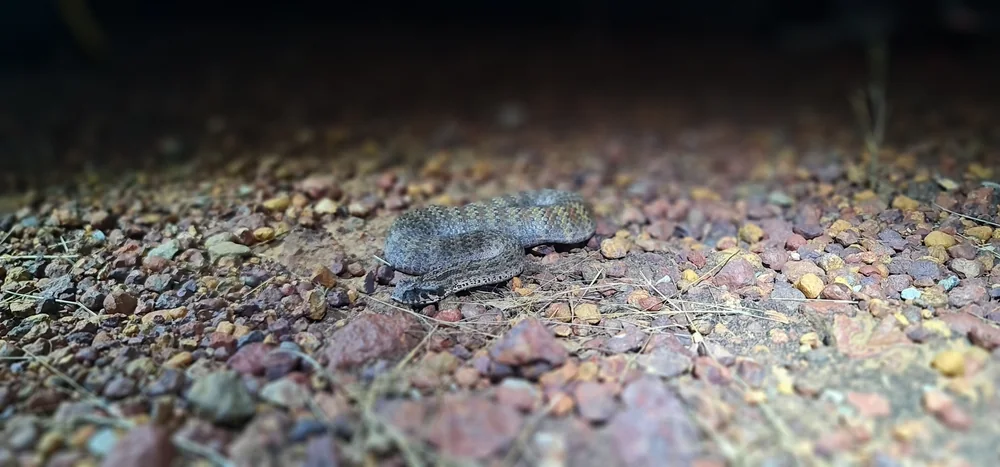
Photo: Max Tibby · CC0 1.0 (Licence)
Elapidae
Acanthophis rugosus
A stocky death adder of the Top End and north-western Queensland, usually marked with alternating pale and dark cross-bands. Some individuals have faint banding, so a brown or grey snake cannot be ruled out by colour alone.
Highly venomous
Open identification guide →
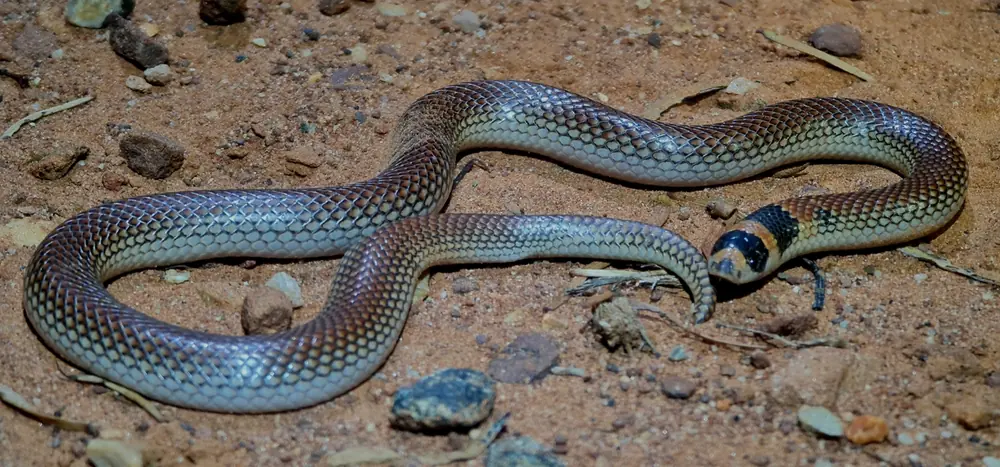
Photo: Max Tibby · CC0 1.0 (Licence)
Elapidae
Brachyurophis incinctus
Unbanded Shovel-nosed Snake is recorded from central Australia north to the Gulf of Carpentaria and across western Queensland. It is orange, pink or brown above, with dark-edged scales and local head and nape bands.
Venomous
Open identification guide →
No photograph available
Elapidae
Antaioserpens warro
The Warrego Burrowing Snake is a small Queensland snake with a weakly shovel-shaped snout, dark head markings and a speckled brown body. It is a poorly encountered burrowing species.
Venomous
Open identification guide →

Photo: dhfischer · CC BY 4.0 (Licence)
Elapidae
Simoselaps littoralis
A small burrowing snake of coastal Western Australia with contrasting dark body bands.
Venomous
Open identification guide →
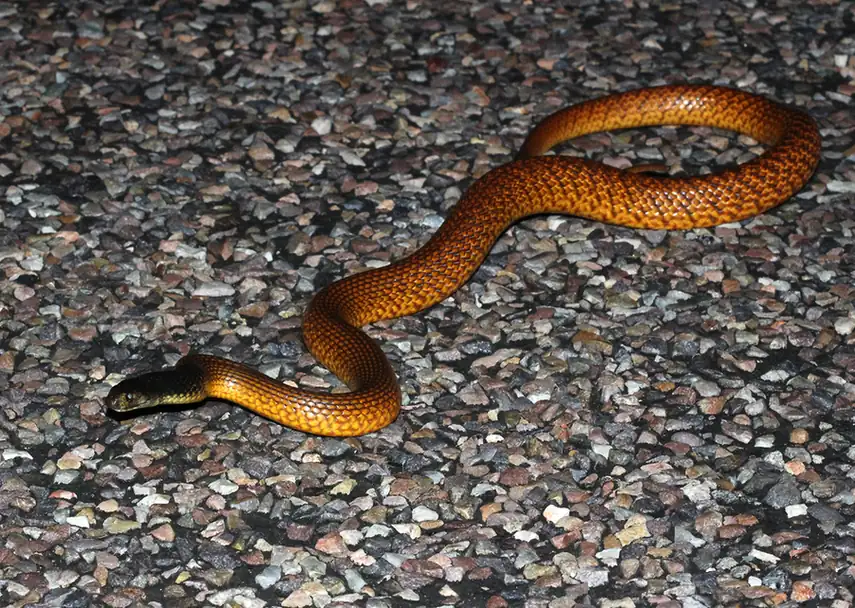
Photo: Lachlan Copeland · CC BY-SA 4.0 (Licence)
Elapidae
Pseudonaja mengdeni
A slender inland brown snake with yellow, orange or brown body forms and variable dark markings.
Venomous
Open identification guide →
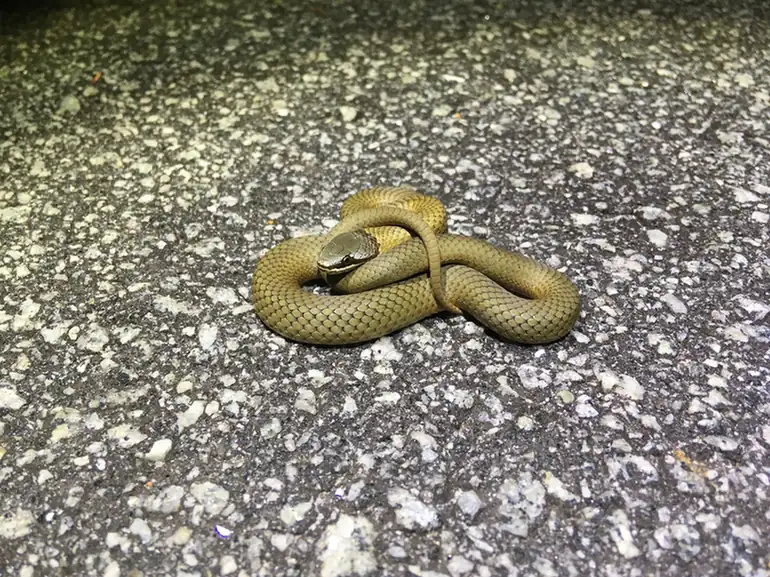
Photo: Donna Belder · CC BY 4.0 (Licence)
Elapidae
Elapognathus coronatus
A small live-bearing snake of coastal southern and south-western Western Australia.
Venomous
Open identification guide →

Photographed in the Great Central Road area, Western Australia.
Photo: Chris Hay · CC BY 4.0 (Licence)
Elapidae
Oxyuranus temporalis
A very slender desert taipan with tan-brown to chocolate-brown upperparts, a paler head and sometimes faint herringbone lines. Confirmed material includes Western Australia; an older Central Ranges record near the NT region remains tentative.
Highly venomous
Open identification guide →
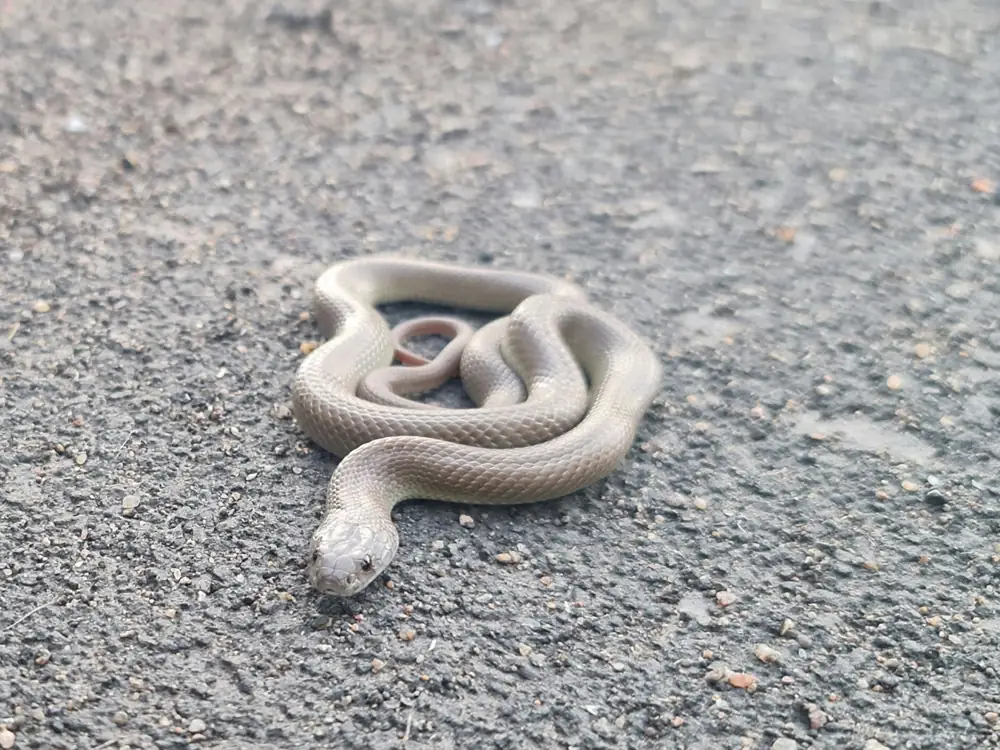
Photo: Max Tibby · CC0 1.0 (Licence)
Elapidae
Pseudechis weigeli
A venomous black-snake relative recorded in the Kimberley and the Northern Territory.
Dangerously venomous
Open identification guide →

Photo: Lachlan Copeland · CC BY-SA 4.0 (Licence)
Homalopsidae
Fordonia leucobalia
A coastal northern Australian water snake with glossy dark upperparts, pale underside and irregular spots.
Probably weakly venomous (rear-fanged)
Open identification guide →
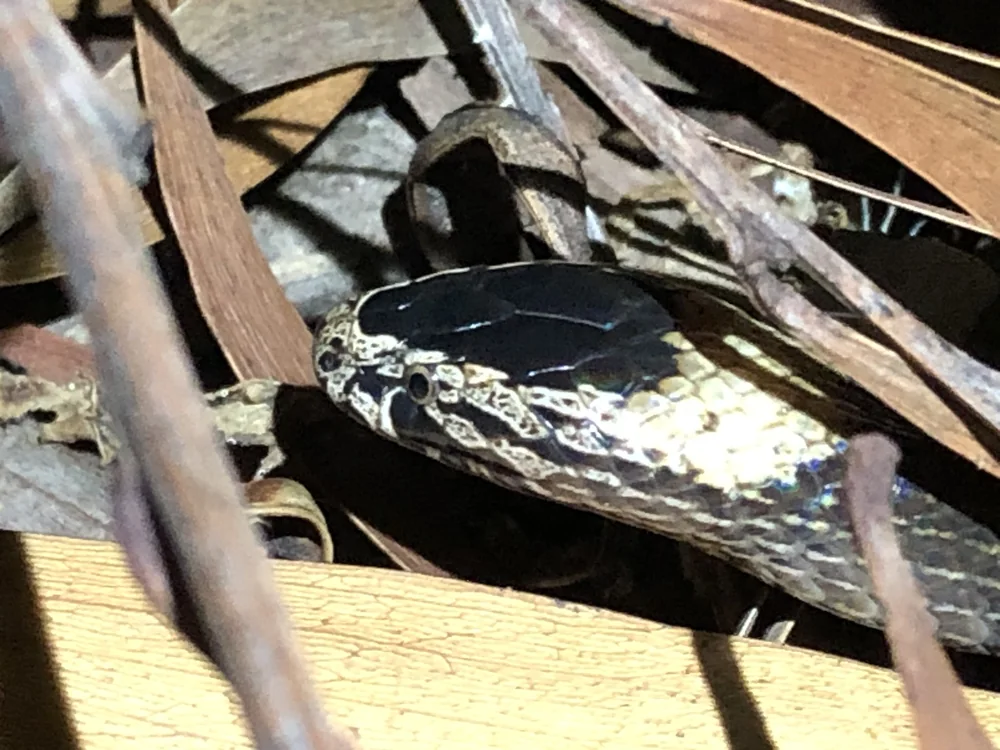
Photo: Greg Tasney · CC BY-SA 4.0 (Licence)
Elapidae
Cacophis harriettae
The White-crowned Snake is a small dark snake of moist eastern Australian habitats. It has a broad white collar across the nape and a dark head.
Venomous
Open identification guide →
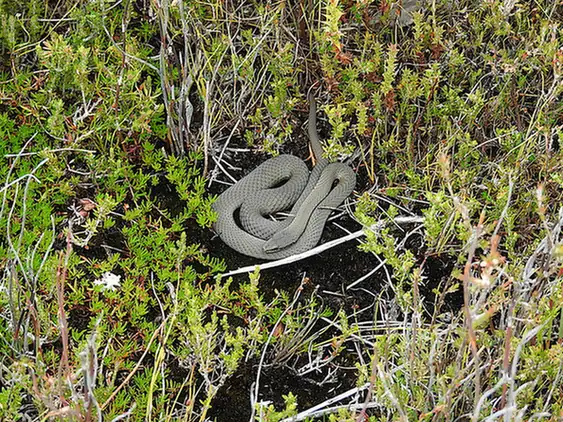
Photo: george_vaughan · CC0 1.0 (Licence)
Elapidae
Drysdalia coronoides
White-lipped Snake is recorded across south-eastern Australia, including Tasmania and New South Wales. It varies from olive-brown and grey to reddish brown or dark grey, with a white stripe on the upper lip and no pale or dark nape band.
Venomous
Open identification guide →

Photo: Tim Robertson · CC0 1.0 (Licence)
Elapidae
Hydrophis platurus
Yellow-bellied Sea Snake is a pelagic marine snake recorded across tropical Australian waters and the wider Indian and Pacific oceans. It has a dark upper body, a yellow lower body and a patterned paddle tail.
Venomous
Open identification guide →

Photo: James K. Douch · CC BY-SA 4.0 (Licence)
Elapidae
Demansia psammophis
Yellow-faced Whip Snake is an eastern Australian species recorded in NSW, QLD, VIC, SA and ACT. It is variable in grey, olive, yellow and brown tones, with a dark facial line and dark-edged scales that can give a reticulated appearance.
Venomous
Open identification guide →
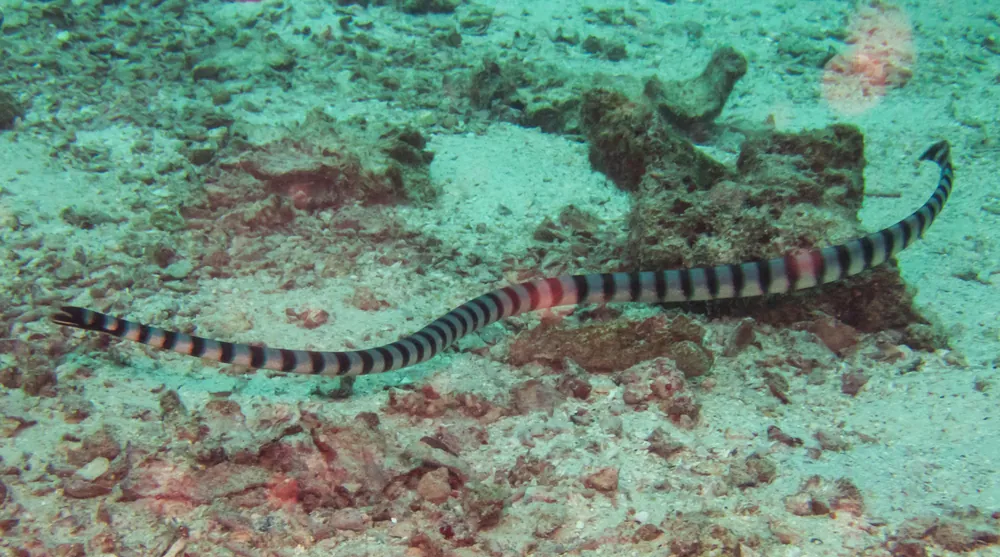
Photo: portioid · CC BY 4.0 (Licence)
Elapidae
Laticauda colubrina
A banded sea krait that occasionally reaches Australia, with a yellow upper lip and a mainly black head.
Venomous
Open identification guide →
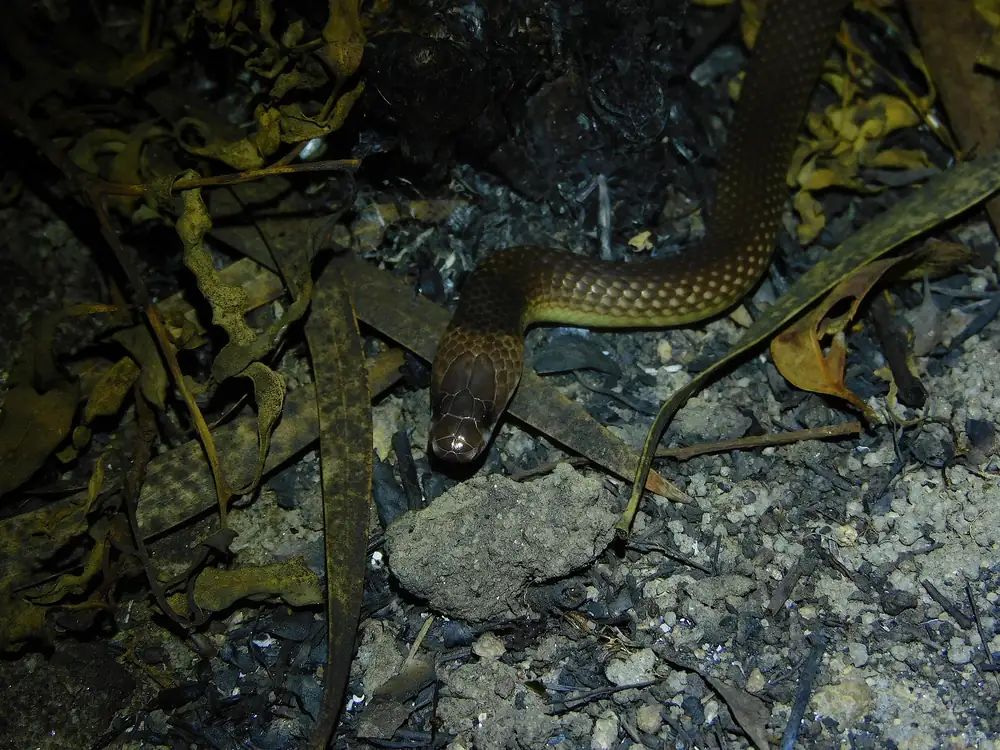
Photo: george_vaughan · CC0 1.0 (Licence)
Elapidae
Furina barnardi
A little-known Queensland snake with a brown body and pale neck band.
Venomous
Open identification guide →

